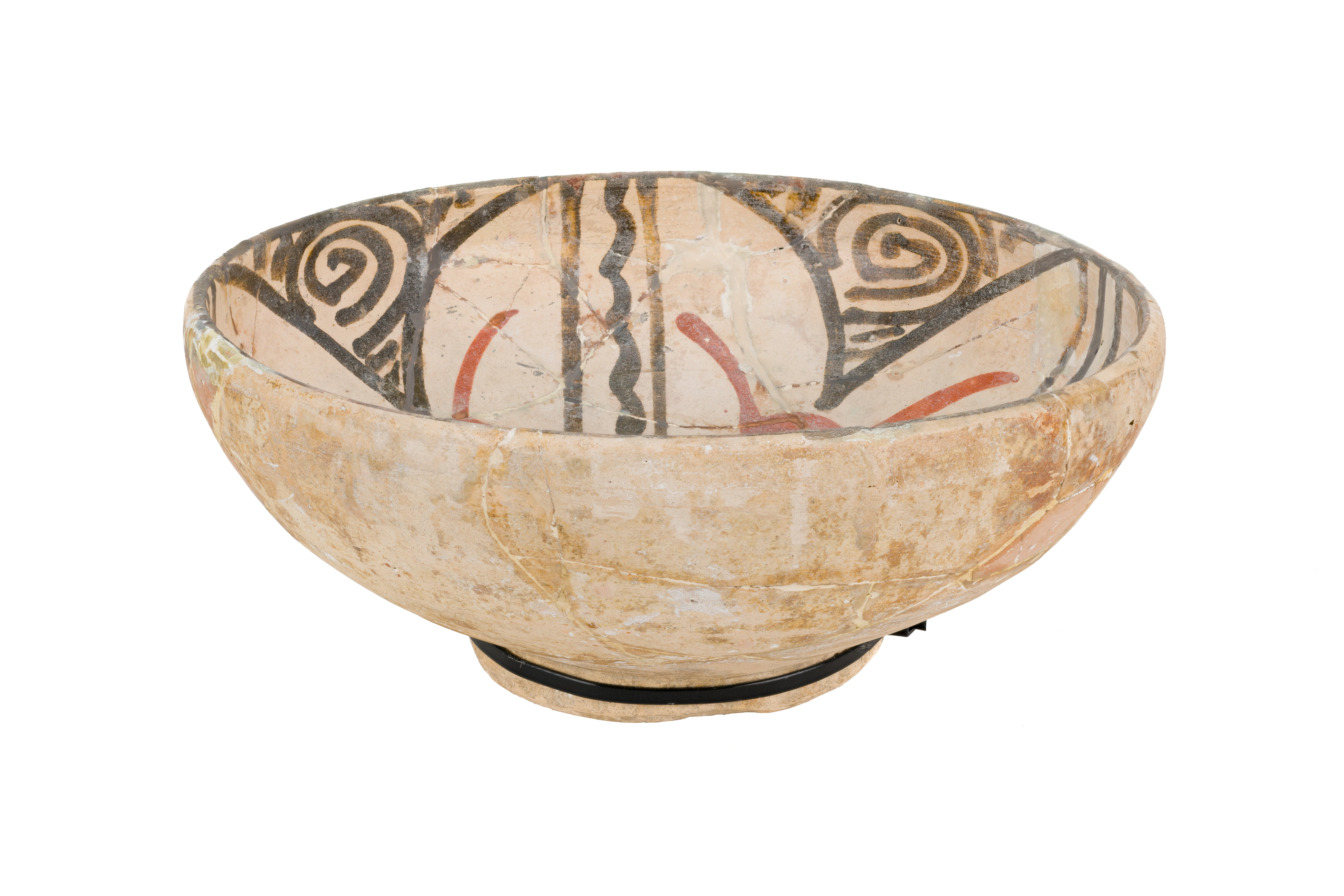
Bowl with Black and Red Patterns
10th–11th centuries СЕ. Central Asia. Ceramic; engobe. 9.5 × 22.2 cm
Audio guide
Description
Look at the interior of this bowl. The ornament immediately draws attention: clear black lines intersect to form a cross-like structure, while red elements introduce rhythm and movement.
This ceramic bowl dates to the 10th–11th centuries, a period presented in the exhibition as the First Renaissance. At this time, urban culture in Mawarannahr became more firmly established, alongside advances in learning, theology, and craftsmanship. Within the intellectual environment associated with figures such as Imam al-Maturidi, everyday objects also acquired a distinctive visual language.
The surface of the bowl is covered with slip – a thin layer of clay that creates a light background for the painted decoration. Black wavy and straight lines define the structure of the composition, while red accents bring balance. The ornament does not fill the entire surface; instead, it organizes the space, emphasizing the vessel’s form and guiding the viewer’s gaze toward the center.
Cracks and traces of restoration are visible on the bowl. They indicate long use and careful preservation. This object allows us to see the First Renaissance not only through texts and ideas, but also through the aesthetic choices embodied in objects of everyday life.