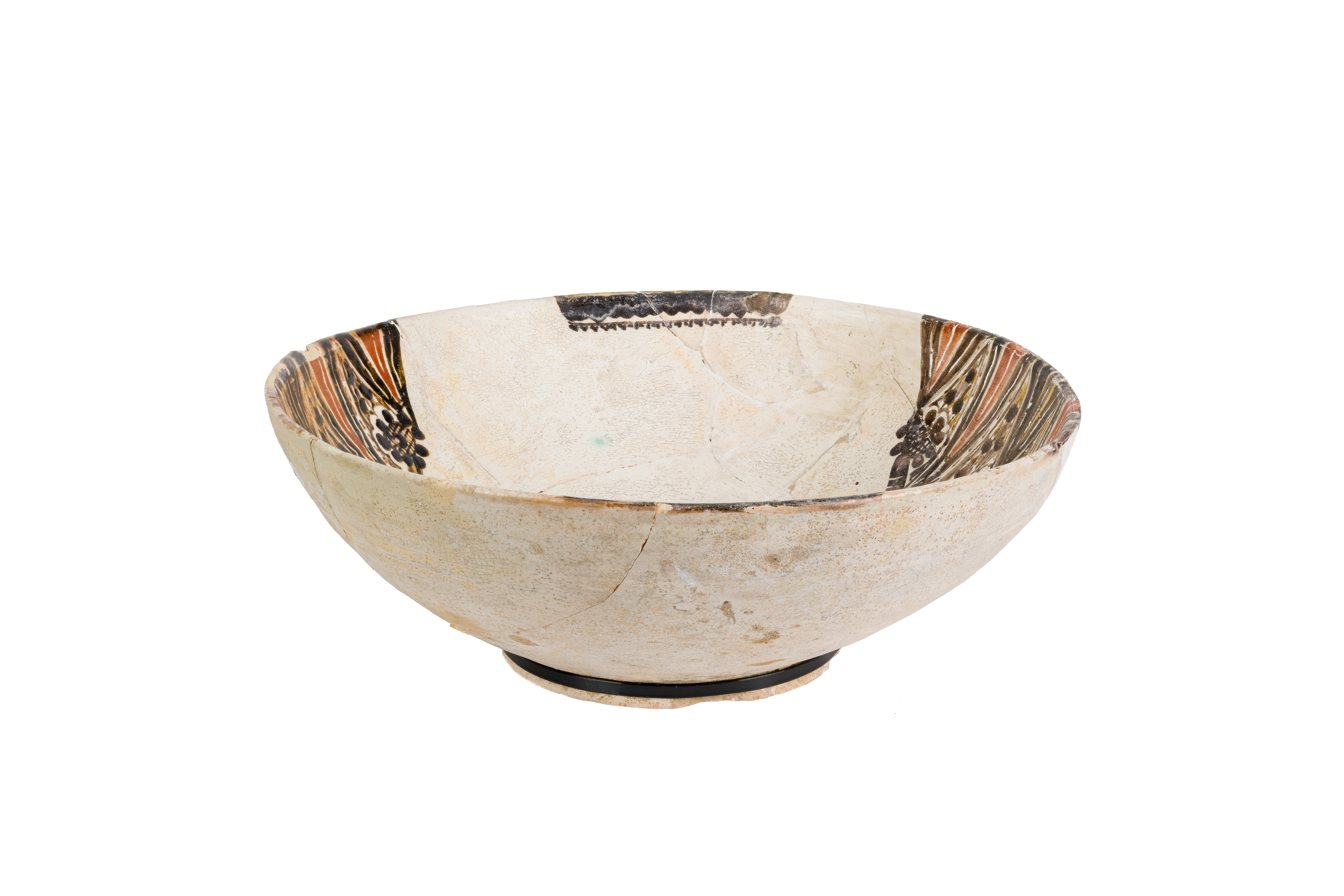
Bowl
10th–11th centuries CE. Central Asia. Ceramic; engobe. 10.5 × 25.8 cm
Audio guide
Description
This ceramic bowl dates to the 10th–11th centuries, a formative period for rational Islamic theology in Central Asia, closely associated with Imam al-Maturidi. Such bowls served everyday needs and reflected the intellectual culture of the time.
The surface is coated with a light slip, or engobe, creating a calm background for painted decoration. Fan-shaped and stylized vegetal motifs unfold in strict symmetry. This sense of balance echoes the Maturidi concept of mīzān–measure and equilibrium between reason and faith.
Vessels like this were used during meals in scholars homes, merchants and administrators. They belonged to spaces where knowledge was shared through discussion and interpretation. This bowl is a witness of everyday life and thought in the Islamic civilization of Central Asia existed in a single cultural space.