Bowl
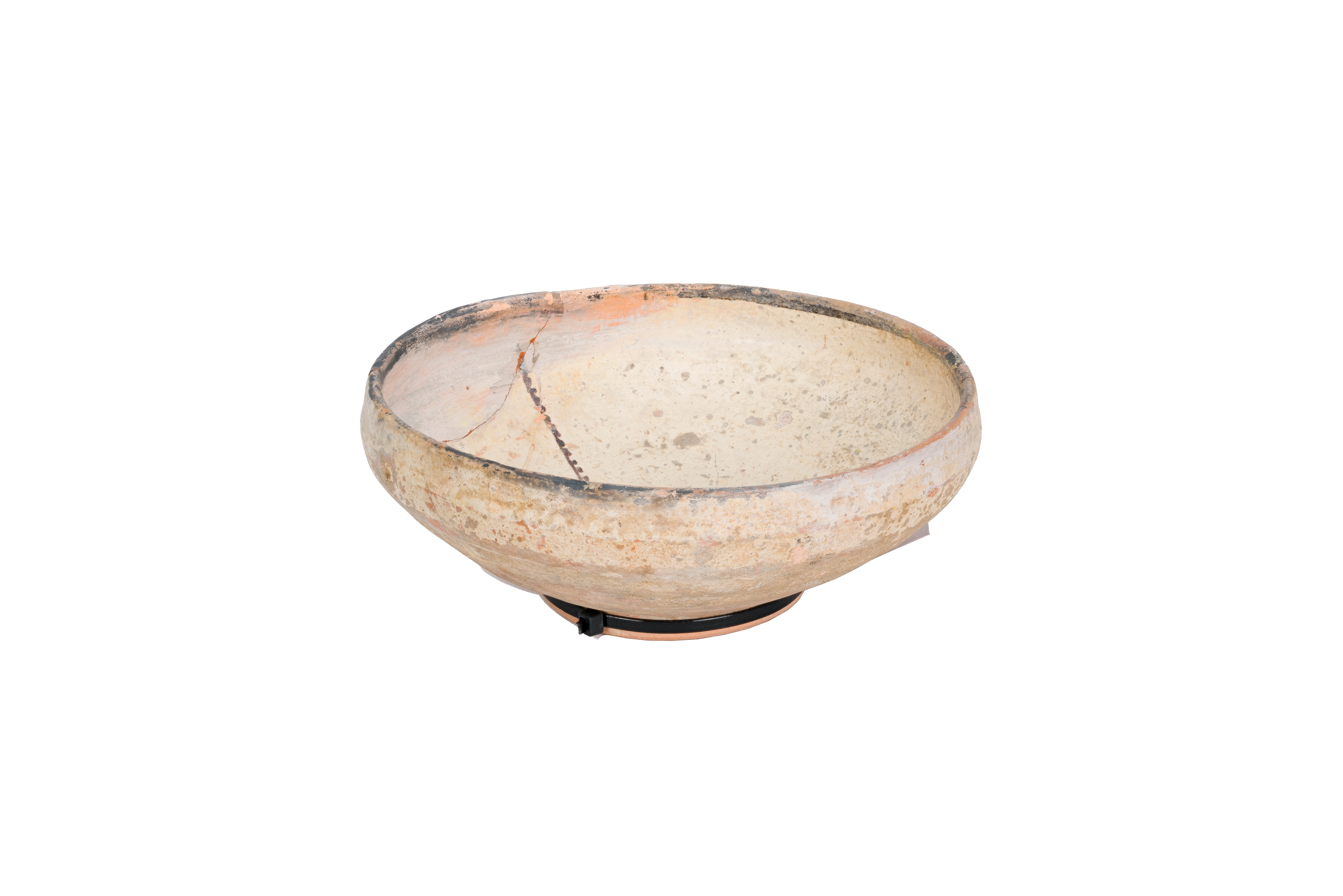
10th century CE. Central Asia. Ceramic; engobe. 7.8 × 19.3 cm
Audio guide
Audio available in: UZ
Description
This ceramic bowl dates to the 10th century, during the flourishing period of the Samanid state, when the cities of Mawarannahr became major centers of learning, trade, and craftsmanship.
Unlike richly decorated vessels, this object stands out for its restraint. Its only decorative feature is a thin dark line along the rim, emphasizing the harmony and geometry of its form. Such visual simplicity reflects an important aesthetic principle of Islamic art – the appreciation of balance and proportion.
The white surface was created using an engobe coating – a refined liquid clay applied before firing. This technique enabled Central Asian potters to produce ceramics visually comparable to the highly prized Chinese porcelain traded along the Silk Road.
Visible restoration marks reflect the long life of the object. High-quality ceramics were rarely discarded; instead, they were repaired and reused, demonstrating their practical and material value.
This vessel illustrates how the artistic culture of the Islamic world valued not only ornament, but also purity of form and proportional beauty.