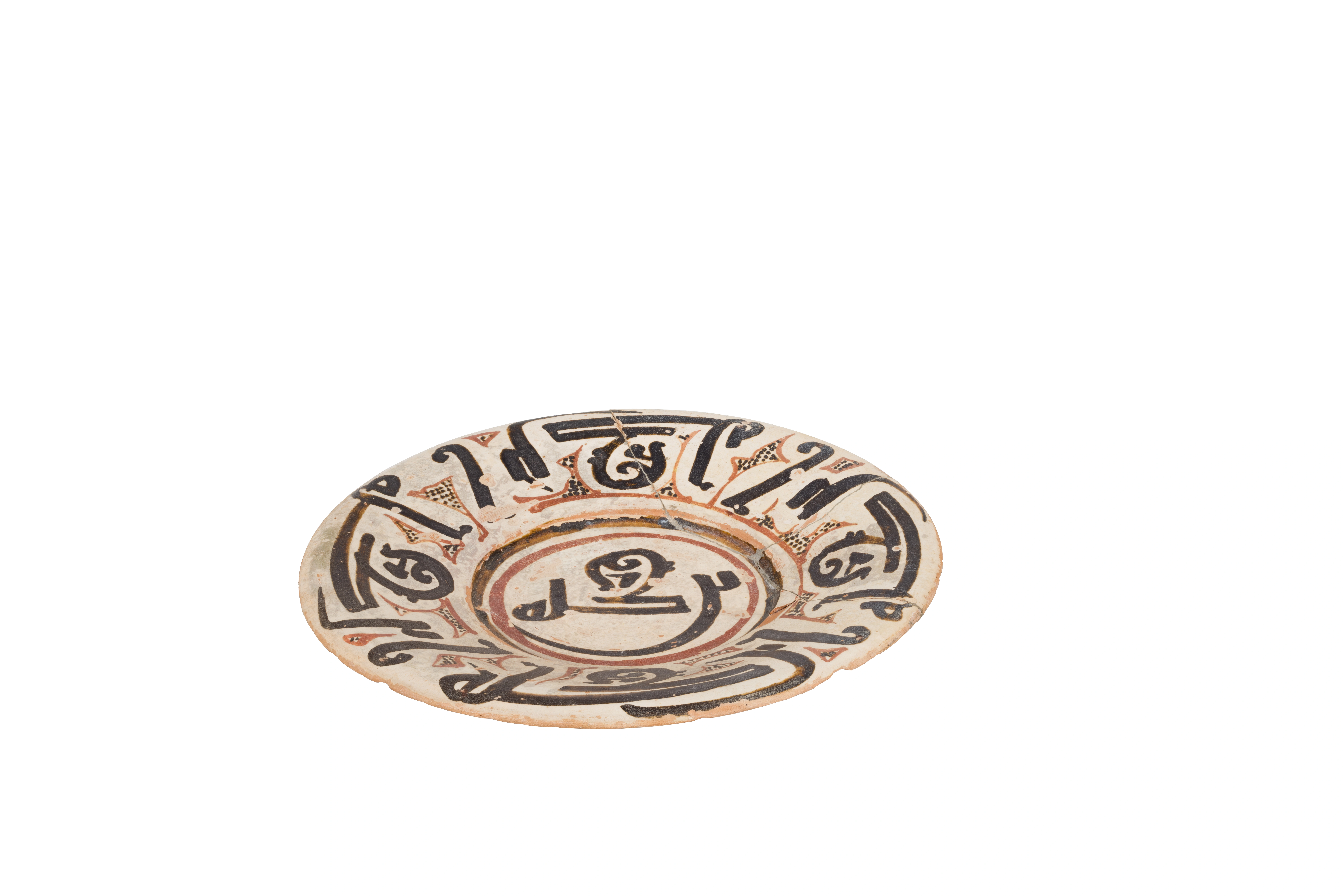
Bowl with a Disc-Shaped Base
10th–11th centuries CE. Central Asia. Ceramic; engobe. 3.3 × 21.4 cm
Audio guide
Description
Look at the interior of this bowl. The surface is largely free of dense decoration, creating a sense of clarity and focus.
This bowl dates to the 10th–11th centuries, a time when urban culture in Central Asia was taking shape. In everyday ceramics of this period, there is a growing preference for balanced forms and restrained visual language. Such vessels were made for daily use and accompanied ordinary acts of dining.
The surface of the bowl is covered with a light slip, which evens out the color of the clay and emphasizes the form. Inside, a simple yet expressive composition appears: thin lines intersect at the center, dividing the surface into equal sections. This approach creates a sense of order and internal structure without overloading the object with decoration.
Cracks and traces of restoration are visible on the surface. They point to long use and careful preservation. This bowl reveals the aesthetics of the 10th–11th centuries through its restrained form and attention to qualities characteristic of the artistic culture of the First Renaissance.