Video available in: UZ
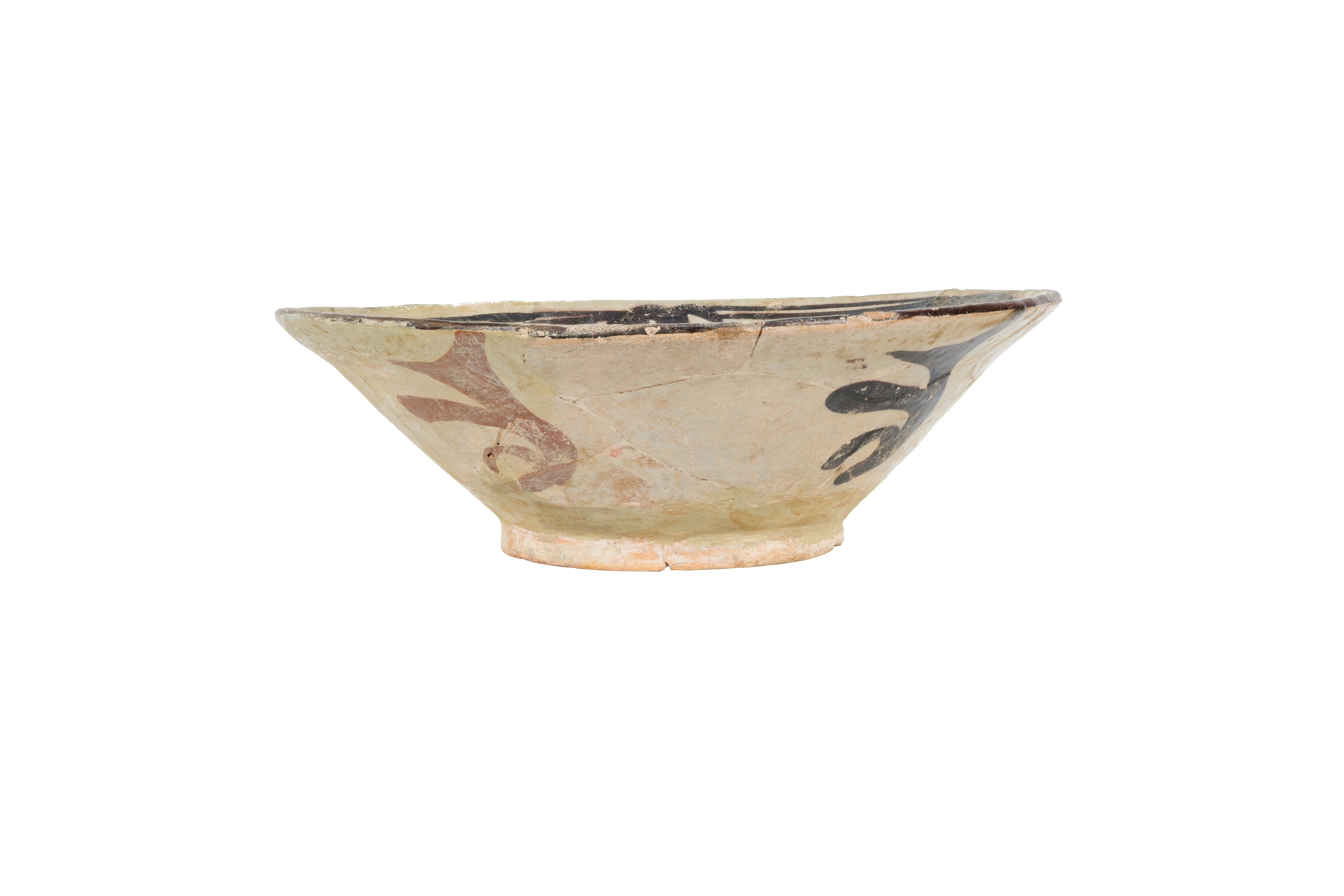
Bowl with Kufic Inscription
10th–11th centuries CE. Central Asia. Ceramic; engobe. 6 × 19.5 cm
Audio guide
Description
Look at the rim of this bowl. Along its circumference runs a strict inscription formed by large, angular signs. It immediately establishes a rhythm, turning the surface into a closed circle of meaning.
This bowl dates to the 10th–11th centuries, a period presented in the exhibition as the First Renaissance. In Mawarannahr at this time, the written word and knowledge held a special place in urban culture. Writing extended beyond the page and entered the visual environment, including objects of everyday use.
The surface of the dish is covered with slip, creating a light background. Dark paint is used to apply a Kufic inscription, one of the earliest forms of Arabic script. Here it is intended less for reading than for contemplation: the large signs are evenly arranged, emphasizing the circular form of the vessel. Ornamental elements between the letters enhance the sense of rhythm and order.
Cracks and traces of restoration are visible in the center. They indicate long use and careful preservation. This bowl shows written culture became part of daily life during the First Renaissance, combining practical function with respect for the written word.