Video available in: UZ
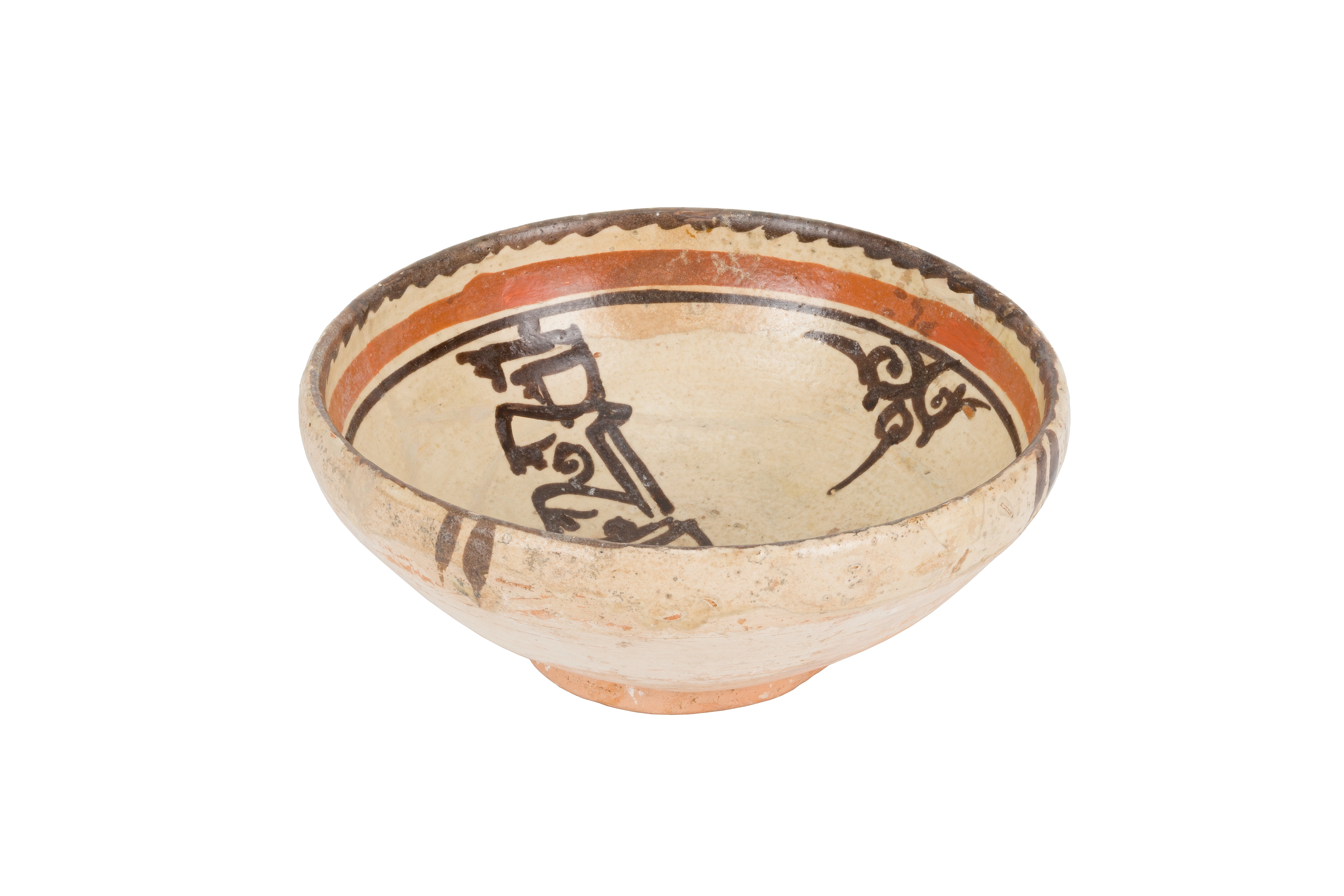
Bowl with Kufic Inscription
Early 11th century CE. Central Asia. Ceramic; engobe. 6.9 × 18.3 cm
Audio guide
Audio available in: UZ
Description
This bowl represents another example of early 11th-century epigraphic ceramics from Central Asia, reflecting the flourishing urban culture of Mawarannahr.
Unlike many similar vessels where inscriptions run continuously along the rim, here the calligraphy is arranged in distinct compositional segments. The Kufic script is so stylized that it begins to resemble vegetal ornament, illustrating a key feature of Islamic art – the transformation of writing into abstract decoration.
The triangular border along the rim also deserves attention. Such rhythmic elements create a visual frame and reinforce the compositional unity of the design.
Technically, the bowl was produced using the regional engobe technique. The white surface was created with a liquid clay coating, while the decoration was painted with mineral pigments before firing. The red band beneath the rim adds visual stability and enhances the architectural balance of the composition.
Objects like this demonstrate how even utilitarian ceramics reflected the intellectual and aesthetic values of Central Asian urban society.