Video available in: UZ
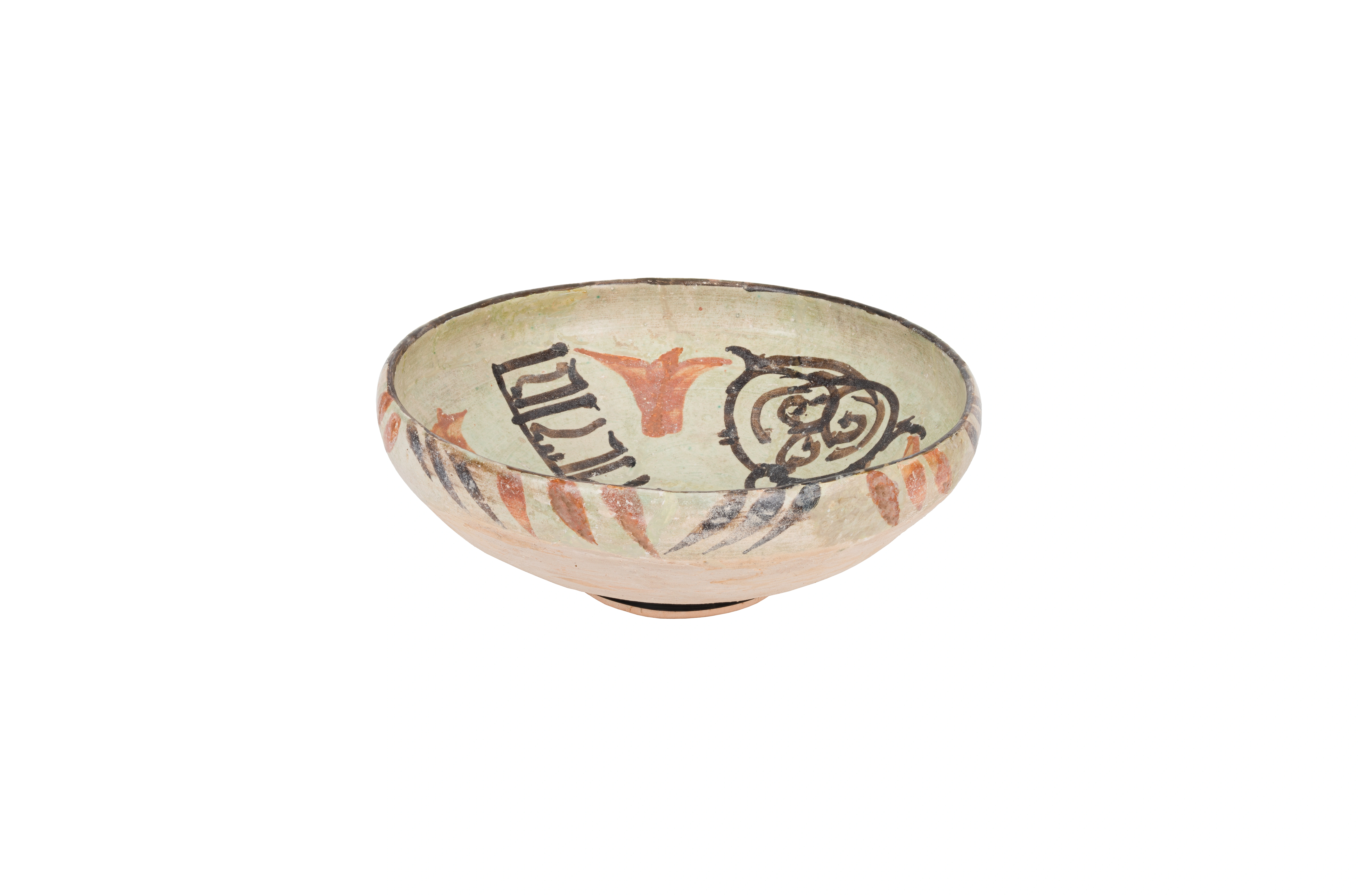
Bowl with Kufic Inscription
Early 11th century CE. Central Asia. Ceramic; engobe. 8.3 × 23 cm
Audio guide
Audio available in: UZ
Description
This bowl dates to the early 11th century, a period when Samarkand was one of the major intellectual centers of the Islamic world and closely associated with the legacy of the theologian Imam al-Maturidi.
The vessel belongs to the tradition of epigraphic ceramics, where calligraphy serves as the principal decorative feature. The inscription is executed in Kufic script, one of the earliest and most monumental forms of Arabic writing. In such objects, text functioned not only as decoration but also as a reflection of social and ethical ideals.
The production technology also reflects a high level of craftsmanship. The white surface was created using an engobe coating, while the black decoration was applied with mineral pigments capable of withstanding high firing temperatures.
The red brushstrokes on the exterior are also significant. Such dynamic painted elements are characteristic of Samarkand workshops and may serve as stylistic markers of production.
Objects like this demonstrate how the culture of knowledge in Central Asia extended beyond manuscripts into everyday material culture.