Video available in: UZ
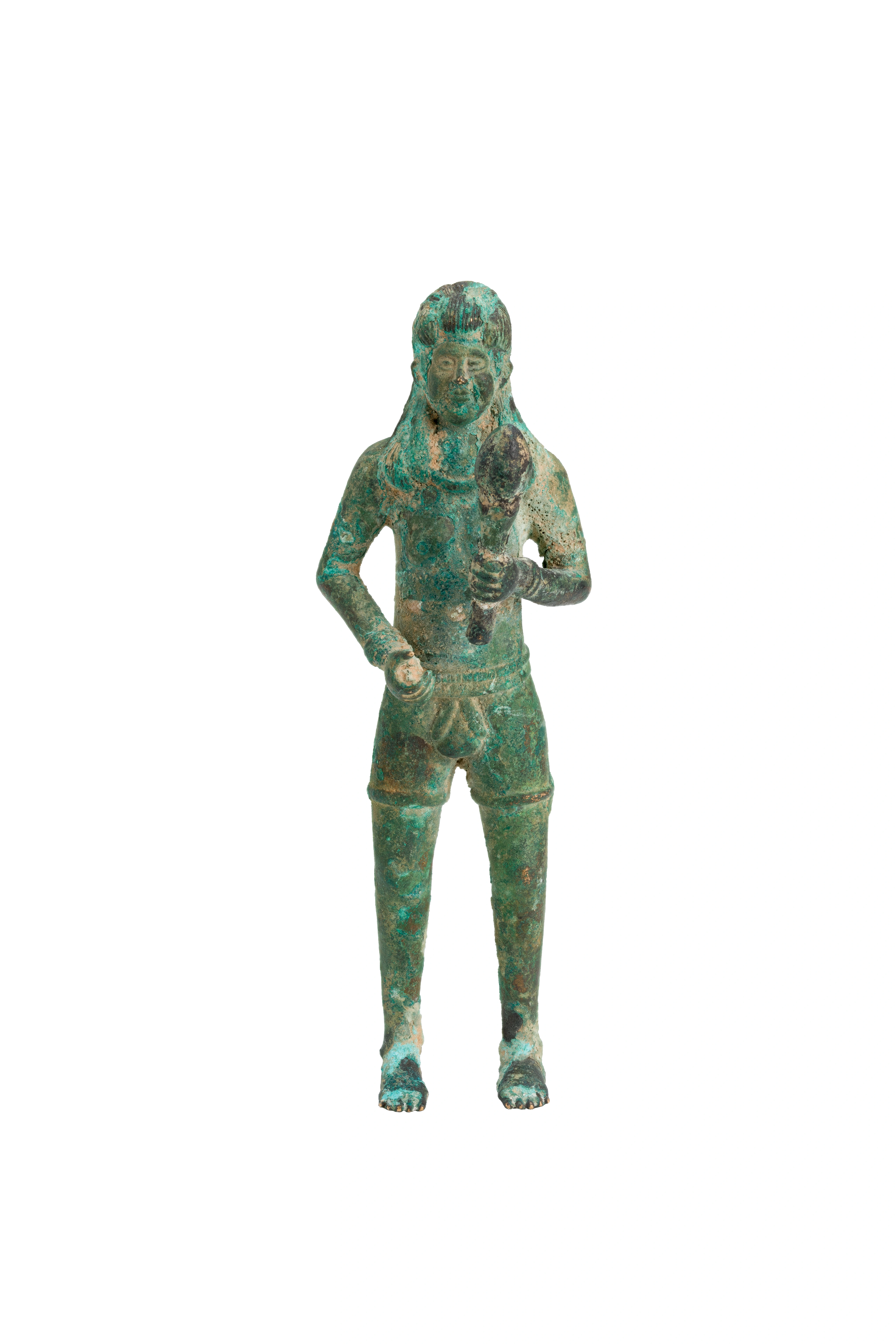
Heracles Figurine
2nd century ВCE. Central Asia. Bronze. H: 19.5 cm
Audio guide
Description
This bronze figurine of Heracles dates to the 2nd century BCE and was discovered at Ai Khanoum, one of the principal centers of the Greco-Bactrian Kingdom.
Founded in the 3rd century BCE, the city developed under strong Greek cultural influence, reflected in its architecture, urban planning, and artistic production.
The figure is rendered in a classical Hellenistic manner, with proportional anatomy, clearly articulated musculature, and a stable frontal stance. In his hand, the hero holds an attribute traditionally associated with his mythological labors — likely a club or other identifying symbol. The modeling and casting technique demonstrate features characteristic of small-scale Hellenistic bronze sculpture.
Objects of this kind illustrate the presence and adaptation of Greco-Mediterranean artistic traditions in Central Asia during the Hellenistic period. Rather than simple imitation, such works reflect the integration of Greek visual language into the local cultural environment of Bactria.