Video available in: UZ
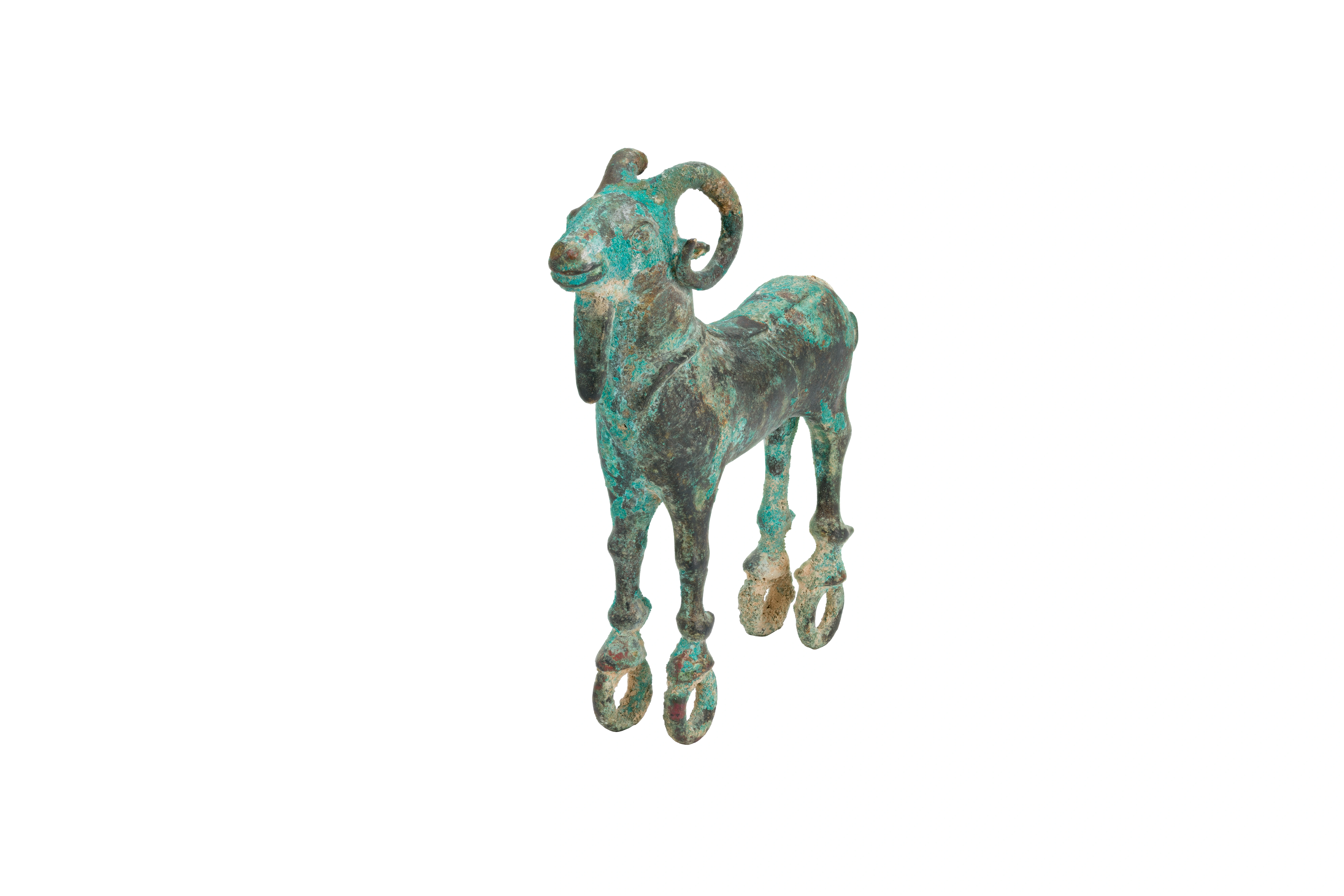
Mountain Goat Figurine
2nd century ВCE. Central Asia. Brass. 13 × 12 сm
Audio guide
Description
This figurine of a mountain goat conveys a sense of poised vitality. Its elongated body, straight legs, and curving horns create a silhouette characteristic of the artistic language of early nomadic societies.
In the 2nd century BCE, the steppe and mountain zones of Central Asia were shaped by migration and cultural exchange. The image of the goat symbolized strength, endurance, and a close relationship with the highland landscape. In nomadic contexts, such figures could serve as harness ornaments, ritual objects, or markers of social status.
The piece was cast in brass, and its surface now bears a green patina—the natural result of long-term oxidation. The modeling is stylized rather than naturalistic, reflecting an aesthetic that favored symbolic clarity over detailed realism.
Through this compact sculpture, we glimpse a worldview in which animal imagery embodied both mythological meaning and social identity.