Video available in: UZ
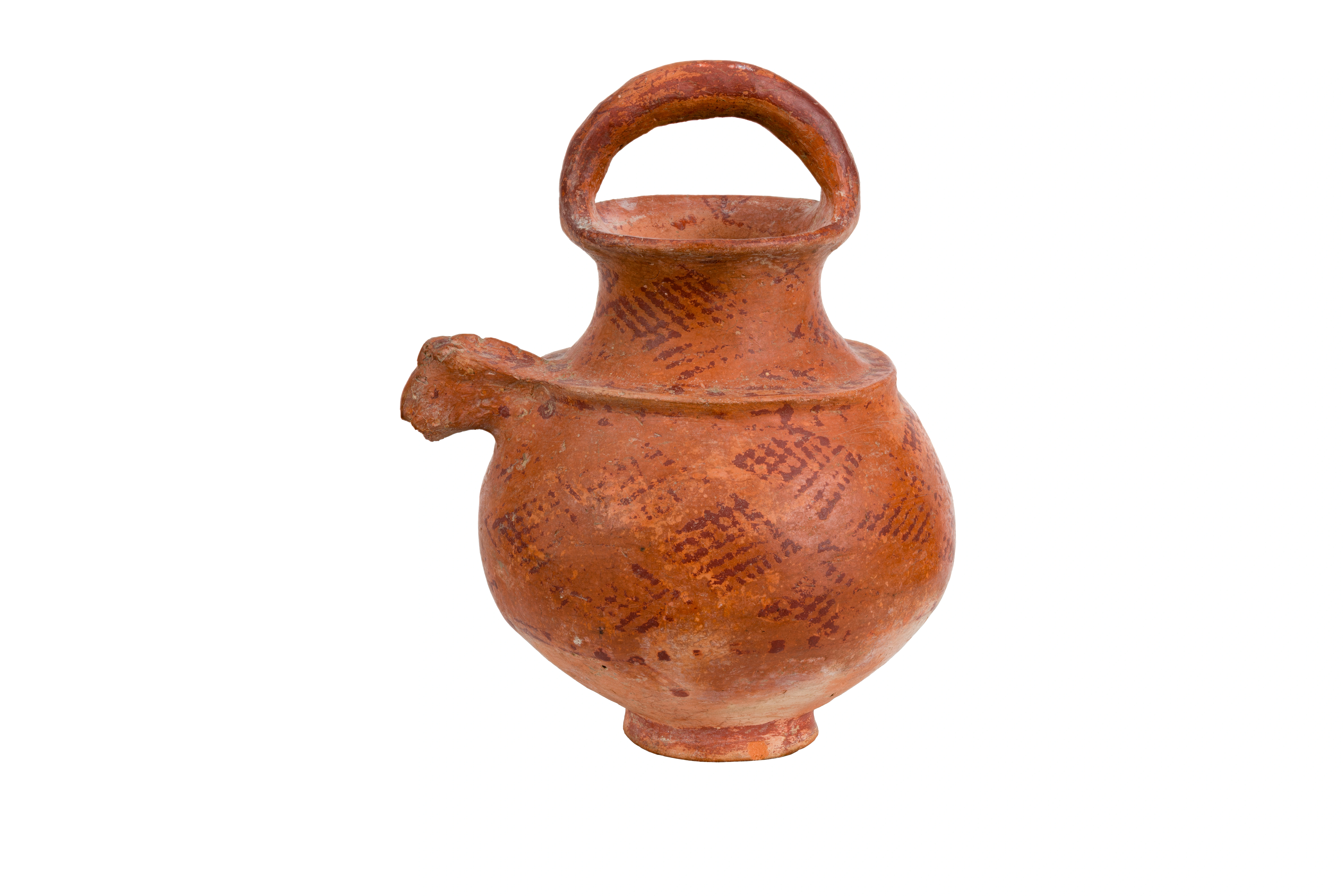
Jug with Handle
4th–1st centuries BCE. Fergana. Ceramic. 19.2 × 13 cm
Audio guide
Description
This is a ceramic jug from Fergana, dated to the 4th–1st centuries BCE. Though modest in size, it reflects the refined and diverse ceramic traditions of Central Asia.
Central Asian pottery is renowned for its variety of forms and the elegance of its craftsmanship. Vessels produced by potters of Bactria, Sogdiana, Margiana, Khorezm, and Fergana, from the Neolithic through the Bronze and Iron Ages are regarded today as rare and valuable archaeological finds.
Fergana artisans created vessels of many sizes, ranging from monumental jars reaching one and a half to two meters in height to small jugs such as this example. Chinese written sources of the 3rd–2nd centuries BCE already mention the ceramics of Fergana.
Hundreds of pottery vessels have been discovered in the ruins of ancient cities of the valley, including Chust, Dalverzintepa, Akhsikat, Mingtepa, Kuva, and Mugtepa. In the early medieval period, a distinctive feature of local pottery was the appearance of inscriptions in Old Turkic runic script placed on the necks, surfaces, and handles of vessels.
This jug stands as evidence of a highly developed craft tradition and the cultural vitality of Fergana long before the flourishing of the Silk Road.