Video available in: UZ
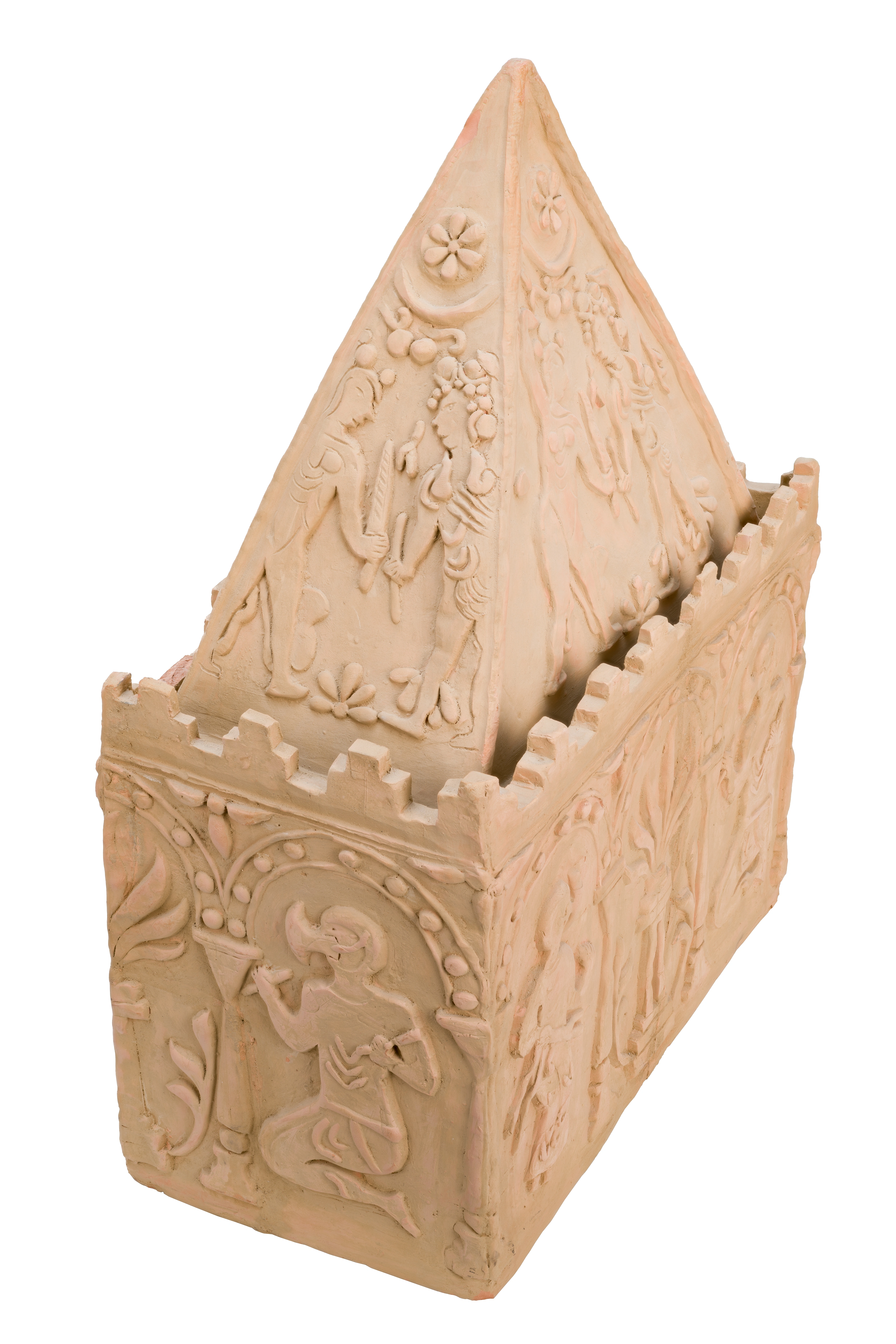
Ossuary
6th century CE. Samarkand. 64.6 × 48.5 × 24.5 sm. Replica
Audio guide
Description
This ossuary is a ceramic container used for storing human bones, typical of Sogdian Zoroastrian practice in the 6th century CE.
In ancient Samarkand, burial rituals followed established religious prescriptions. In Zoroastrian belief, earth, water, and fire were regarded as sacred elements that were not to be polluted by bodily decay. For this reason, the deceased were first exposed in designated locations, where natural processes removed the flesh. The cleansed bones were then collected and placed inside an ossuary.
This example is shaped in the form of a miniature architectural structure with a pitched roof. Its walls are decorated with relief scenes, including human figures, sacred symbols, and representations of the holy fire. Such motifs are commonly interpreted as reflecting Sogdian concepts of the afterlife, divine protection, and the continuation of the soul.
Ossuaries were placed in special niches or funerary structures. They functioned not merely as containers but as ritual objects associated with the soul’s transition to another realm.
The object displayed here is a museum replica created for conservation and exhibition purposes.