Video available in: UZ
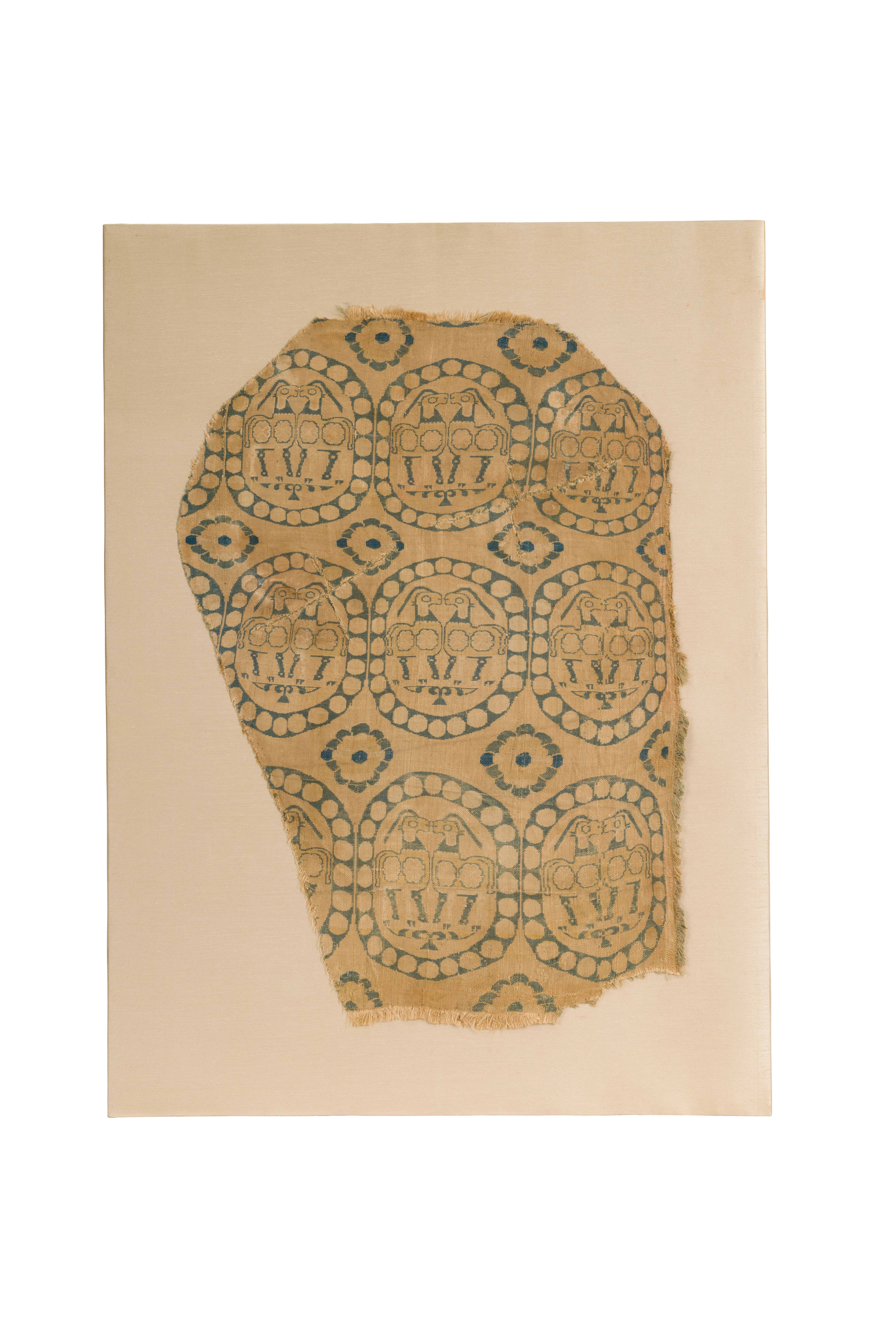
Fabric Fragment Depicting a Pair of Arghars
7th–9th centuries CE. Sogd. Silk, natural dyes. 61.3 × 42 cm
Audio guide
Description
This fragment of Sogdian silk dates to the 7th–9th centuries CE. Within circular medallions, a pair of argali sheep faces one another. Their powerful spiral horns create a dynamic silhouette framed by the characteristic “pearl roundel” motif of Sogdian textiles.
In Sogdian symbolism, the argali represented strength, resilience, and the spirit of the mountains. The paired composition signifies balance and harmony. Textiles of this kind were worn by elites, used in ceremonial garments, and valued as prestigious trade goods along the Silk Road.
Technically, the fabric is woven in the complex samite technique, where patterns are formed through supplementary weft threads. Natural dyes from plants and minerals provided rich blue and ochre tones.
This textile fragment reflects Sogdiana’s central role in shaping artistic traditions that connected East and West across Eurasia.