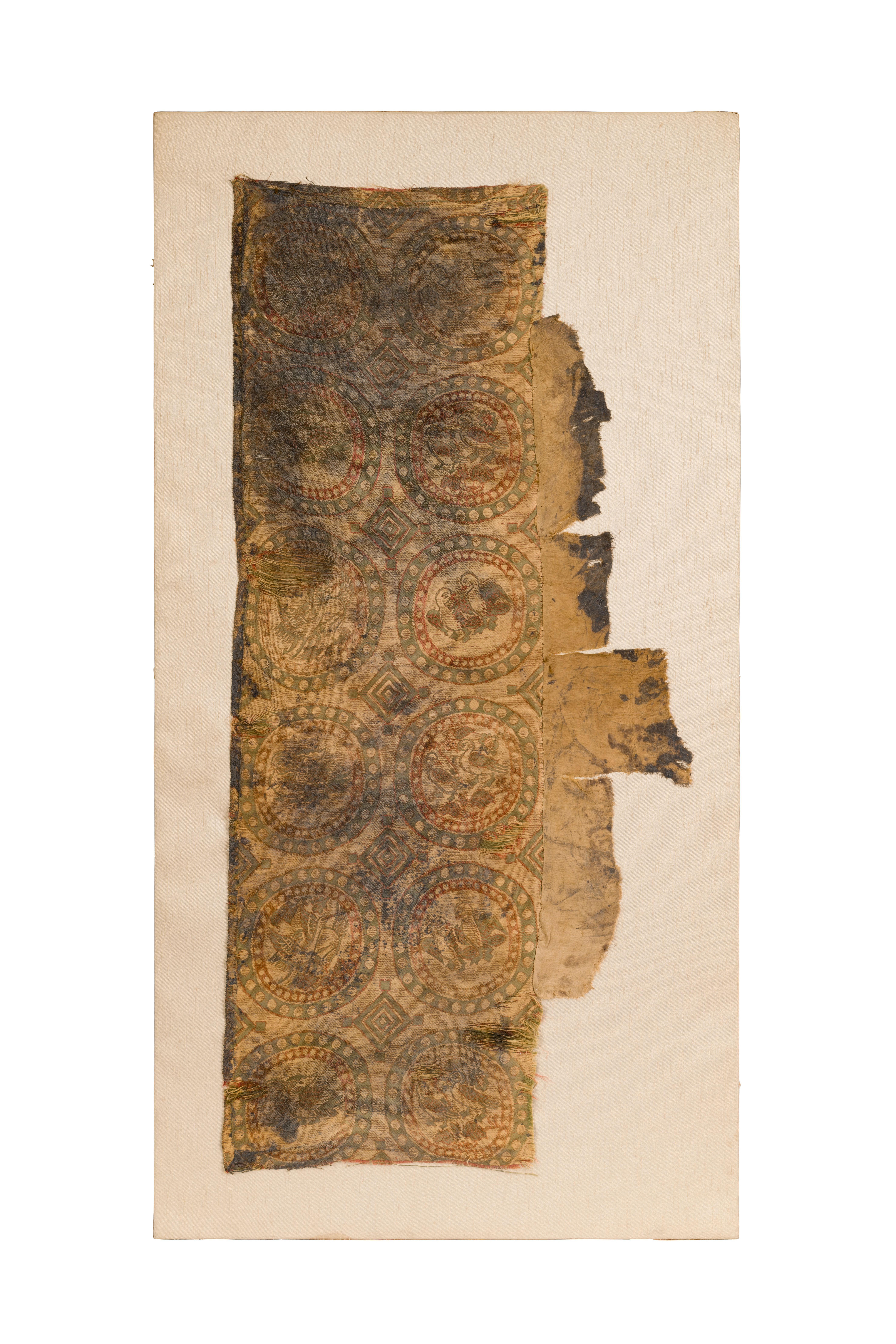
Fabrics Fragment Depicting a Pair of Deers and Ducks (3 pcs)
7th–9th centuries CE. SogdSilk, natural dyes. 49.6 × 27 сm; 64.5 × 30 сm; 61.3 × 84.5 сm
Audio guide
Description
A rhythmic arrangement of circular medallions containing paired animals defines the artistic structure of these silk fragments. Within each roundel, deer and ducks are depicted according to a carefully organized ornamental scheme.
The textiles date to the seventh to ninth centuries CE, a period when Sogd flourished as a major commercial center along the Silk Road. The silk, dyed with natural pigments, demonstrates refined weaving techniques and a balanced color palette. The repetition of medallions creates a sense of order and visual harmony.
Animal imagery carried symbolic meaning. In the Iranian-Sogdian tradition, the deer was associated with vitality and prosperity, while waterfowl suggested abundance and harmony of natural elements. Such fabrics may have served as elite garments, ceremonial textiles, or valuable commodities in caravan exchange.
Sogdian artisans combined local motifs with influences from Iran, China, and the steppe world, forming a visual language recognized far beyond the region.
Within the “Ancient Sogdian Civilization” section, these fragments demonstrate how textile art functioned as a medium of status, symbolism, and intercultural interaction along the Silk Road.