Video available in: UZ
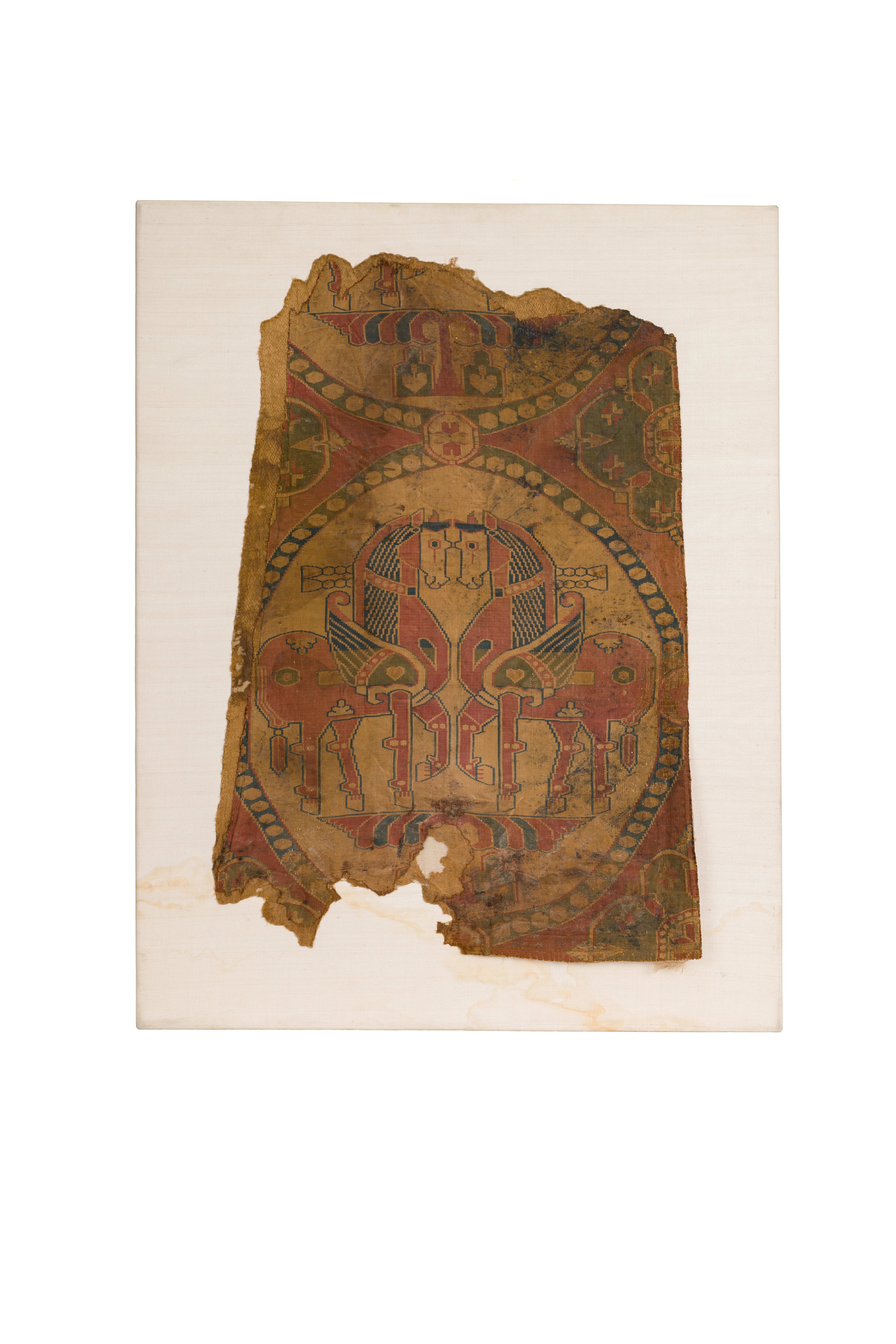
Sogdian Fabrics Collection
6th–8th centuries CE. Silk, natural dyes. 65 × 45.3 cm; 51.8 × 66.6 cm
Audio guide
Description
You are looking at rare examples of Sogdian silk dating to the 6th–8th centuries CE, produced during a period of intense activity along the Silk Roads.
At that time, Sogdiana served as a key intermediary between China, Iran, and the Mediterranean world.
The ornament is arranged within large pearl-bordered medallions, a hallmark of Sogdian textile design. Inside these circular frames appear frontal figures, fantastic beings, and stylized vegetal motifs. Paired imagery is often interpreted as symbolizing harmony and cosmic balance.
These textiles were woven in the sophisticated samite technique, a complex weft-faced compound twill. The pattern was not painted but structurally integrated into the fabric through the use of colored weft threads. Natural dyes, including madder and indigo, were employed.
Sogdian silks were luxury commodities valued from Byzantium to Japan. Comparable fabrics have been discovered in European reliquaries, Chinese tombs, and Japanese imperial treasuries. These fragments attest to the far-reaching artistic influence of Central Asia across Eurasia.