Video available in: UZ
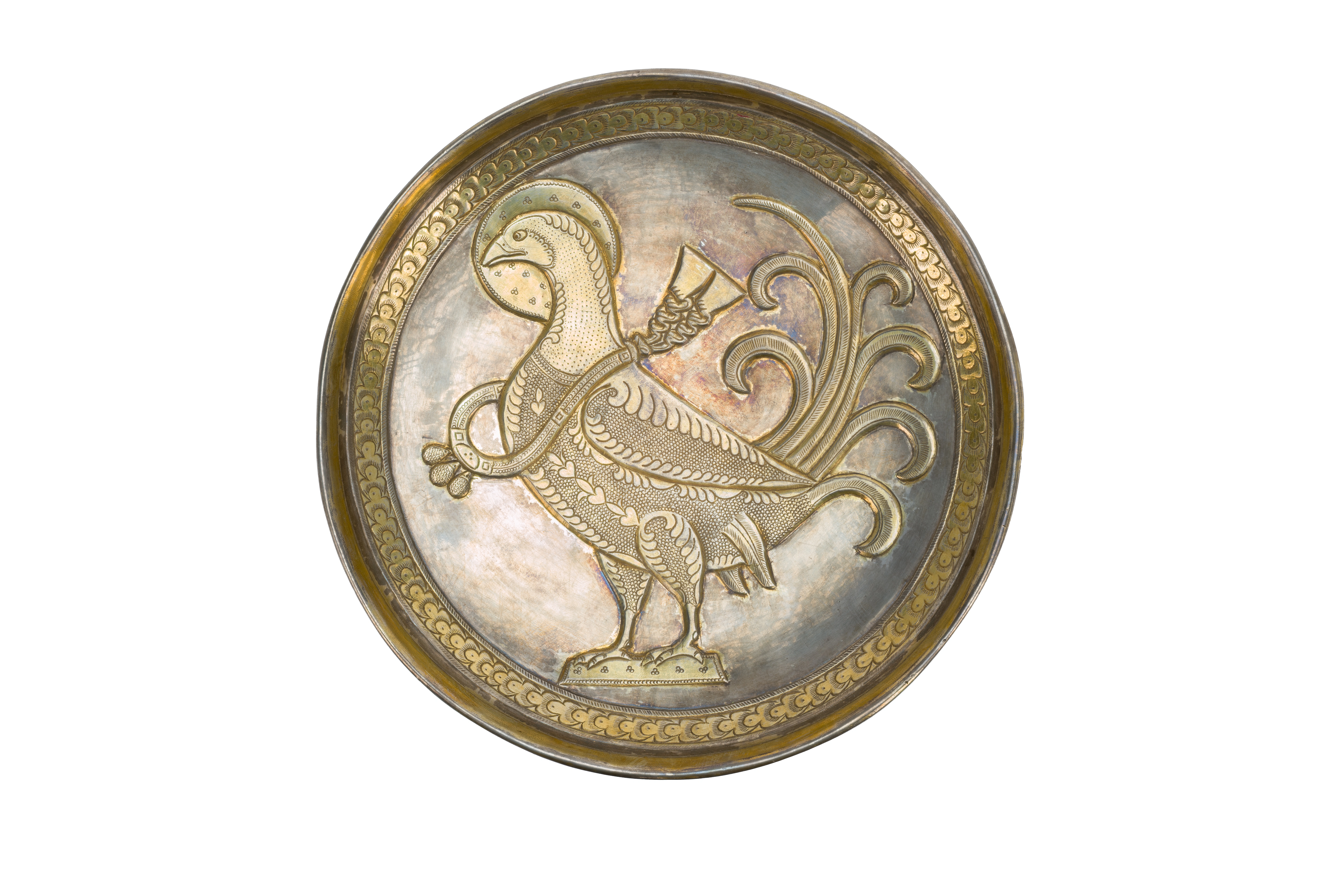
Lagan (Dish) with a Bird Design
5th–8th centuries CE. Central Asia. Silver. 4.5 × 21.5 cm
Audio guide
Description
This silver lagan dates to the 5th–8th centuries CE, a period marked by the flourishing of Sogdian metalwork.
At its center stands a bird with an elongated, sweeping tail. The figure is defined by fine engraving and gilded details. Rather than a naturalistic representation, the image appears symbolic. In Sogdian art, such birds are commonly associated with royal authority and divine favor.
The dish was produced through hammering, repoussé, and engraving. A sheet of silver was shaped by hammering; the relief was raised from the reverse and subsequently refined on the obverse with chasing tools. Selected areas were gilded to enhance visual contrast.
Comparable dishes have been discovered across Central Asia, the Altai region, China, and the Volga basin. They functioned not only as tableware but also as prestigious diplomatic gifts, serving as material expressions of Sogdian artistic and technological achievement along the Silk Roads.