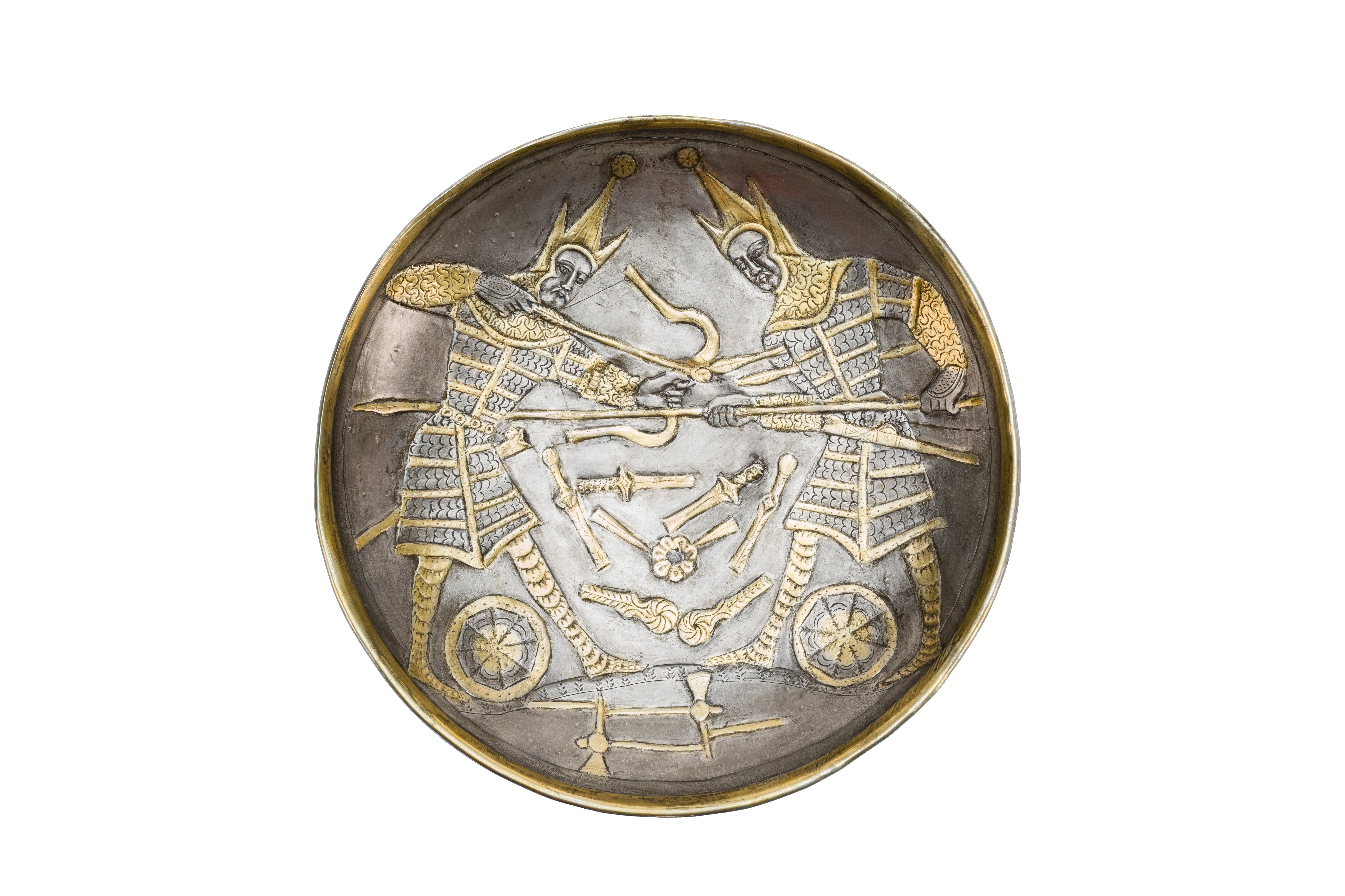
Lagan (Dish) with Warriors Design
6th–7th centuries CE. Central Asia. Silver. 5.6 × 21.8 cm
Audio guide
Description
This silver lagan dates to the 6th–7th centuries CE, a period during which Sogdian cities flourished and trade intensified along the Silk Roads.
At the center, two armored warriors face one another, their spears crossed in a dynamic confrontation. They wear tall helmets or crown-like headgear and scale or lamellar armor. Beneath them appear stylized weapons and wheel motifs, forming a carefully structured composition.
Dishes of this type were not merely utilitarian tableware but prestige objects associated with elite contexts. The iconography resonates with Iranian artistic traditions, in which combat scenes conveyed ideas of royal charisma and military authority.
Technically, the plate was formed by hammering a sheet of silver into shape. The relief was raised from the reverse using repoussé and subsequently refined with chasing and engraving on the obverse. Certain elements may originally have been gilded to enhance contrast and visual effect.
Comparable plates have been discovered across a wide geographic area, from the Altai region to the Volga basin. They functioned not only as luxury items but also as visual expressions of political and cultural identity.