Anikova Plate
8th century CE. Central Asia. Silver. 3.9 × 23.8 cm
Audio guide
Audio available in: UZ
Description
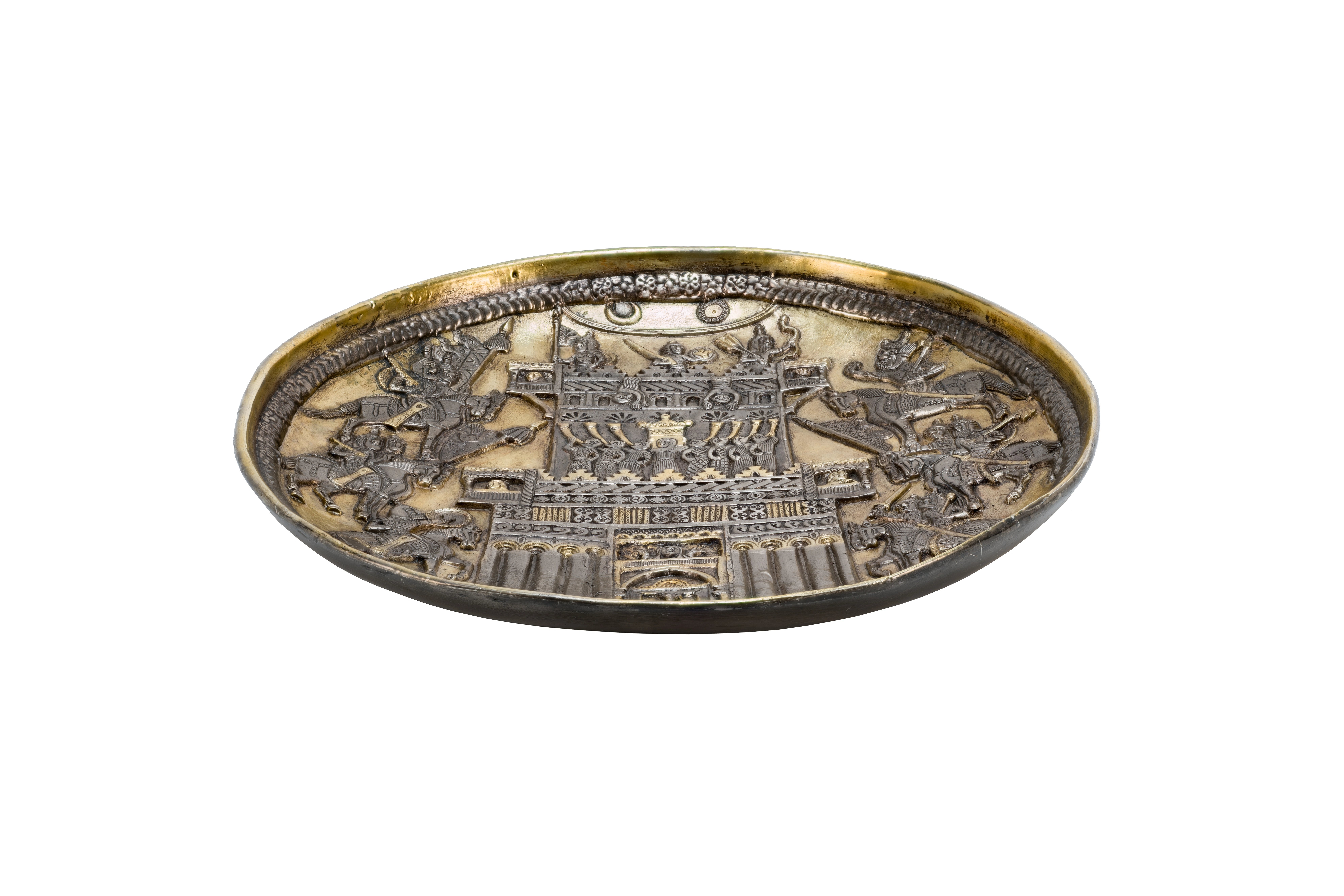
The complex multi-figure composition of this silver plate is structured around a central architectural element resembling a fortified structure or palace. Such compositional organization is characteristic of Sogdian art of the 8th century, when Central Asian cities functioned as major hubs of trade and cultural exchange along the Silk Road.
In the upper section, warriors are depicted standing on walls and towers, armed with spears and shields. Their poses suggest dynamic action, possibly representing a siege or defensive scenario. On both sides, mounted combat scenes unfold, showing riders engaged in battle with spears and weapons, reflecting a military culture shaped by both sedentary and nomadic traditions.
The central area is emphasized through symmetry and architectural detailing, including columns, arches, and decorative bands, conveying an image of monumental construction. The entire composition may be interpreted as a symbolic representation of authority, protection, and organized governance.
The plate was produced using repoussé, followed by engraving and partial gilding, creating contrast between background and figures. Such objects belong to the highest level of Sogdian metalwork and were likely used in elite contexts.
This plate exemplifies the independent visual language of pre-Islamic Central Asia, combining military imagery, architectural symbolism, and concepts of social order.