Video available in: UZ
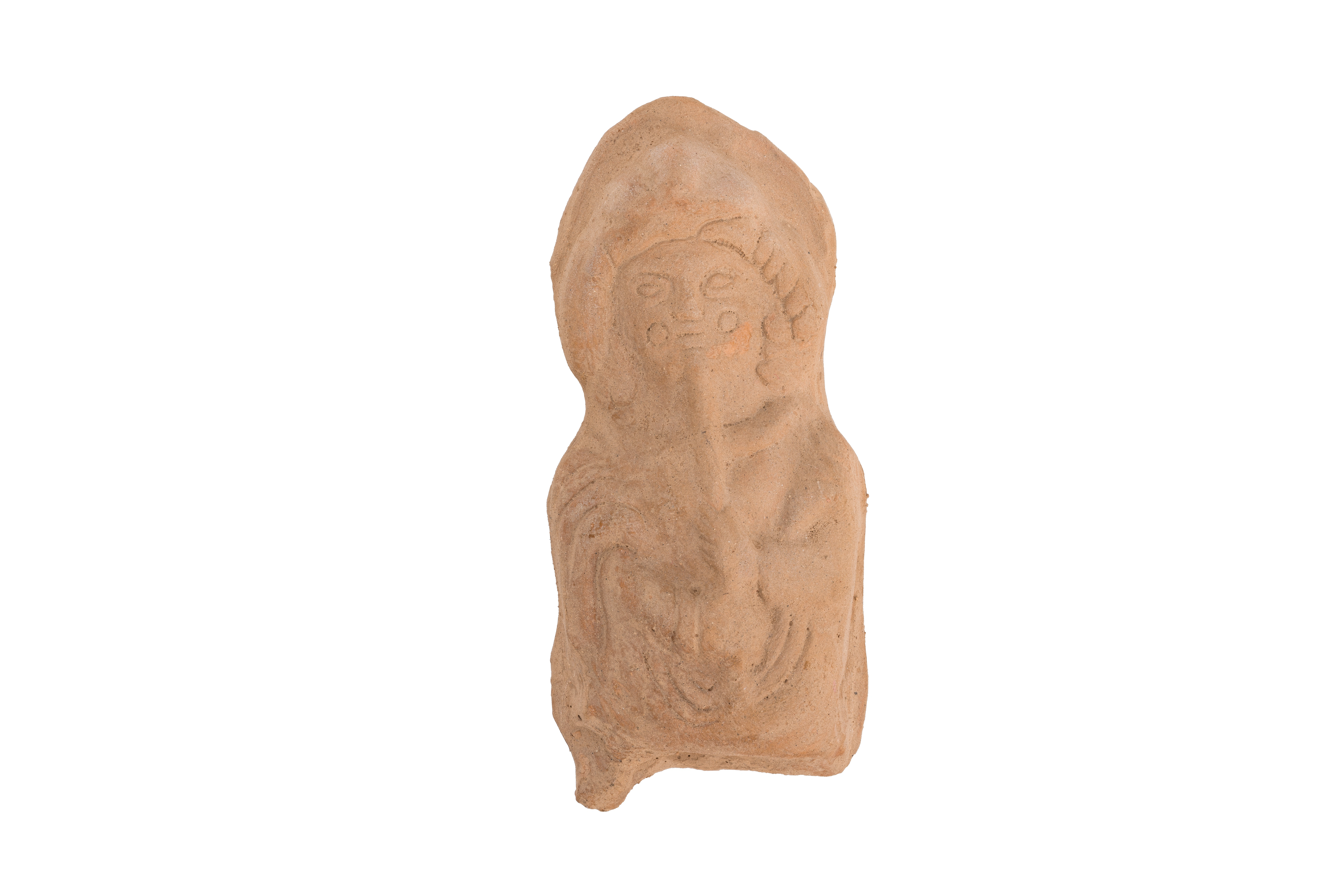
Figurine of a Woman Playing a Flute
2nd millennium BCE. Afrasiab, Samarkand. Ceramic. 9.5 × 4.2 cm
Audio guide
Description
This small terracotta figurine depicts a woman playing a flute, identified as a nay.
It dates to the second millennium BCE, during the Bronze Age, when early settled cultures were developing in the Zarafshan Valley.
The figure was shaped from clay and fired in a kiln. Despite its modest size, the sculptor carefully modeled the facial features, headdress, and the gesture of the hands holding the instrument to the mouth. Rather than representing a purely domestic scene, the image may reflect ritual or symbolic significance.
The nay is among the oldest known wind instruments, traditionally made from reed. Comparable flutes are attested in ancient Mesopotamia, Egypt, and Central Asia, indicating the widespread presence of musical traditions in early civilizations.
This figurine provides insight into the role of music within the spiritual and social life of Bronze Age communities.