Video available in: UZ
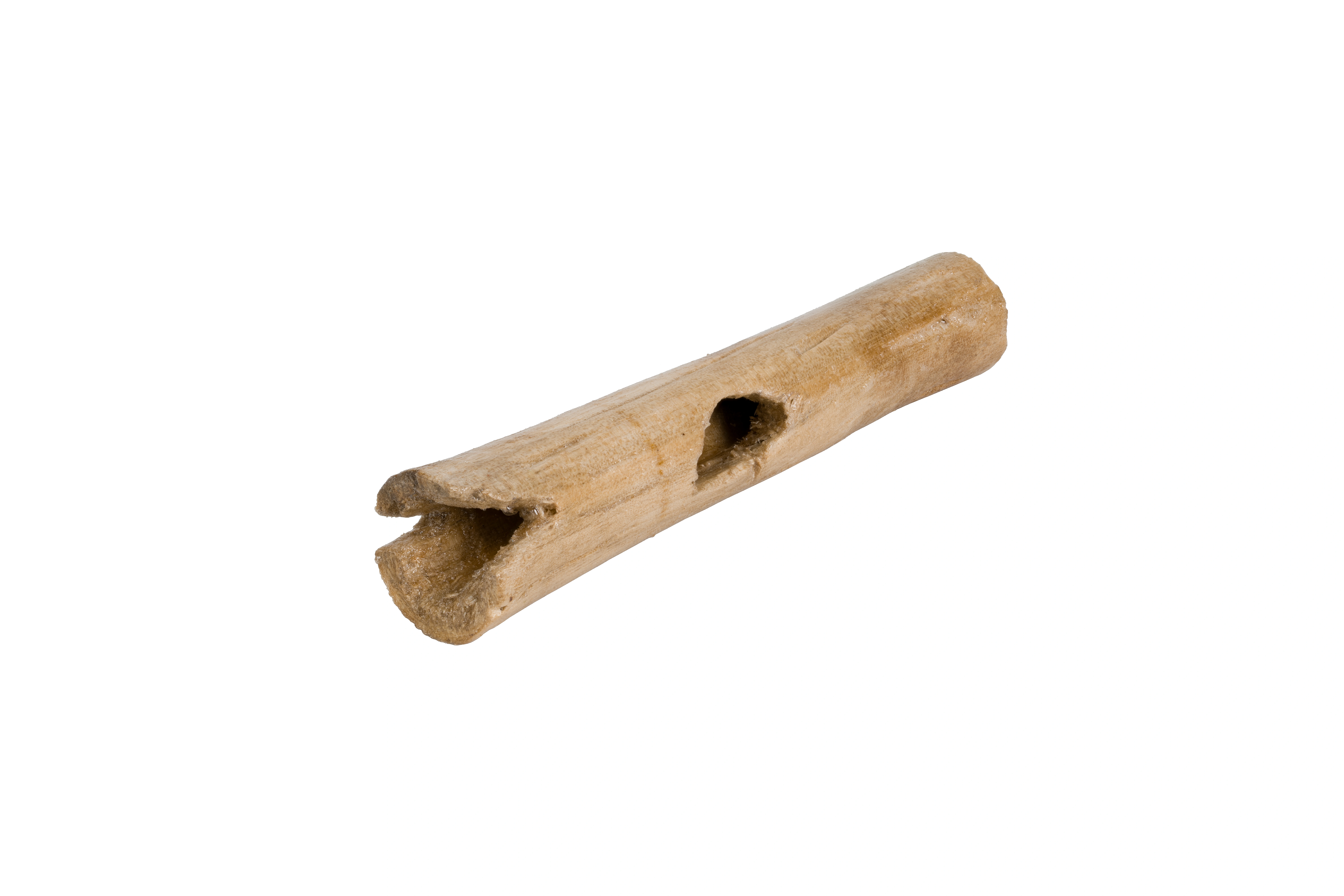
Nay (Flute)
2nd millennium BCE. Muminabad, Samarkand. Bone. 8.3 × 1.7 cm
Audio guide
Description
This is one of the earliest musical instruments discovered in Central Asia — a bone flute, or nay, dating to the second millennium BCE.
The instrument was fashioned from a hollow long bone. The maker carefully carved a sound opening and shaped the air channel. Although simple in appearance, its production required precision: the length of the tube and the thickness of the walls influenced tonal stability.
Comparable flutes are attested in Bronze Age contexts in Mesopotamia, Egypt, and Central Asia. Such instruments were used not only for music but may also have been associated with ritual practices, in which sound was understood as a medium connecting the human and spiritual realms.
During this period, early agricultural societies were developing in the Zarafshan Valley. Music likely accompanied ceremonies, seasonal observances, and possibly funerary rites.
This flute provides evidence of an early and enduring musical tradition in the region.