Video available in: UZ
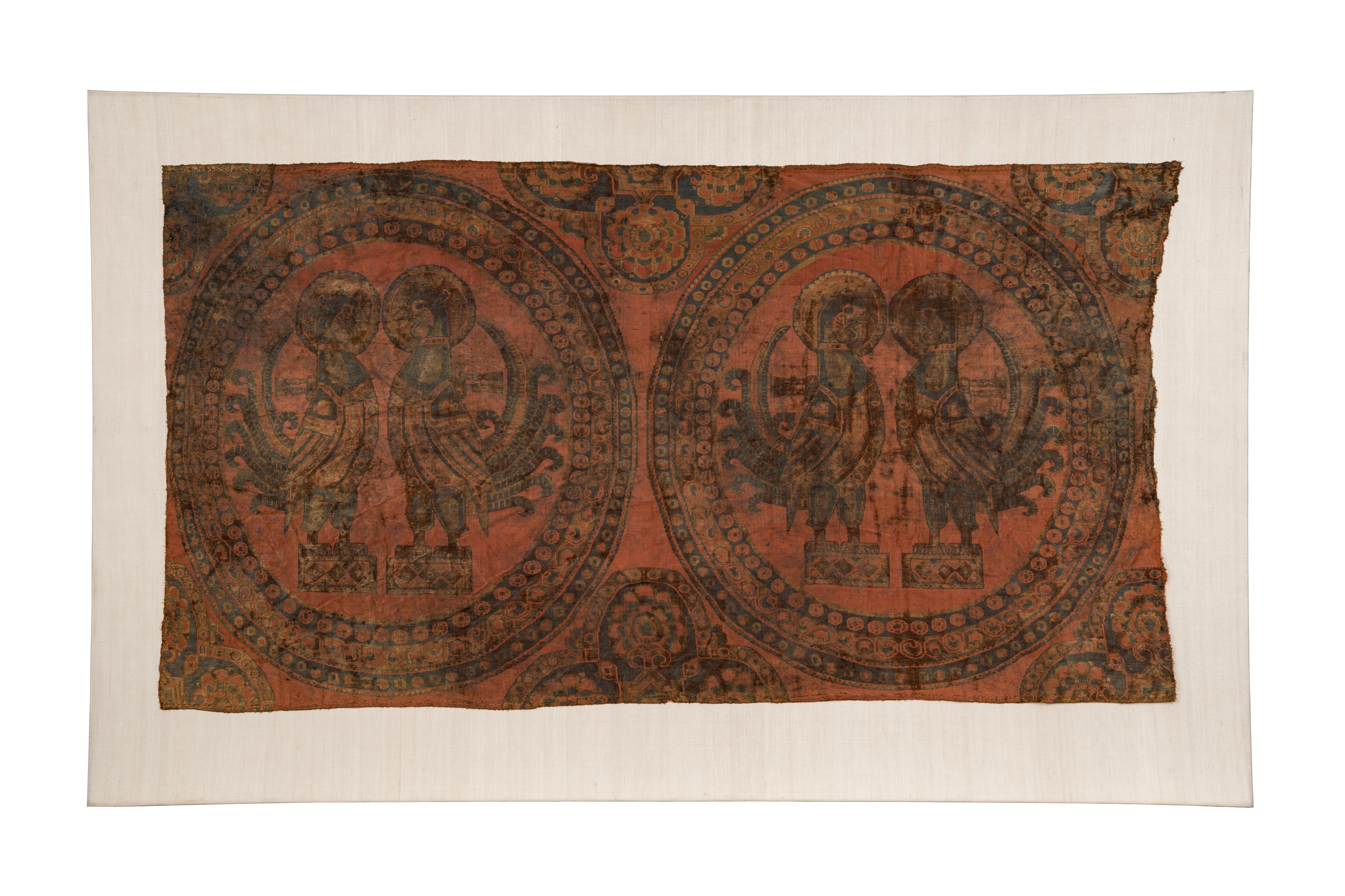
Fabric Fragment with a Pair of Birds
7th–9th centuries CE. Central Asia. Silk. 101.9 × 54.7 cm
Audio guide
Description
You are looking at a large fragment of Sogdian silk dating to the 7th–9th centuries CE.
Within circular medallions appear two birds facing one another — a symmetrical, confronted composition characteristic of Sogdian textile design.
In Sogdian symbolism, birds are often associated with divine glory, known in Iranian tradition as farn. Their pairing may have conveyed ideas of harmony, prosperity, and cosmic balance. The medallions are framed by a distinctive “pearl roundel” border derived from Central Asia traditions.
The textile was likely woven in the samite technique — a complex weft-faced compound twill. This advanced structure allowed multicolored patterns to be created through supplementary weft threads, producing durable and richly ornamented fabrics. Comparable silks circulated widely along the Silk Roads, reaching China, Byzantium, and other regions, where they were valued as luxury and ceremonial textiles.
This fragment reflects the shared artistic vocabulary of early medieval Eurasia and the central role of Sogdiana in the transmission of textile design.