Video available in: UZ
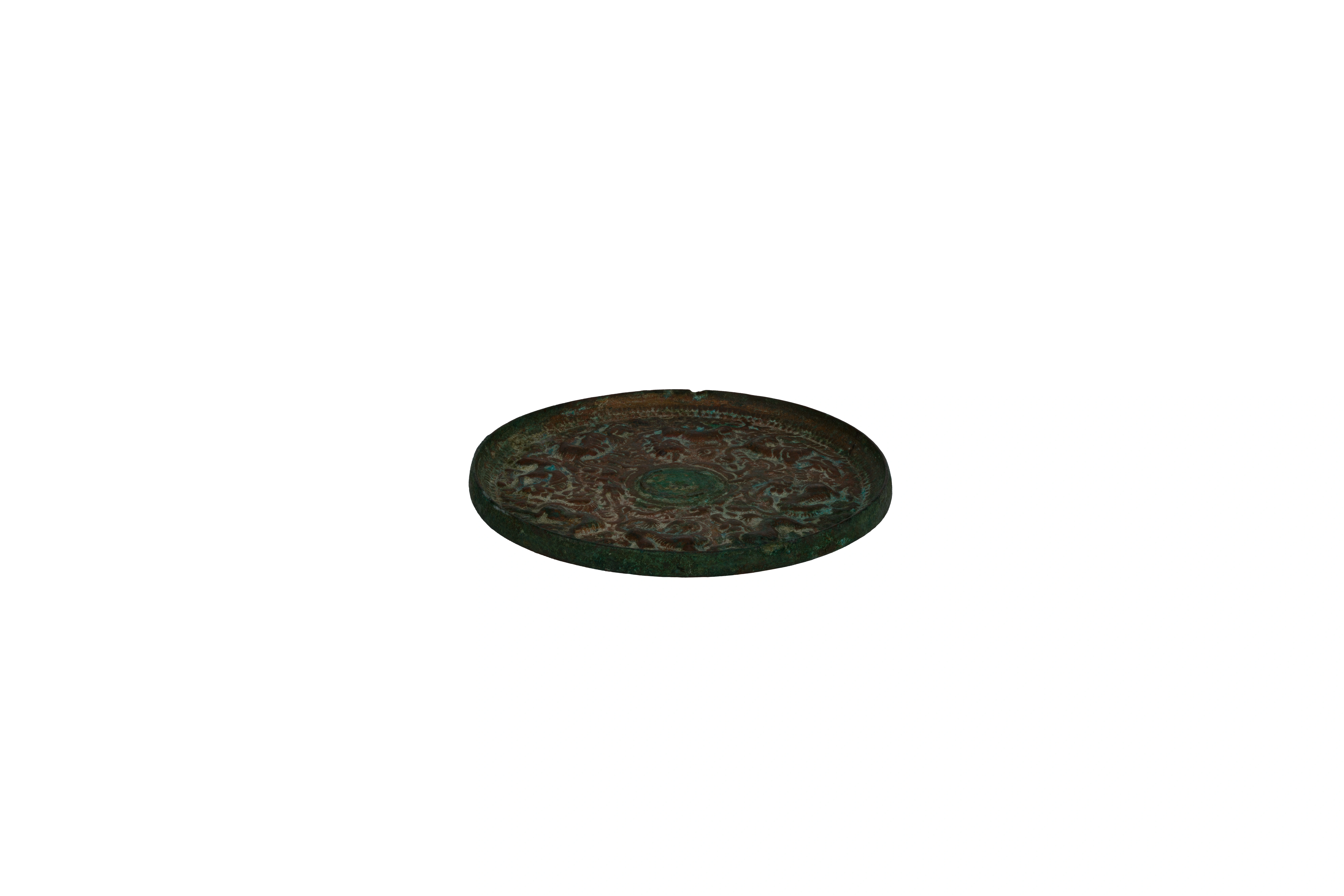
Mirror with an Animal Design
7th–8th centuries CE. Central Asia. Bronze. 13.4 × 0.7 cm
Audio guide
Description
This bronze mirror dates to the 7th–8th centuries CE and is decorated with a relief image of an animal.
In early medieval Central Asia, mirrors were not merely household objects but items imbued with symbolic significance. The polished surface served for reflection, while the reverse was often adorned with mythological or emblematic imagery.
On the back of this mirror, an animal figure is arranged within a circular composition. Such motifs are commonly interpreted as symbols of power, protection, and cosmic order. In the artistic traditions of the period, animals — whether real or mythical — were understood as guardians and mediators between the human and spiritual realms.
The circular form of the mirror may have reinforced these associations, as the circle was widely regarded as a symbol of wholeness and continuity. The object thus combined practical function with symbolic meaning, reflecting not only the image of its owner but also aspects of the cultural worldview of its time.