Video available in: UZ
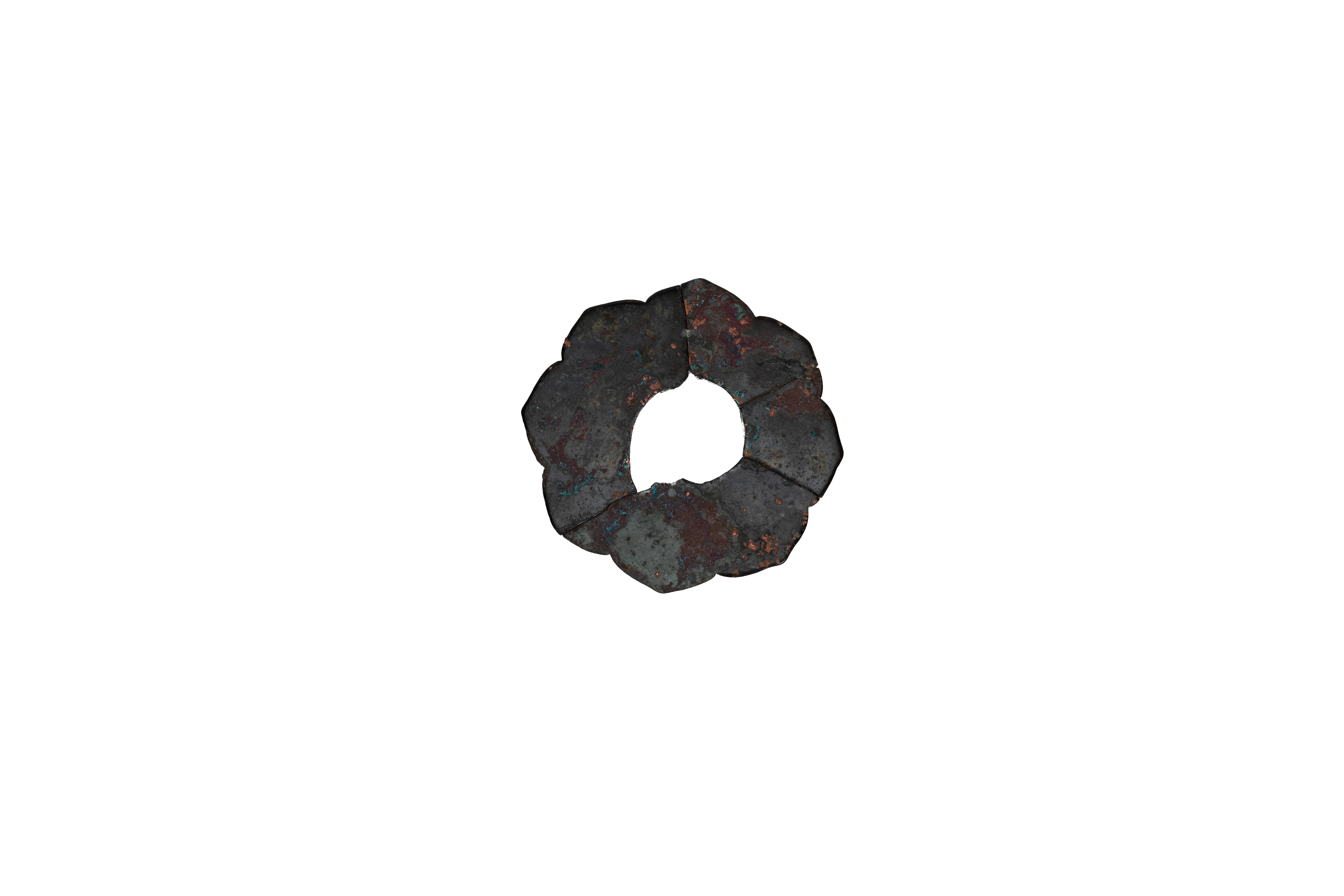
Mirror
7th–8th centuries CE. Central Asia. Bronze. 9.7 × 0.4 cm
Audio guide
Description
You are looking at a bronze mirror dating to the 7th–8th centuries CE, a period marked by the formation of early medieval states in Central Asia.
During this time, mirrors were not merely practical objects; they also functioned as symbols of status, refinement, and, in some contexts, ritual protection. The bronze surface was carefully polished to produce a reflective plane, while the reverse was often decorated with vegetal, geometric, or symbolic motifs.
Such mirrors have been found in both urban contexts and burial settings, indicating their role in daily life as well as in ritual practice. Across the region, mirrors were associated with concepts of light, purity, and spiritual reflection.
The 7th–8th centuries were characterized by intense cultural exchange between Sogdiana, Tokharistan, Khorezm, Tang China, Iran, and the steppe world. Through these networks, artistic forms and bronze-casting techniques circulated widely.
With a diameter of 9.8 centimeters, this object was likely a personal possession. It attests to refined craftsmanship and to the interconnected cultural landscape of early medieval Central Asia.