Video available in: UZ
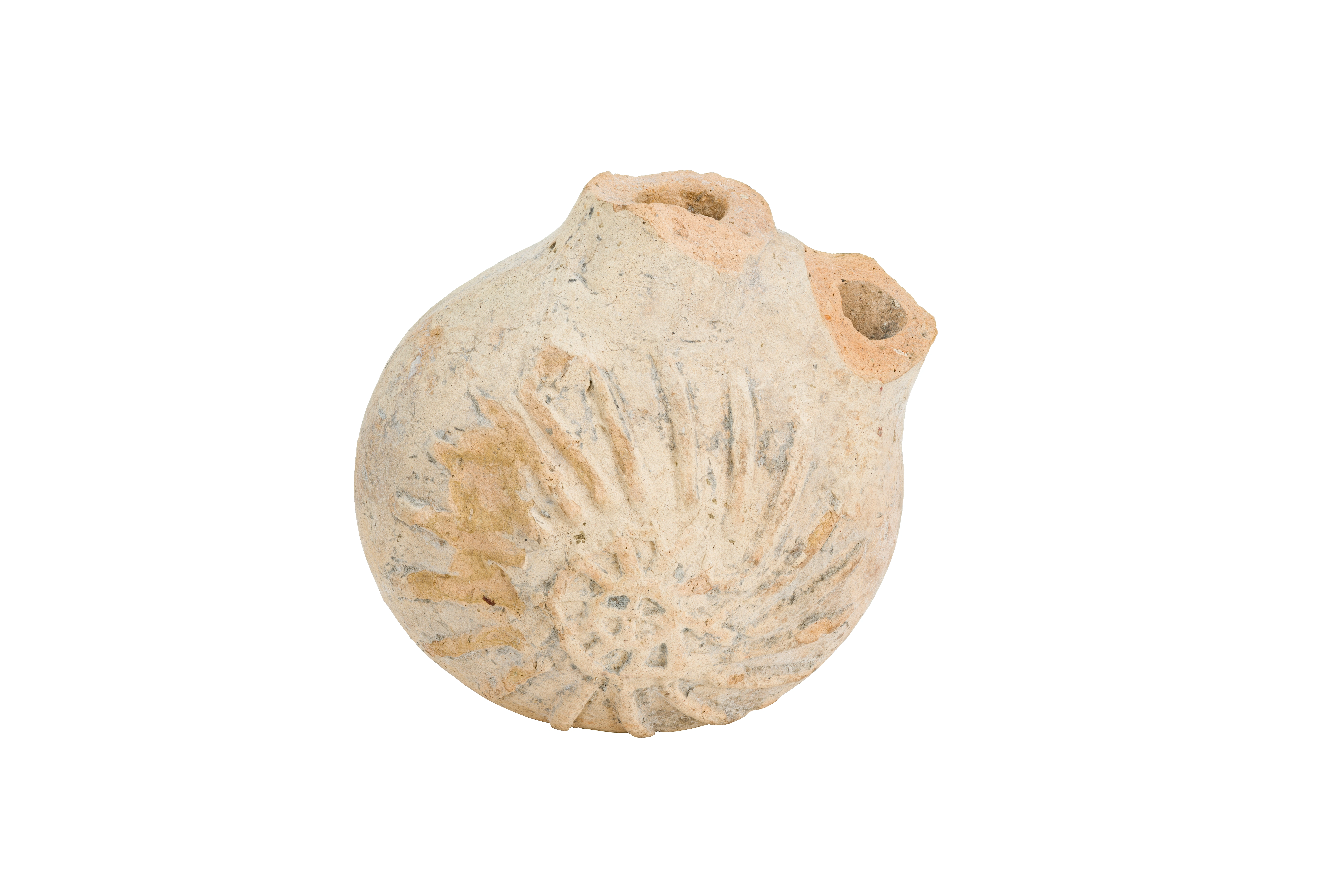
Vessel with Sun-like Relief Pattern
2nd–1st centuries BCE. Samarkand Region. Сeramic. 12.1 × 12 cm
Audio guide
Description
This ceramic vessel dates to the 2nd–1st centuries BCE and was discovered in the Samarkand Region.
Its surface is decorated with a relief motif of the sun — a central disk with radiating rays, one of the most ancient and enduring symbols in human culture.
In the pre-Islamic civilizations of Central Asia, the sun was understood as a source of life, light, and cosmic order. Such imagery was closely associated with agricultural cults and concepts of cyclical time. The relief ornament was not merely decorative; it imbued the vessel with symbolic meaning and likely connected it to ritual or ceremonial practice.
The form, featuring two openings, suggests a specialized function. It may have been used for storing or pouring liquids within ritual contexts. The handmade technique and applied relief decoration reflect the developed craft traditions of the region.
This vessel attests to the complexity of early spiritual and artistic systems in Central Asia. The solar symbol expressed a worldview in which humanity was understood as part of a larger cosmic order.