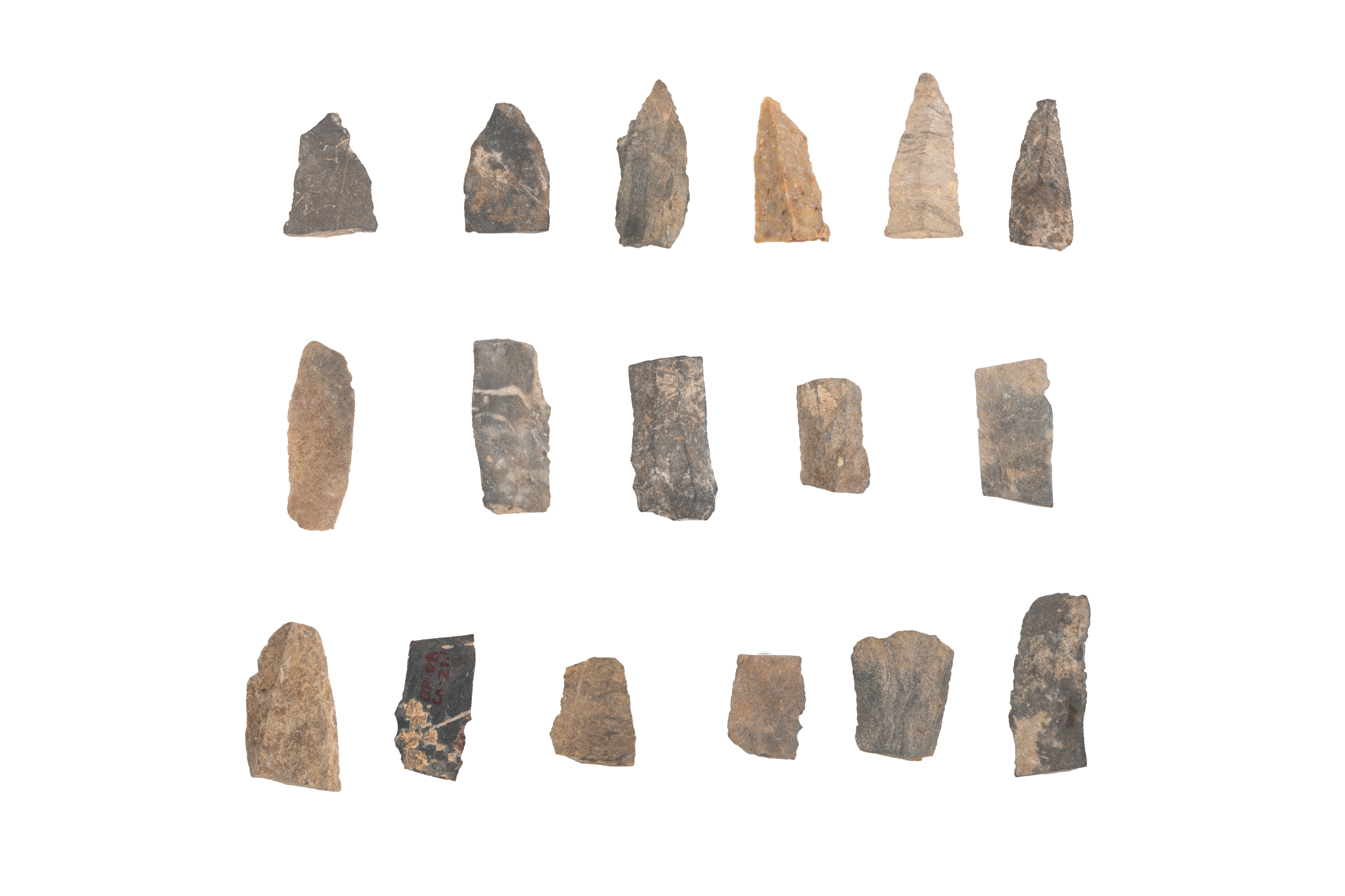
Stone Tools and Arrowheads
Middle Paleolithic. 80 thousand years ago. Obi-Rakhmat grotto. Tashkent Region. Stone. Dimensions vary
Audio guide
Description
These small flint blades and arrowheads represent one of the earliest chapters in the history of human occupation in the territory of present-day Uzbekistan. They originate from the Obi-Rakhmat Cave in the Tashkent Region and date to the Middle Paleolithic, approximately 80,000 years ago.
The tools were produced through controlled flaking, creating sharp cutting edges through precise strikes. Such implements were used for processing meat, hides, and wood, as well as for hunting. The presence of projectile points suggests developed hunting strategies and coordinated group activity.
The Obi-Rakhmat Cave is one of the key archaeological sites in Central Asia, preserving evidence of ancient human occupation, including Neanderthals and early Homo sapiens. These finds illustrate human adaptation to mountainous and steppe environments and the effective use of natural resources.
As part of the introductory section, these objects place the visitor within the deep chronology of human development, long before the emergence of urban culture and written traditions.