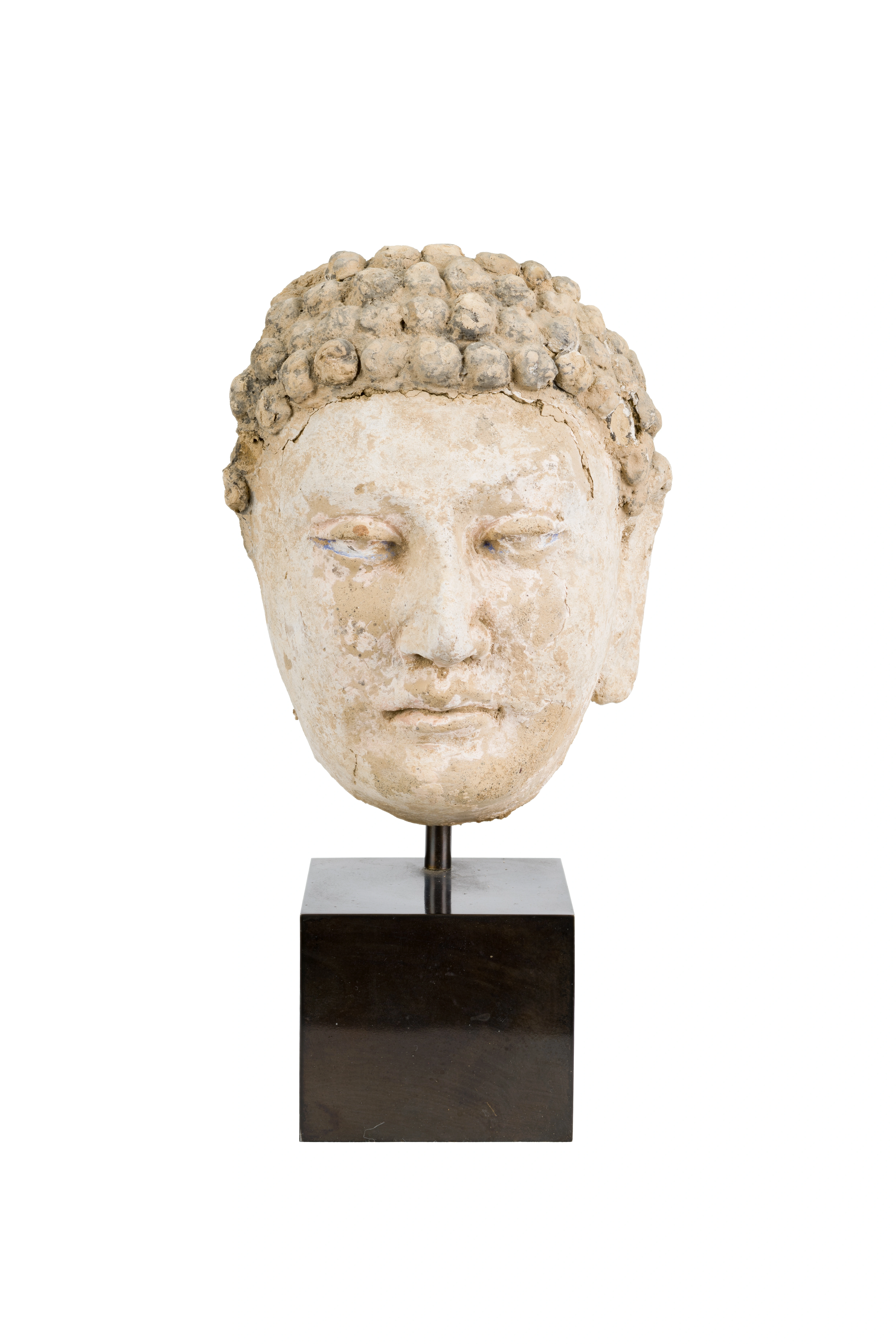
Head of Buddha
2nd–4th centuries CE. Surkhandarya Region. Gypsum. 19.1 × 15.6 cm; With podium: 29.7 × 15.6 cm
Audio guide
Description
This head of the Buddha was created between the 2nd and 4th centuries CE in the region of present-day Surkhandarya, part of ancient Bactria.
At that time, Central Asia lay along the Great Silk Road, where Indian, Iranian, and Hellenistic artistic traditions intersected.
The Buddha’s face is rendered with soft features, a serene expression, and the characteristic treatment of curled hair. These elements reflect the established artistic canon of Buddhist imagery, shaped under the influence of Gandhara, where Hellenistic sculptural traditions merged with Indian spiritual concepts.
Such sculptures adorned monasteries and temple complexes, serving as objects of veneration and meditation. Through images of this kind, Buddhist philosophy spread along the trade routes of Central Asia.
This fragment reflects the cultural diversity of the region’s pre-Islamic past and its openness to external influences long before the rise of the Islamic era.