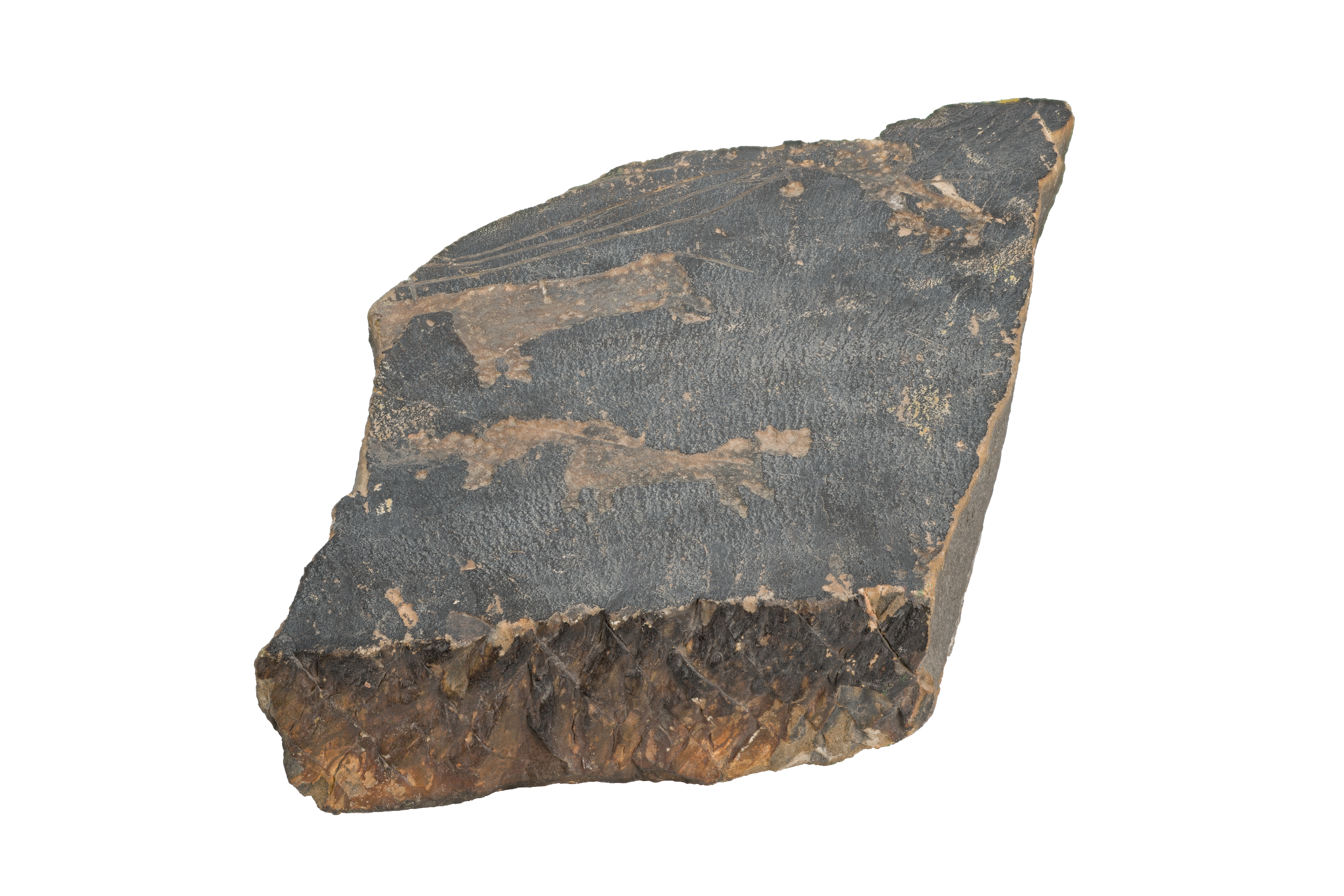
Sarmishsoy Petroglyphs
2nd–1st BCE. Chirokchi Region. Stone. 38.3 × 24 × 7 cm
Audio guide
Description
This fragment of a stone slab bearing incised images is part of the ancient cultural heritage of Central Asia. It originates from the Sarmishsoy rock art complex and dates to the 2nd–1st centuries BCE.
The figures were created by pecking and incising the stone surface. The silhouettes of animals—most likely mountain goats or other representatives of the local fauna—are clearly recognizable. Their elongated bodies and accentuated horns are rendered in concise, confident lines. This stylistic approach is characteristic of the rock art of nomadic and semi-nomadic societies, in which hunting and herding played a central role.
The Sarmishsoy complex includes thousands of petroglyphs from different periods, ranging from the Bronze Age to historical times. These images reflect the development of stable visual symbols and shared representations of the surrounding world. They may have served ritual, narrative, or symbolic functions.
Within the section “Civilizations of the Pre-Islamic Period,” this object highlights the depth of the region’s artistic tradition, demonstrating the existence of sophisticated forms of visual expression long before the emergence of writing.