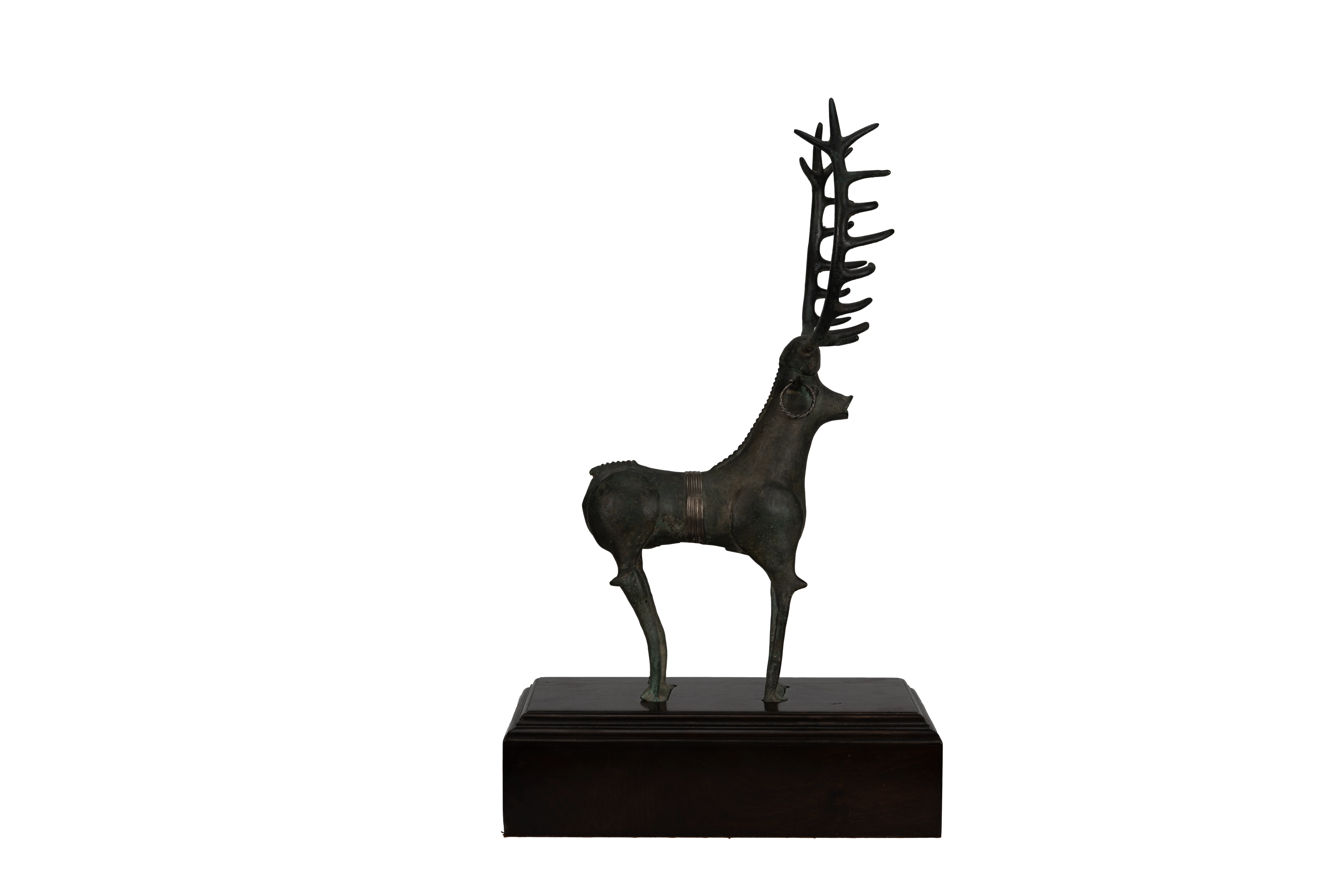
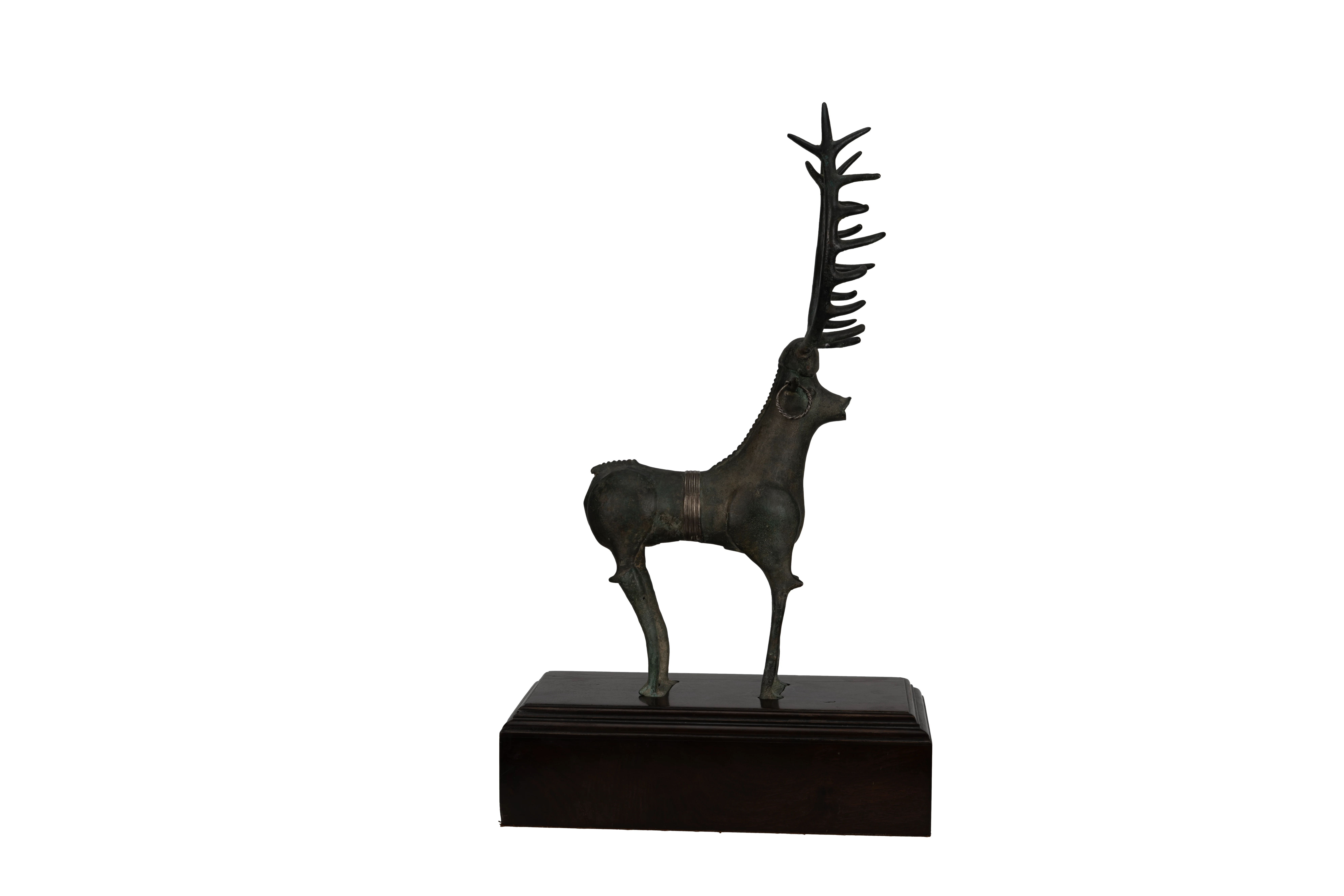
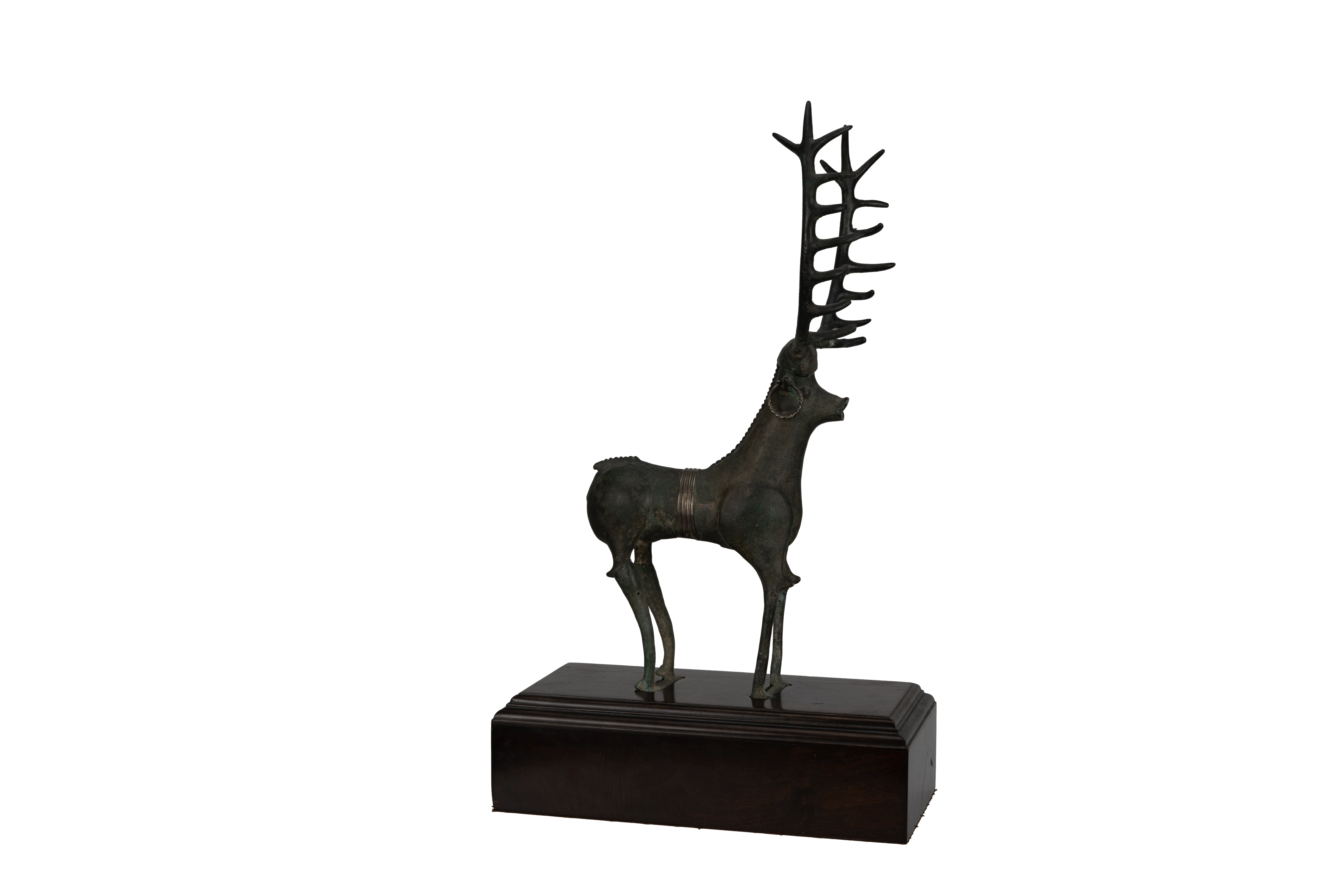
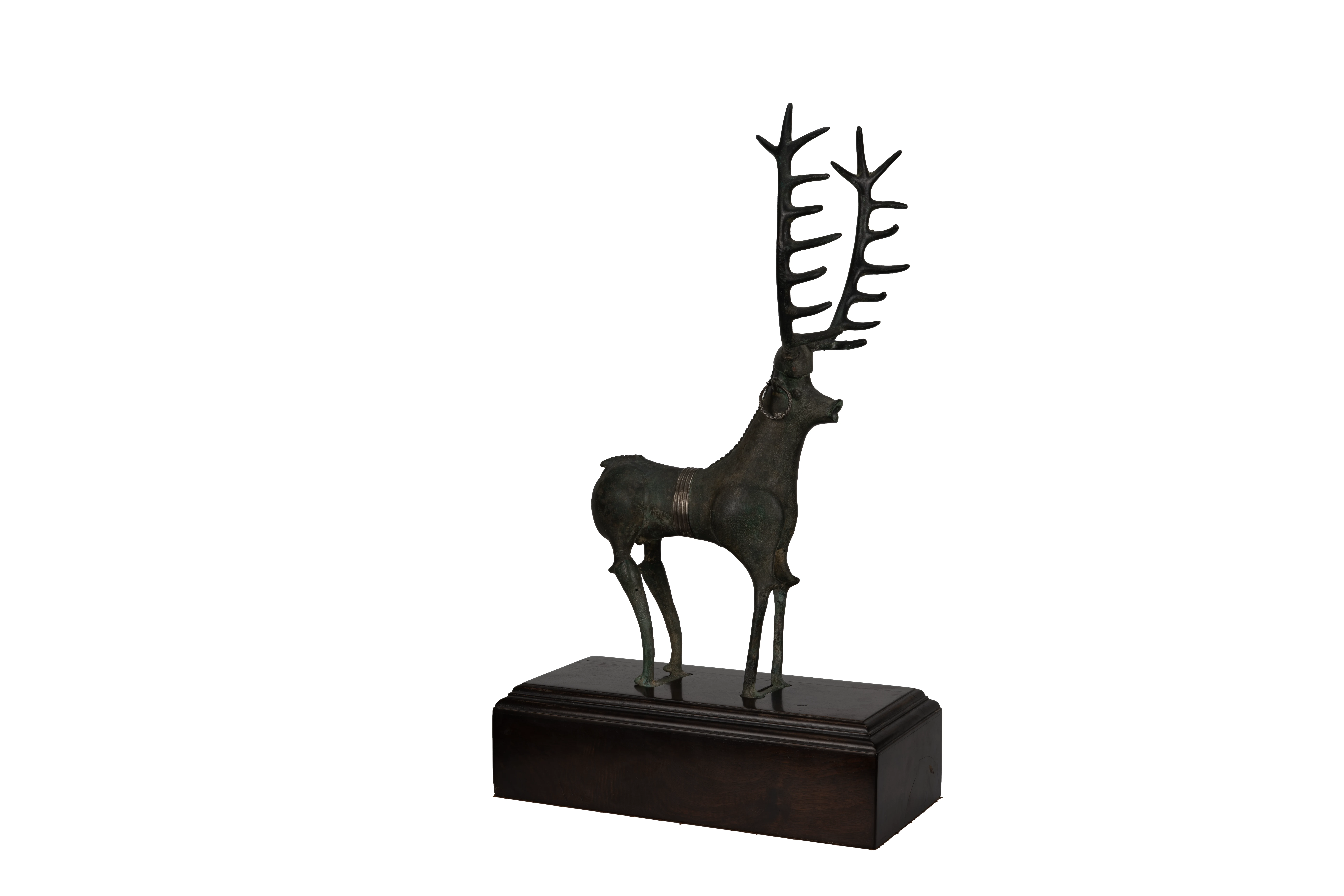
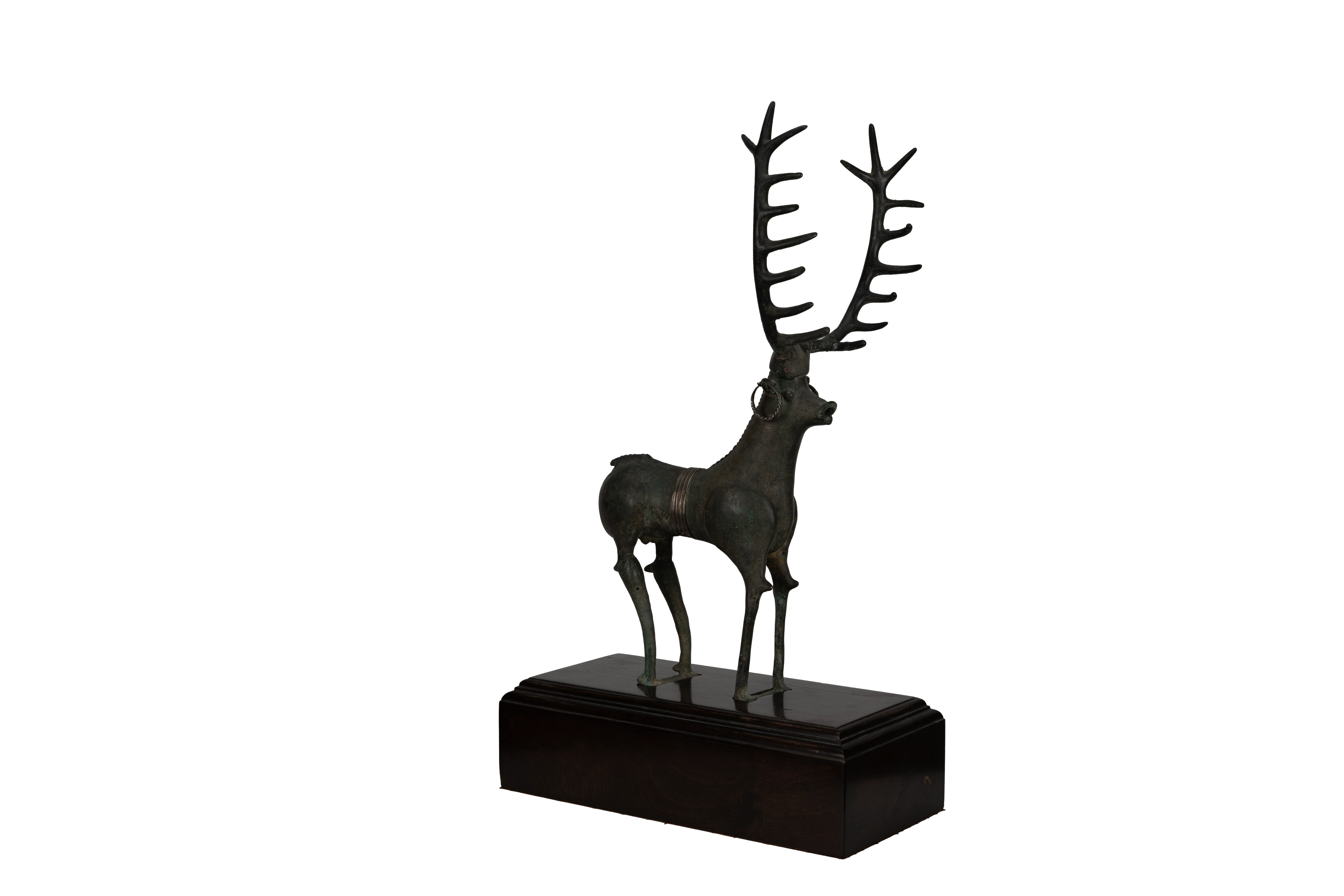
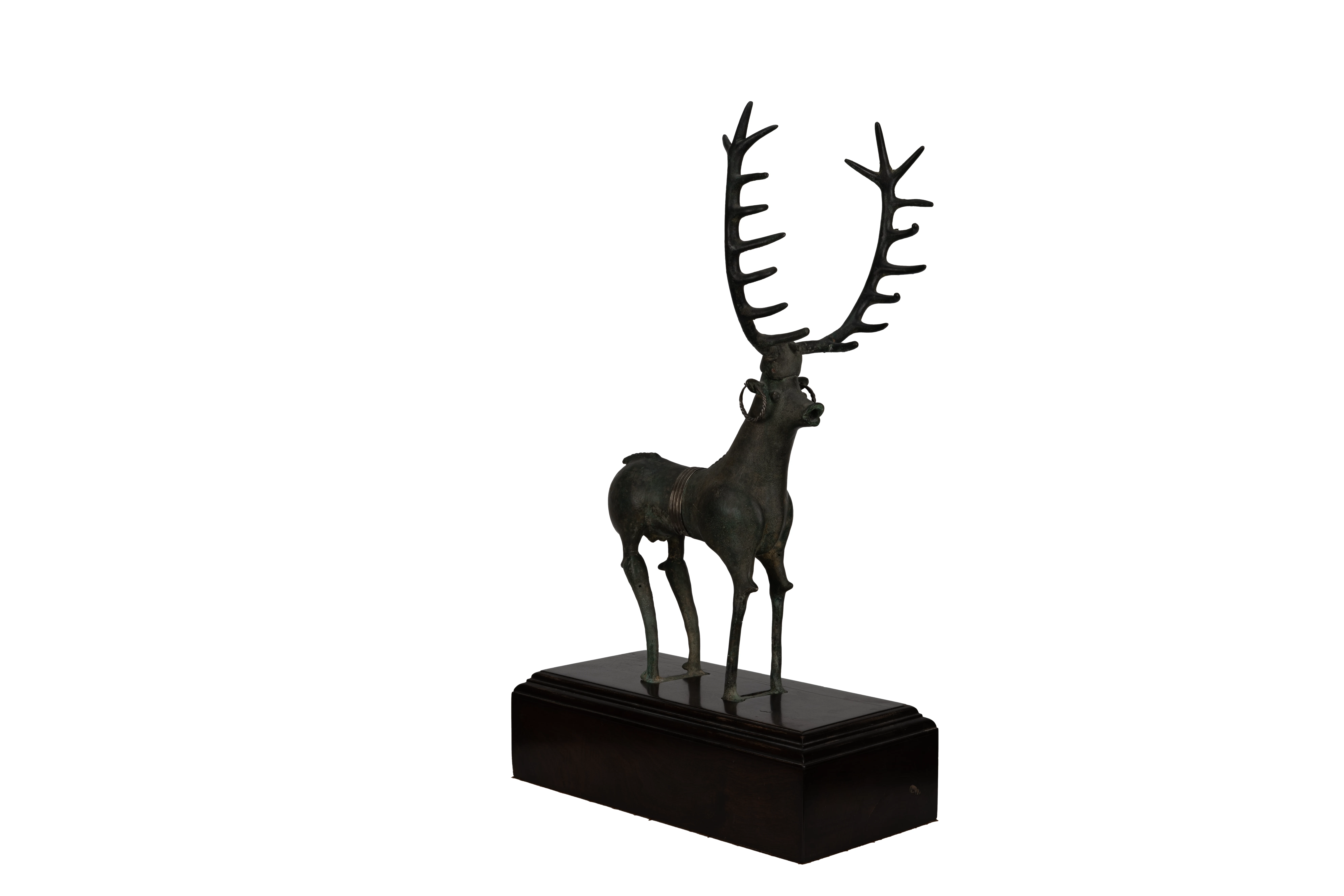
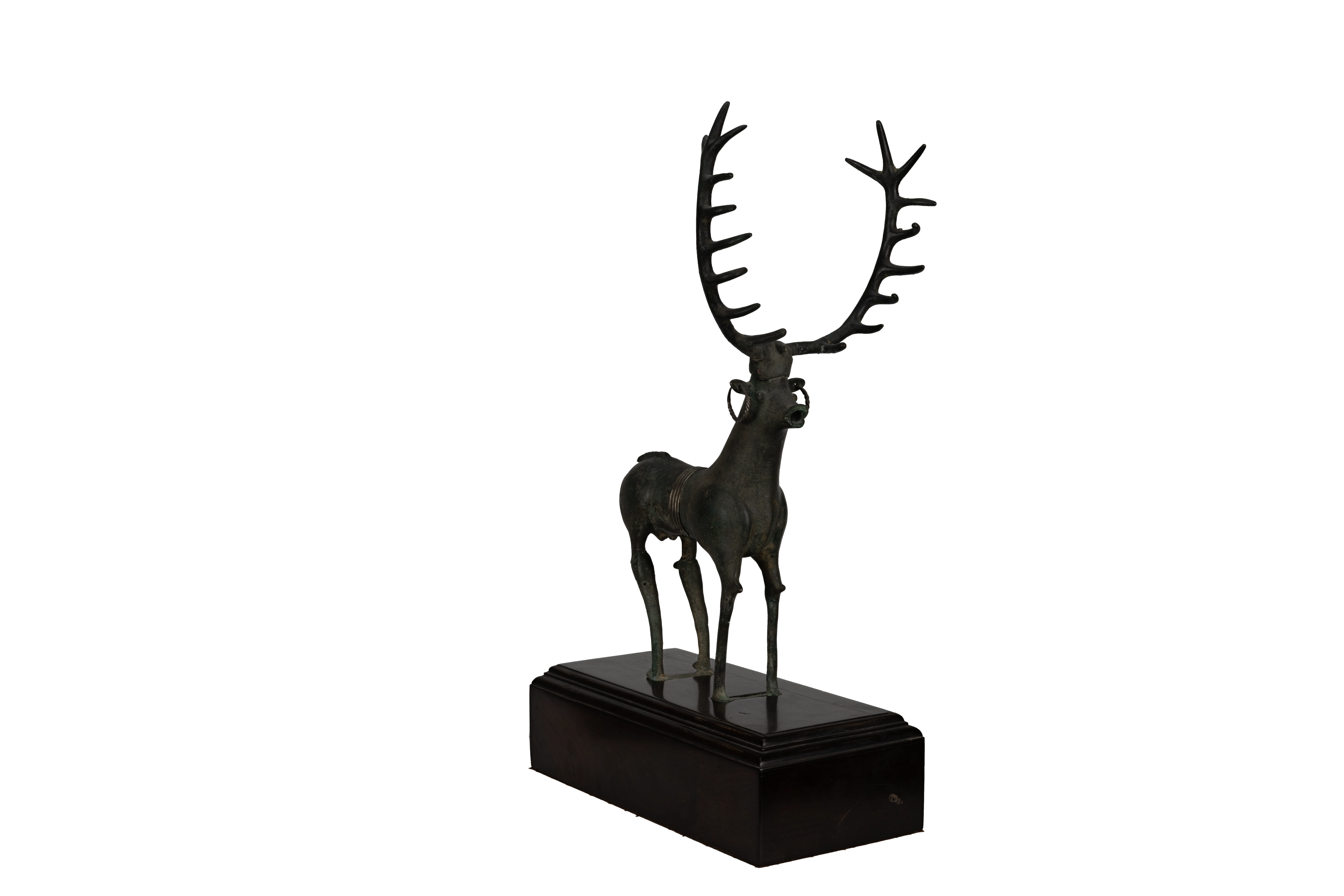
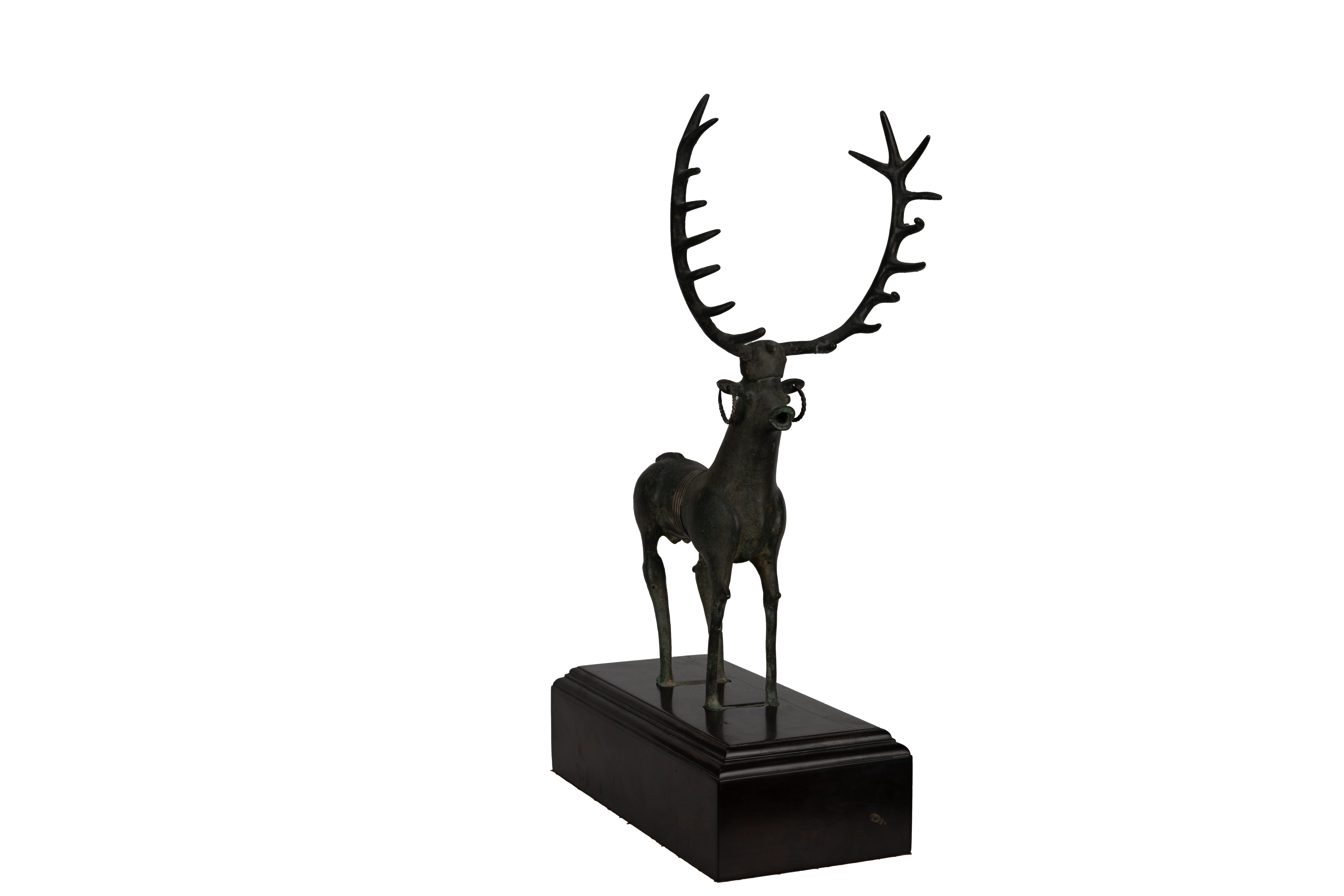
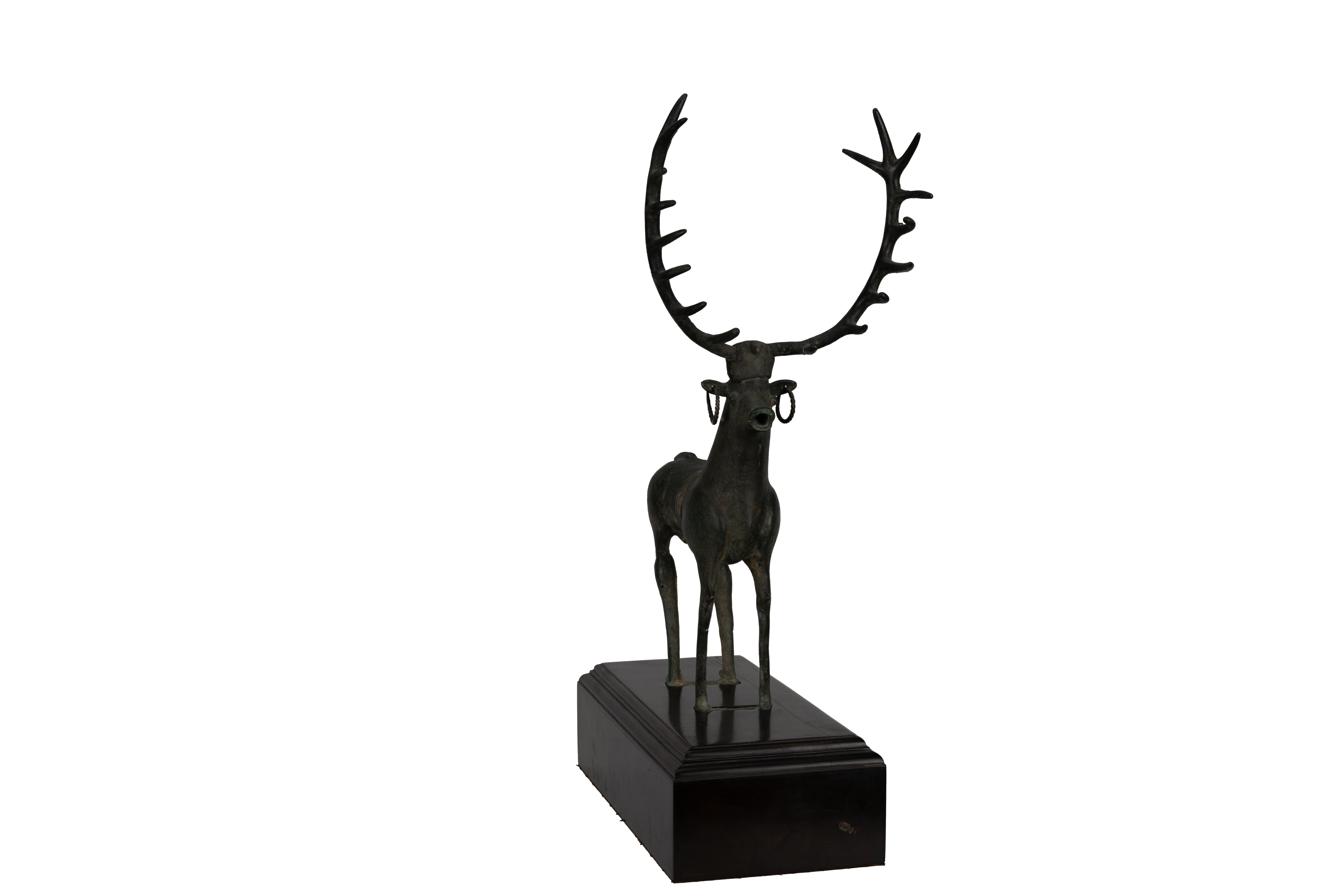
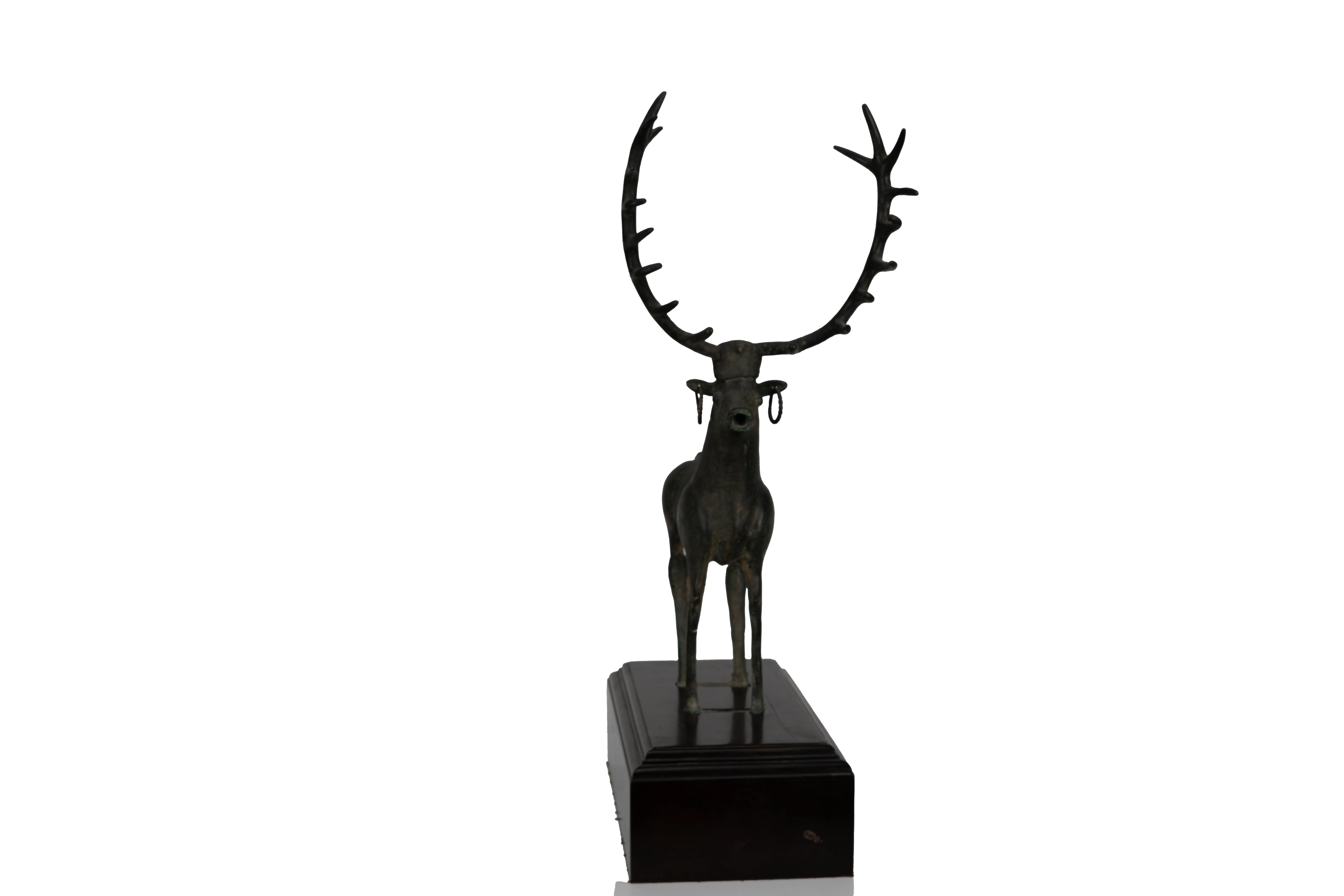
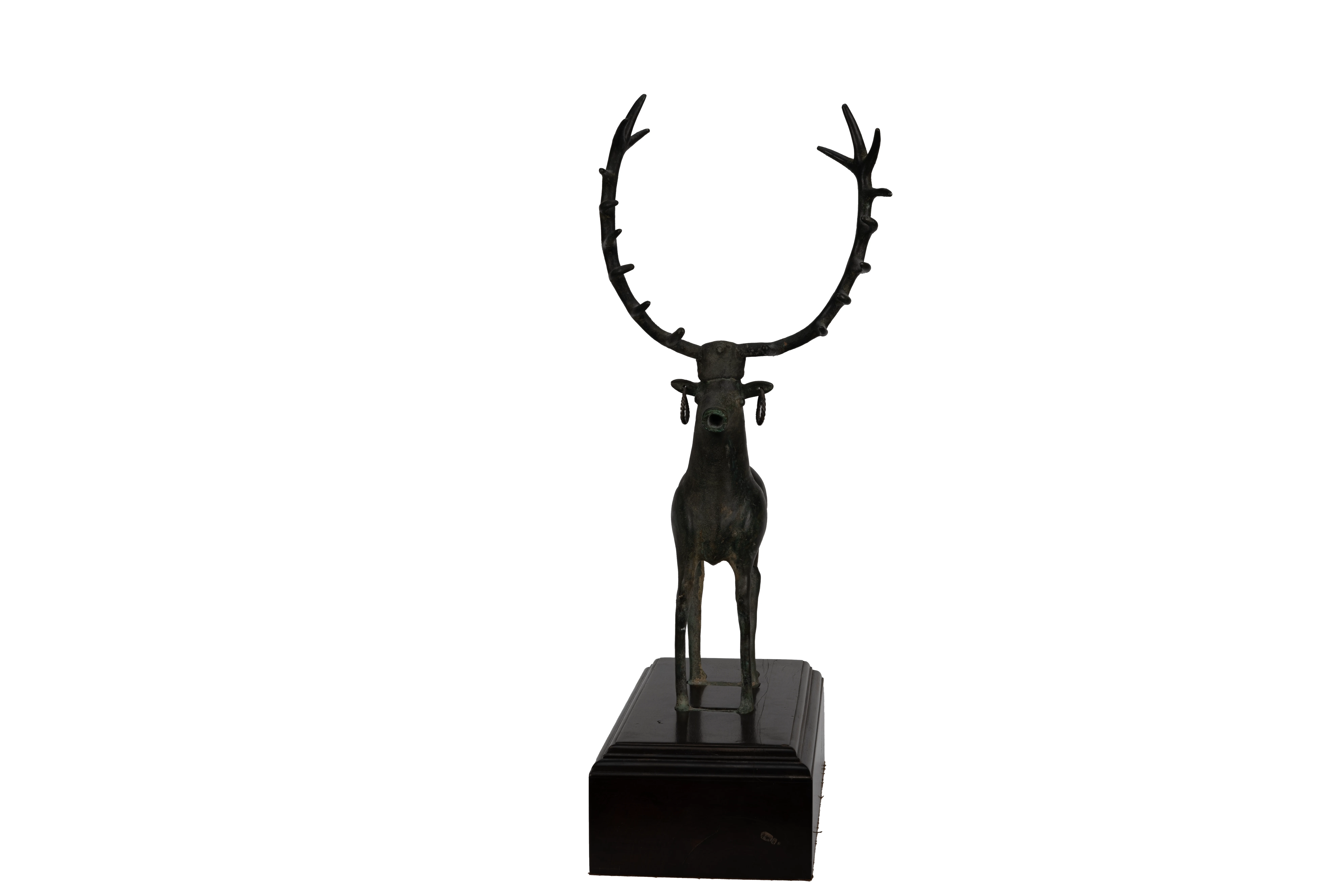
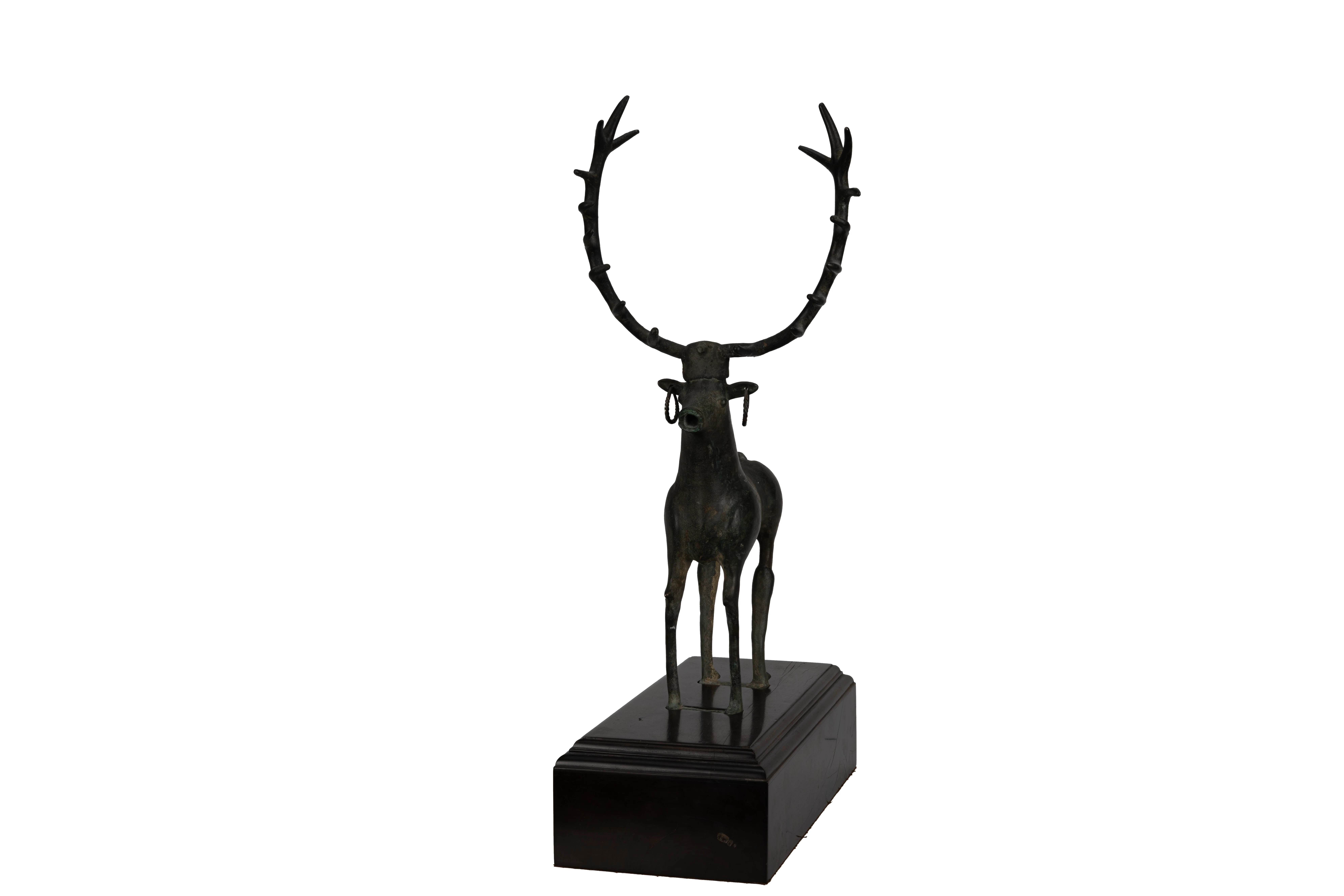
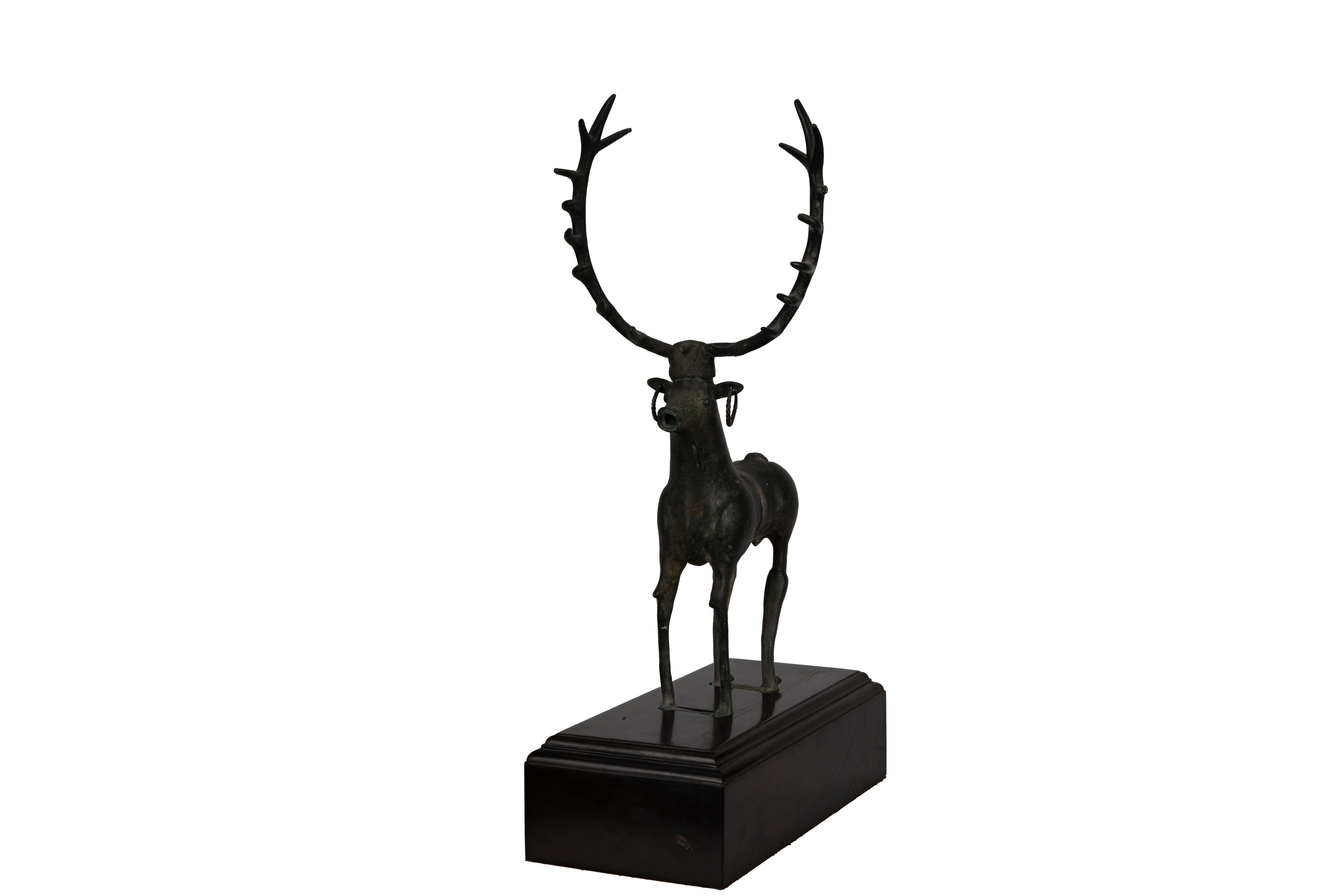
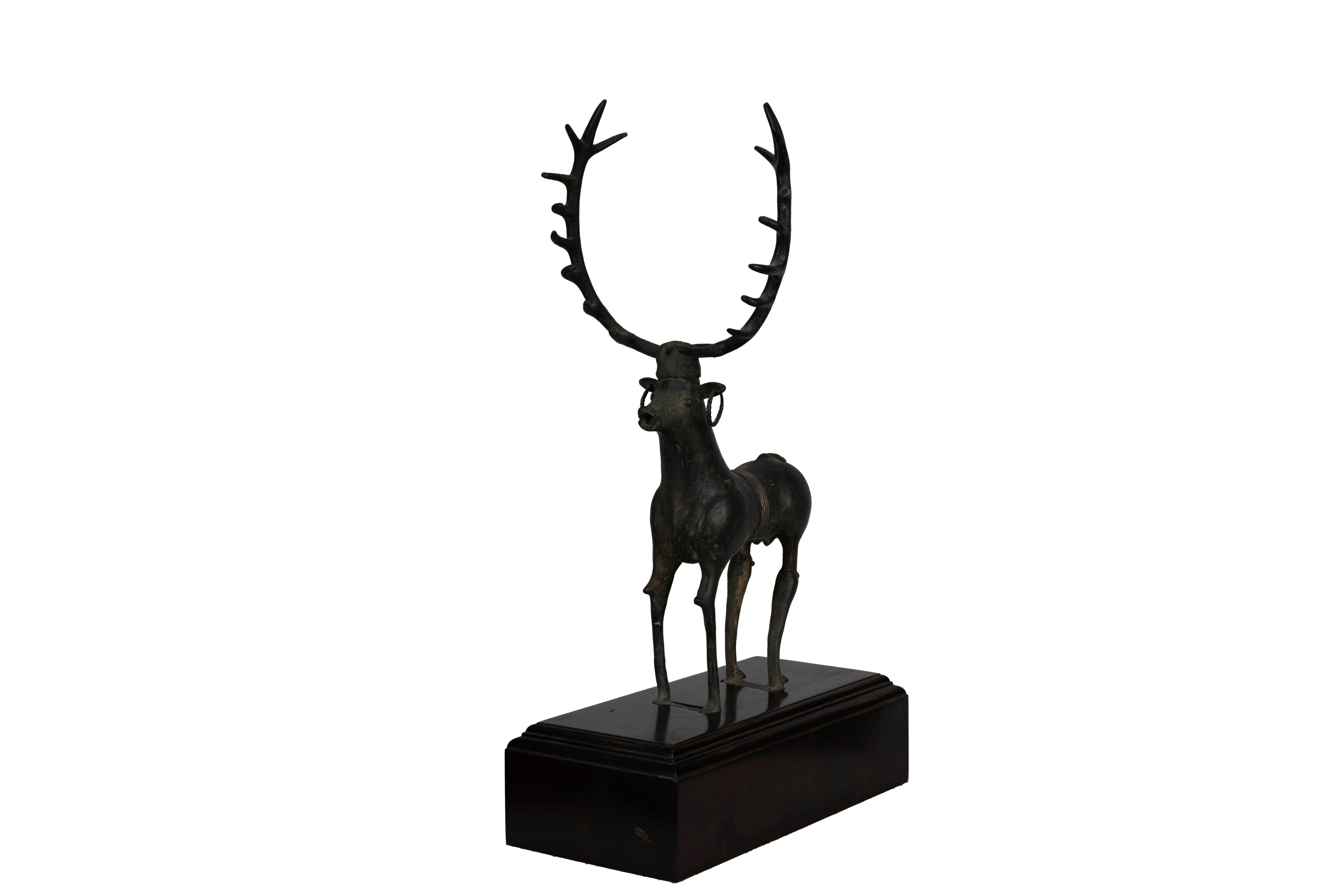
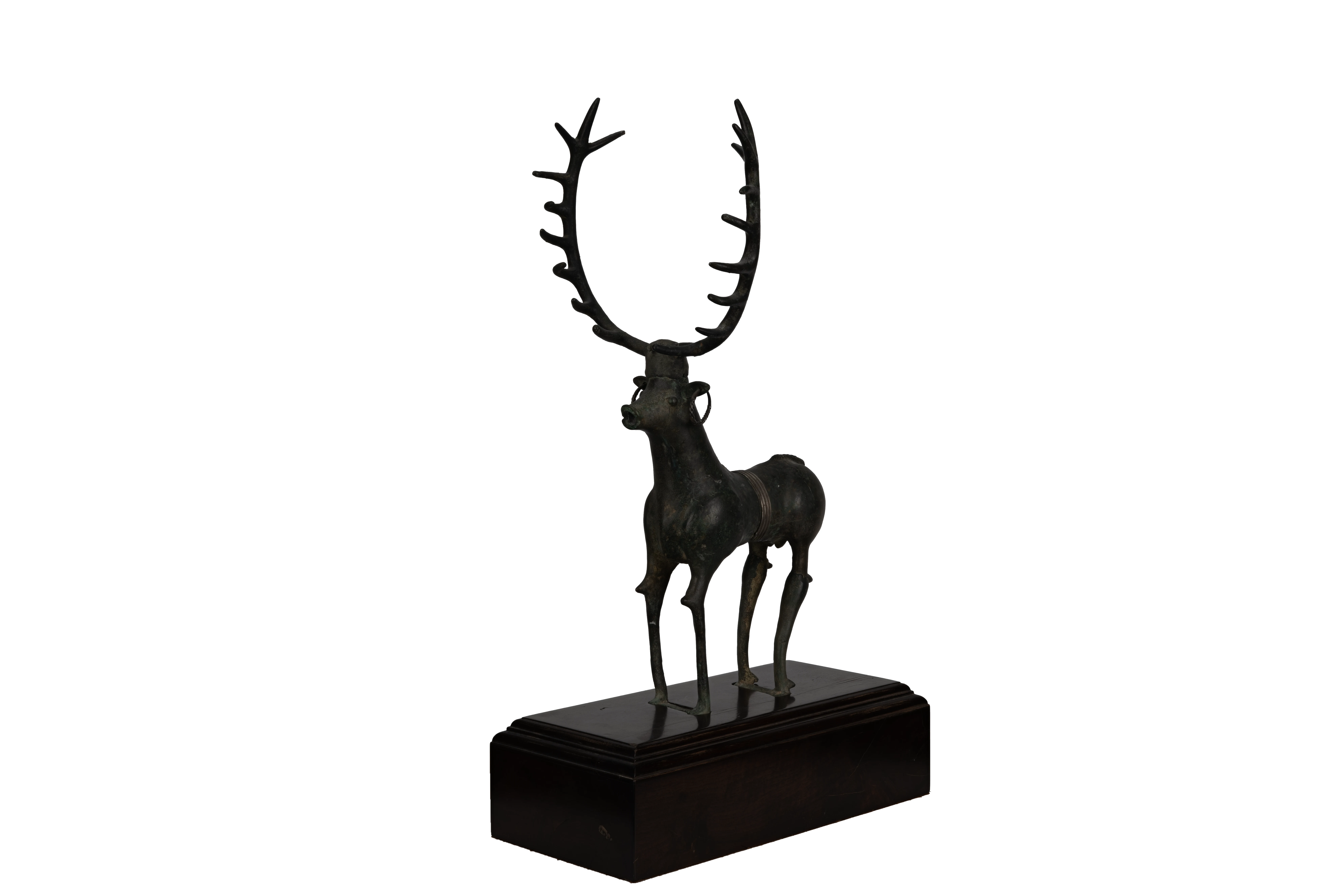
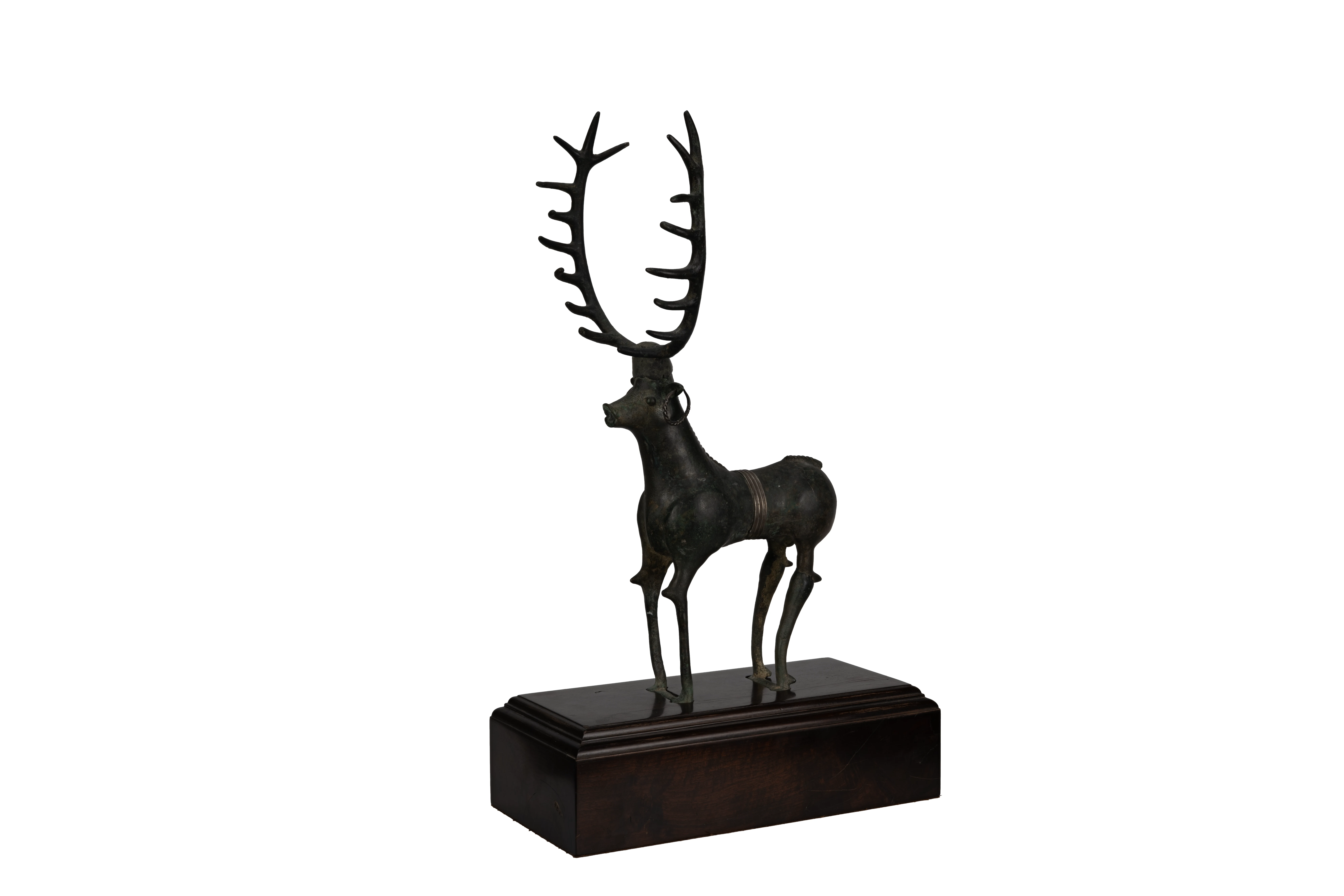
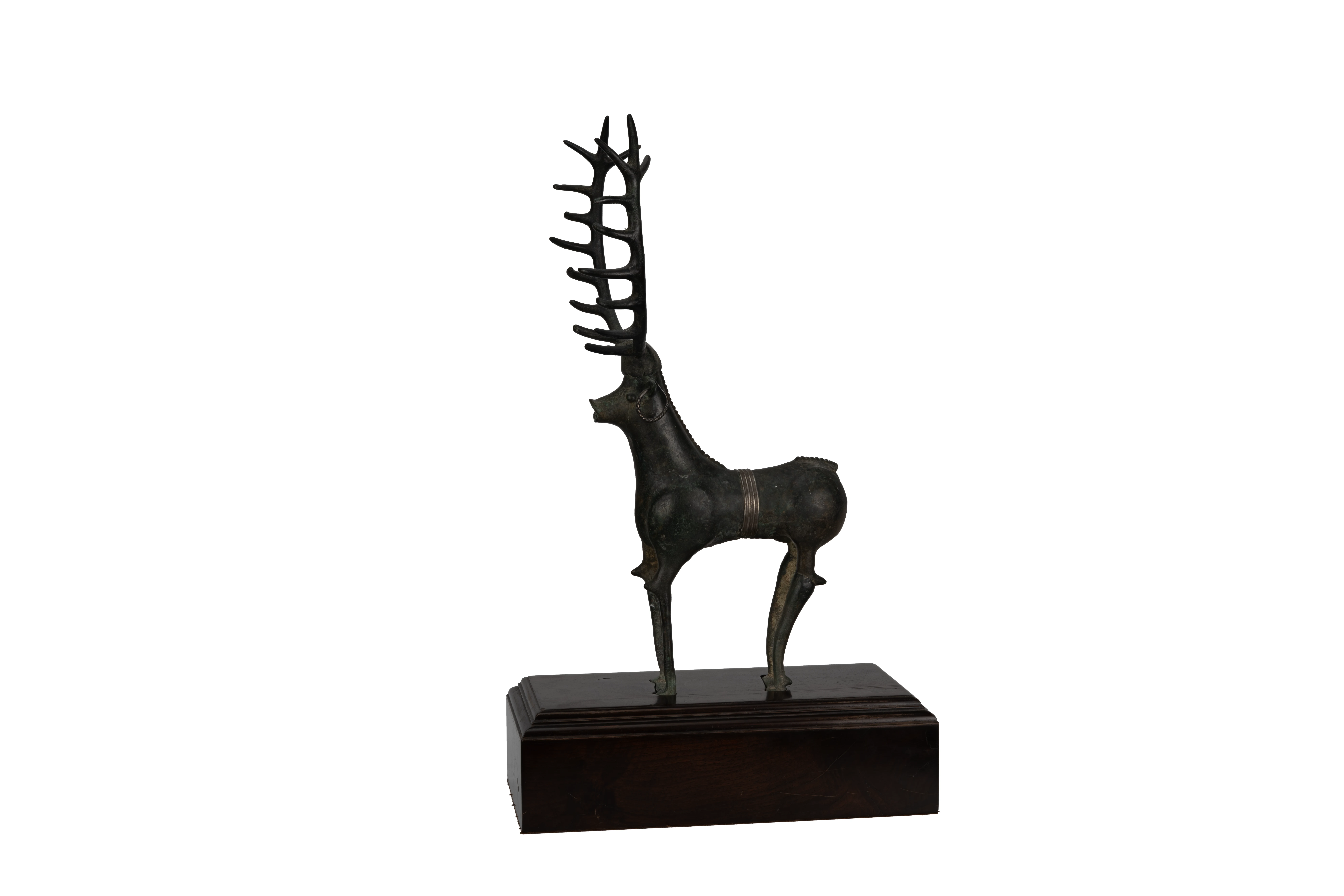
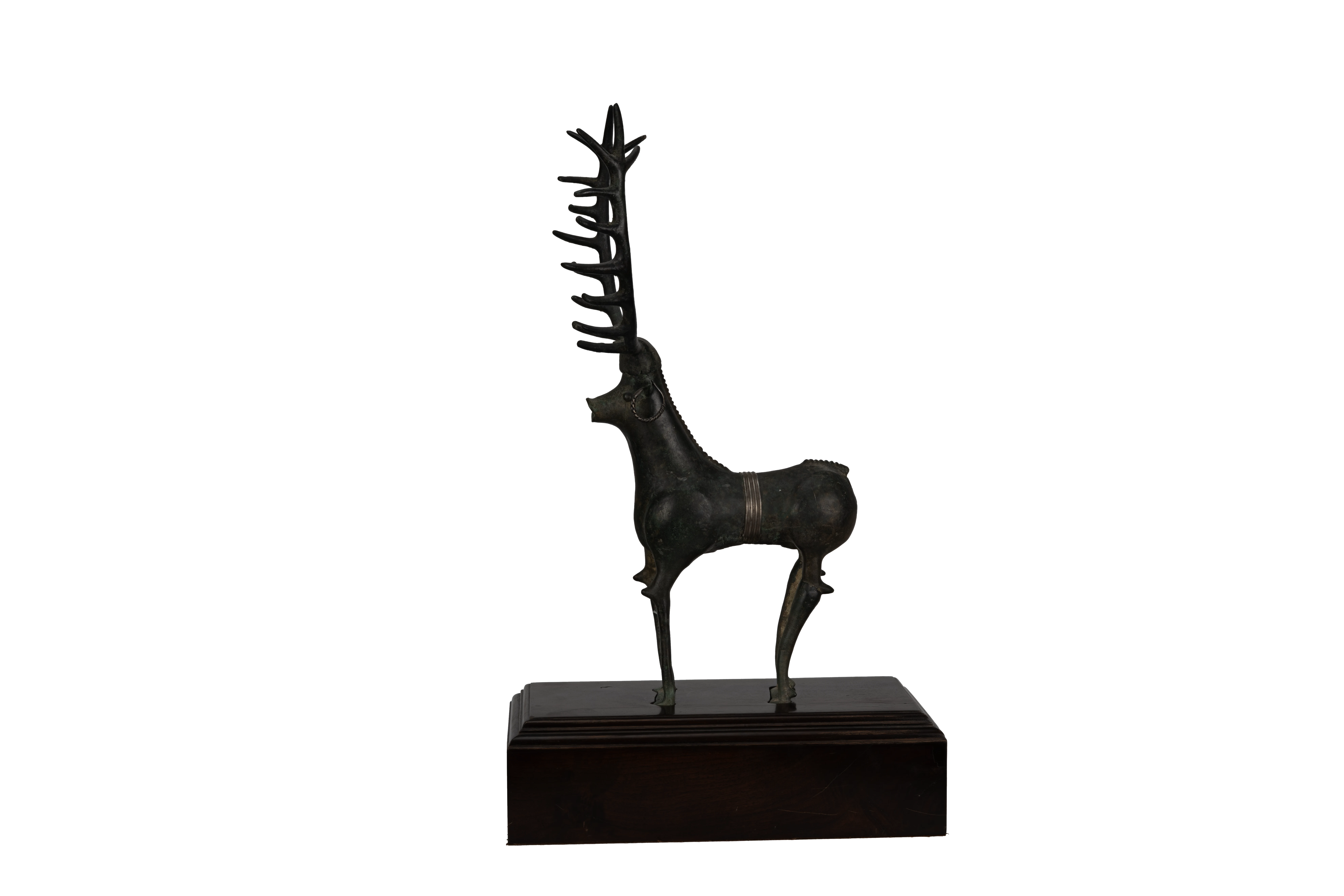
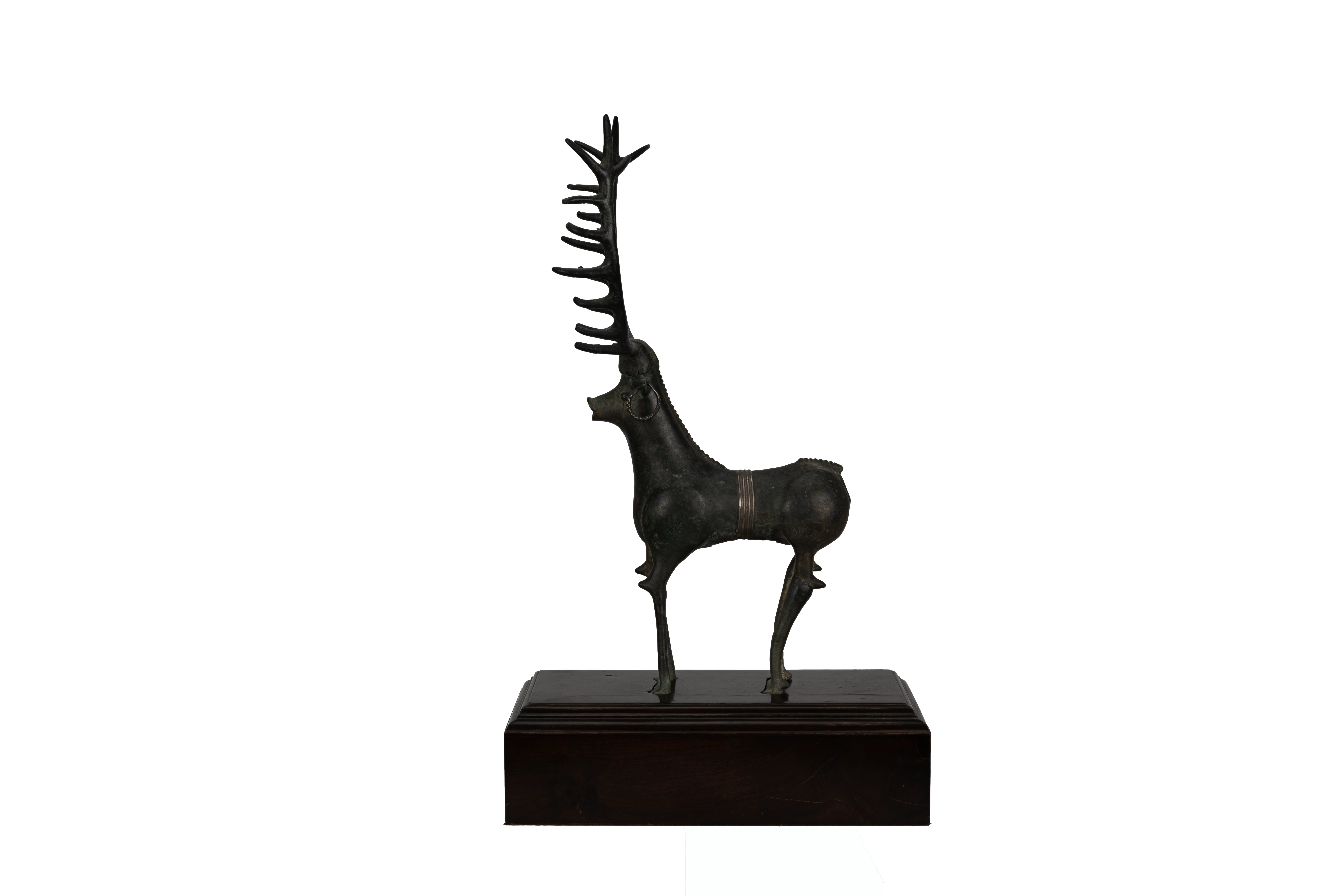
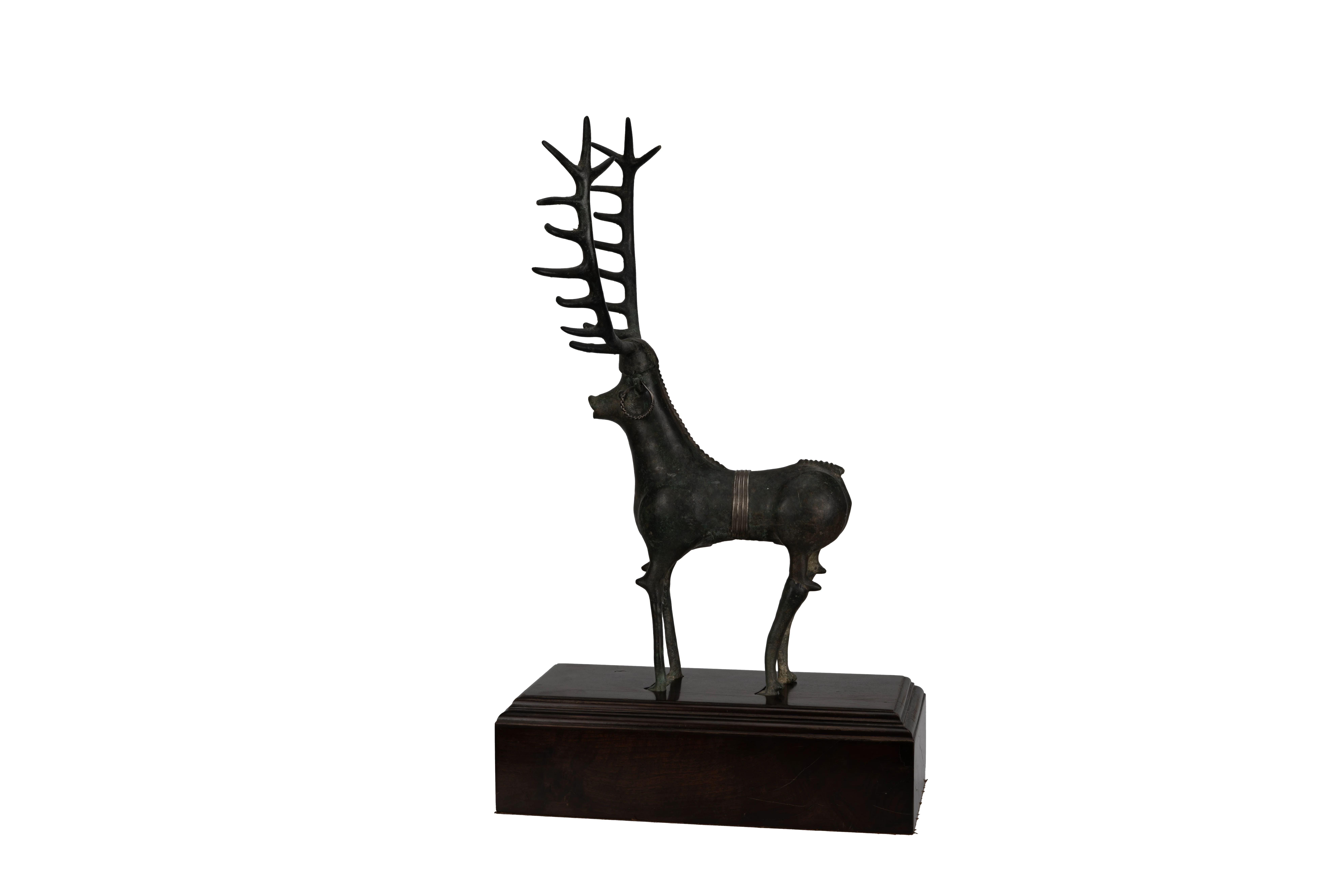
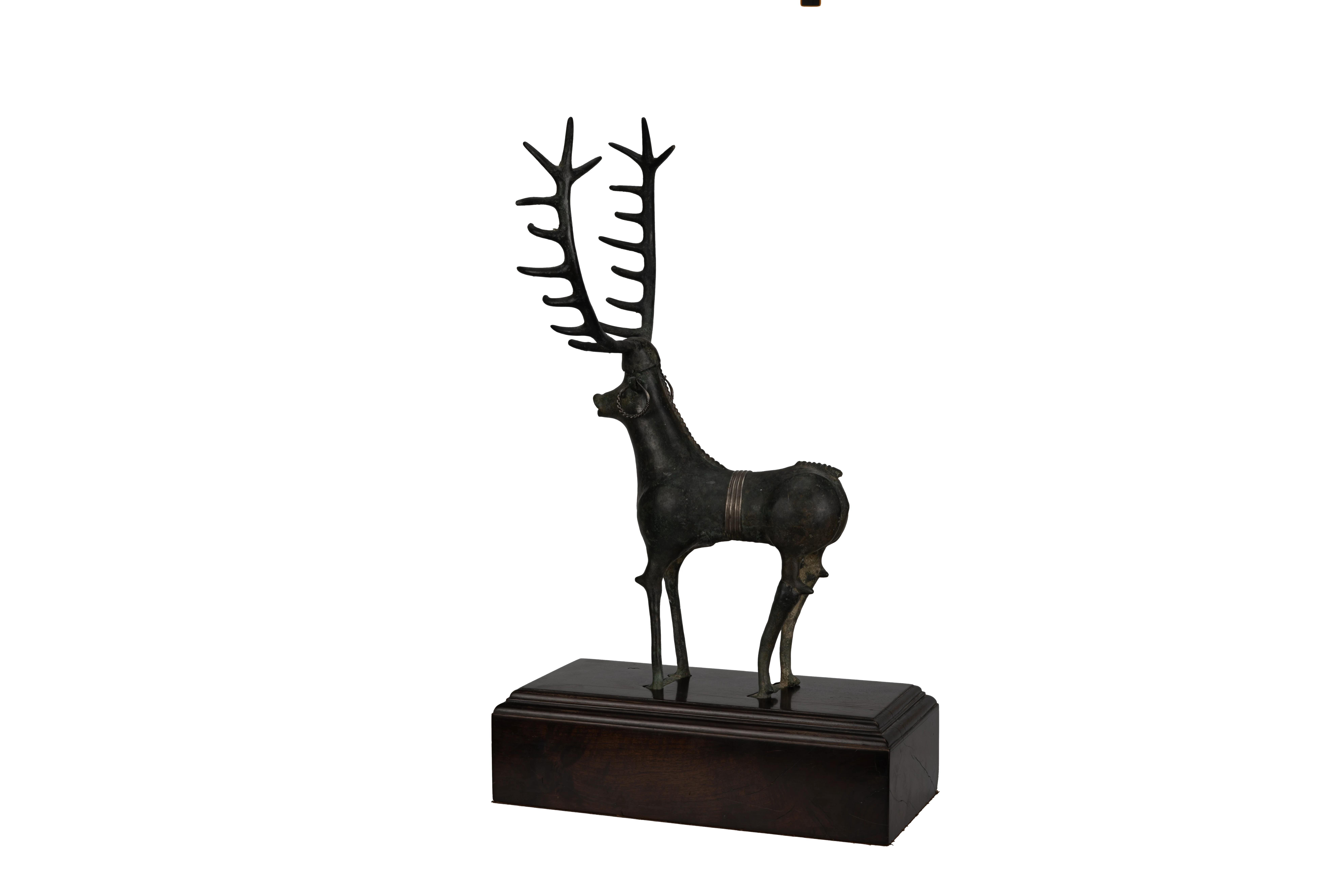
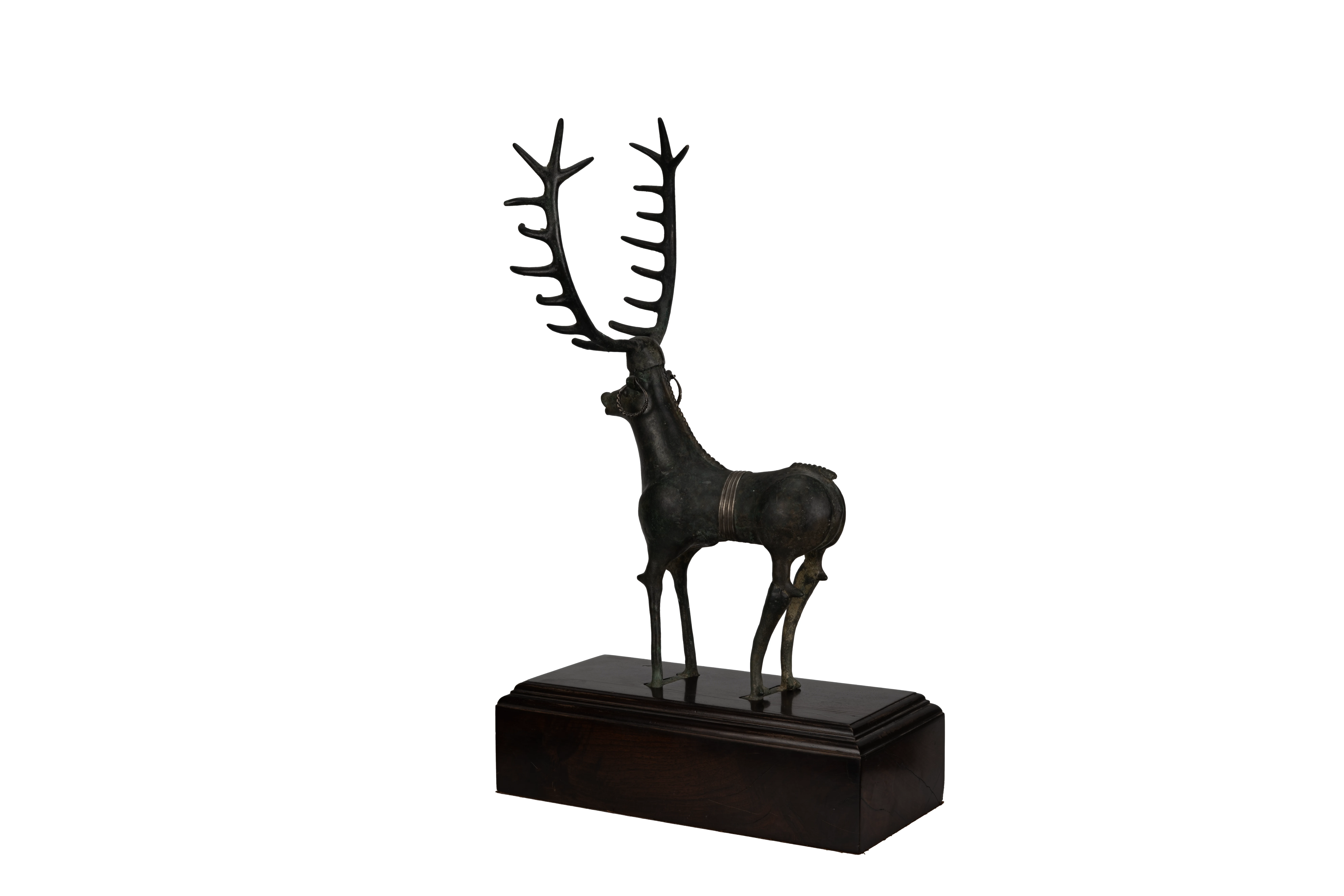
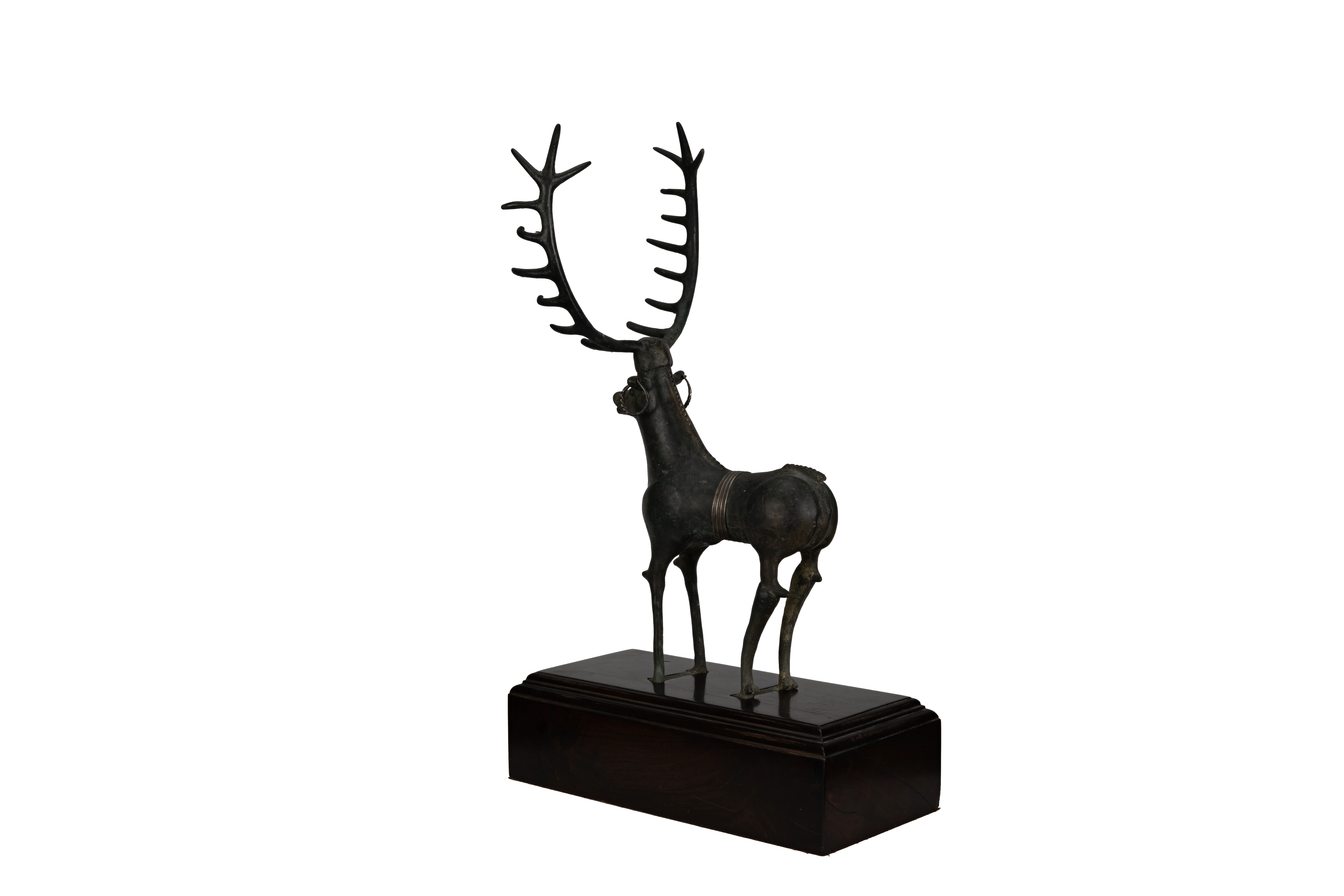
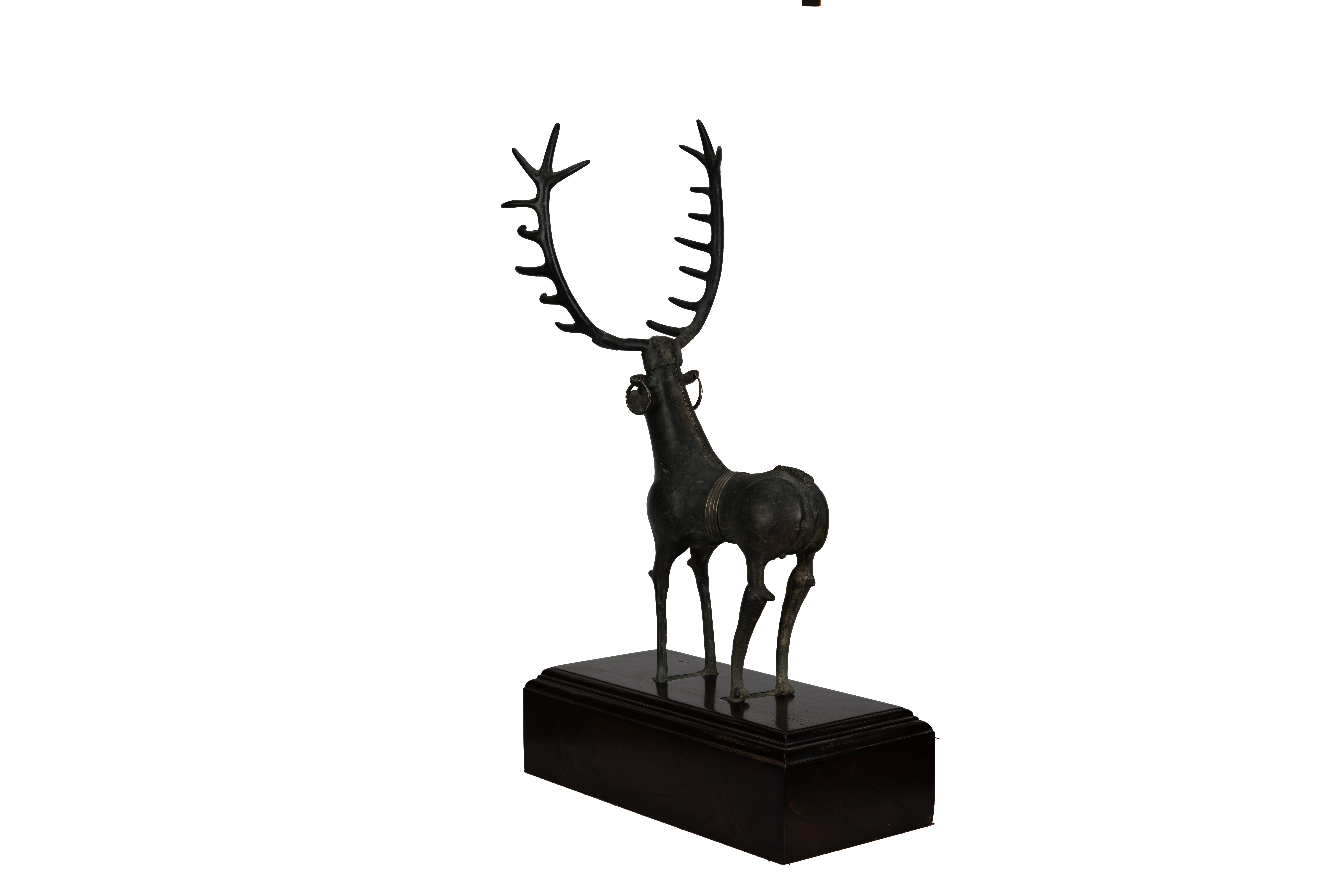
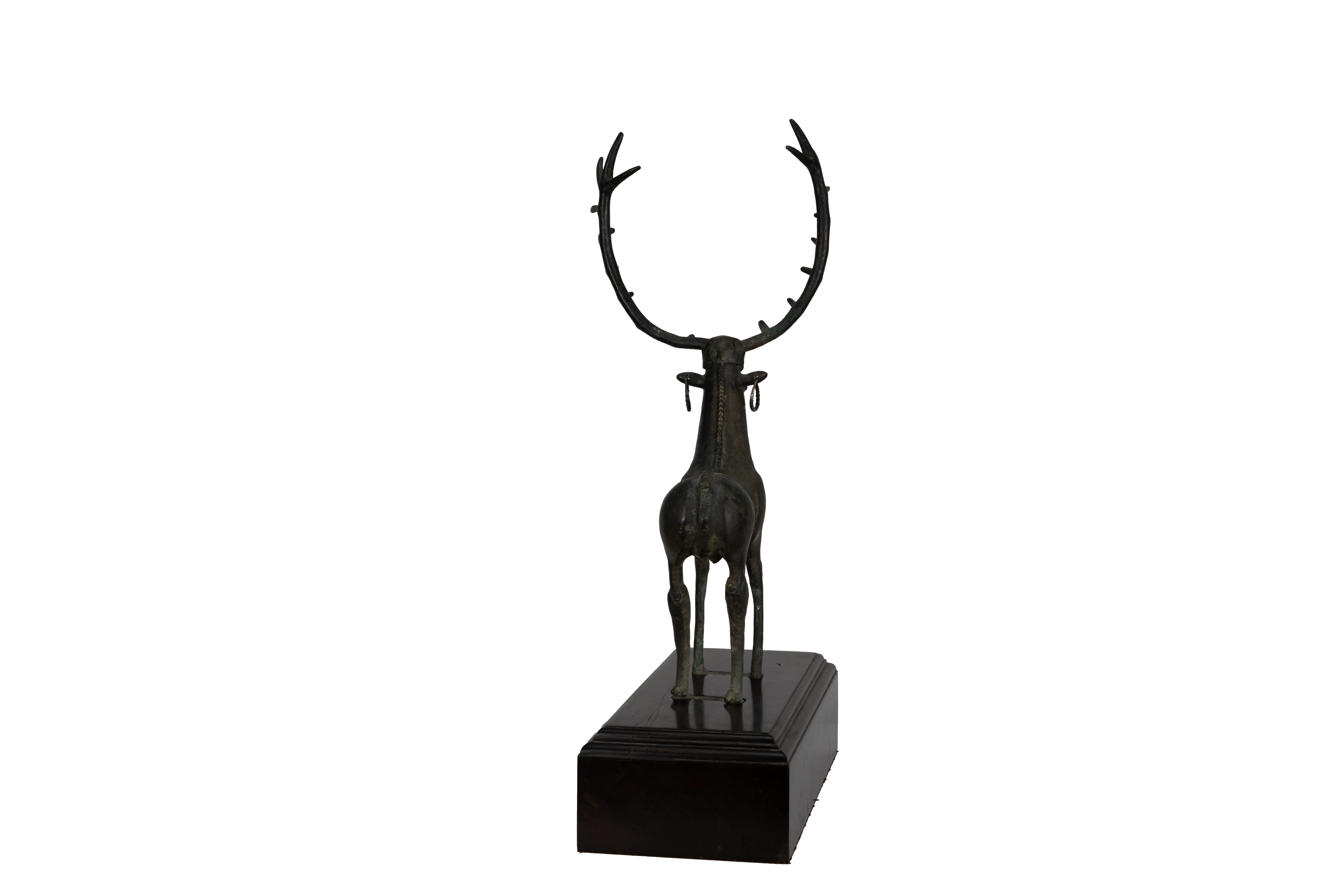
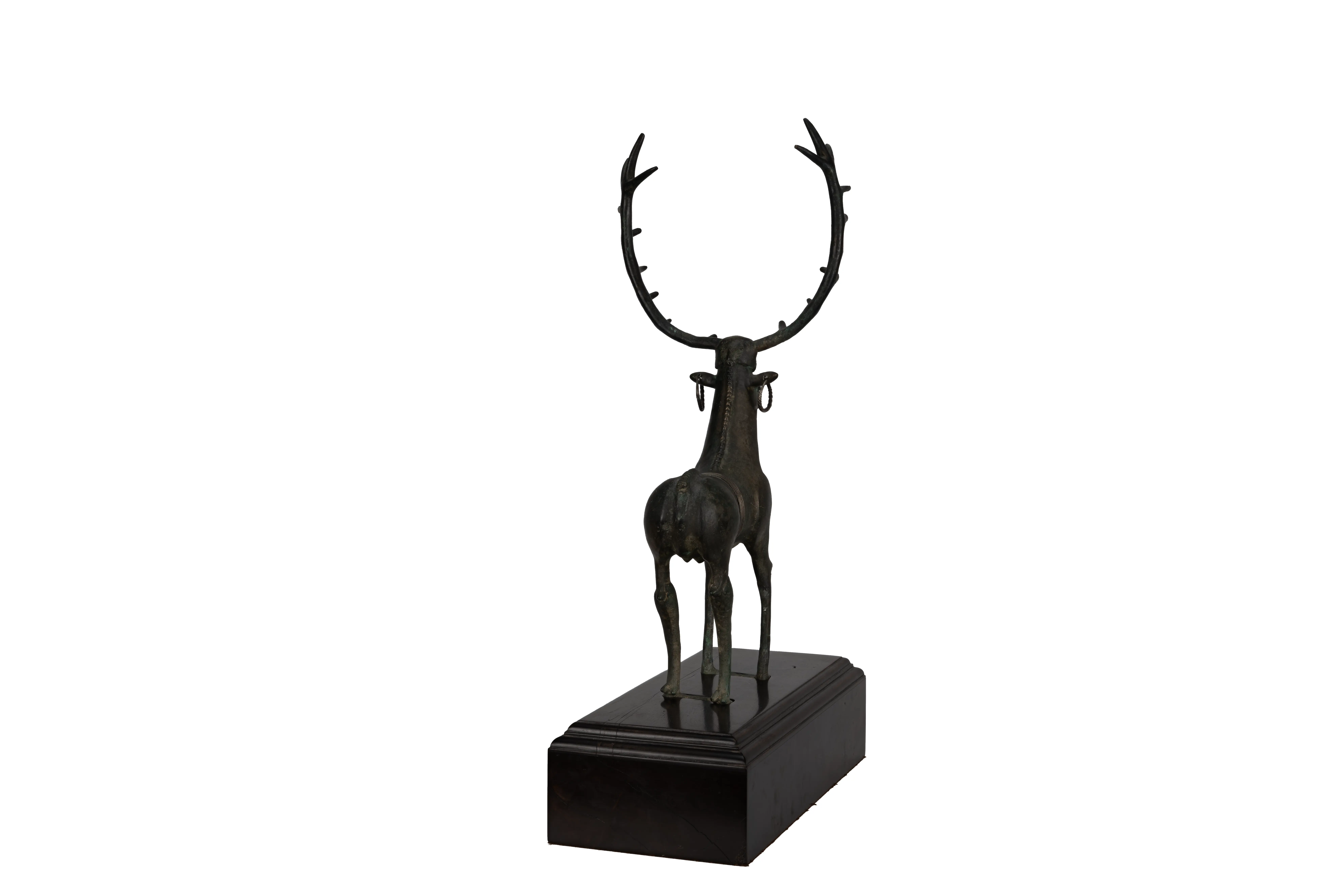
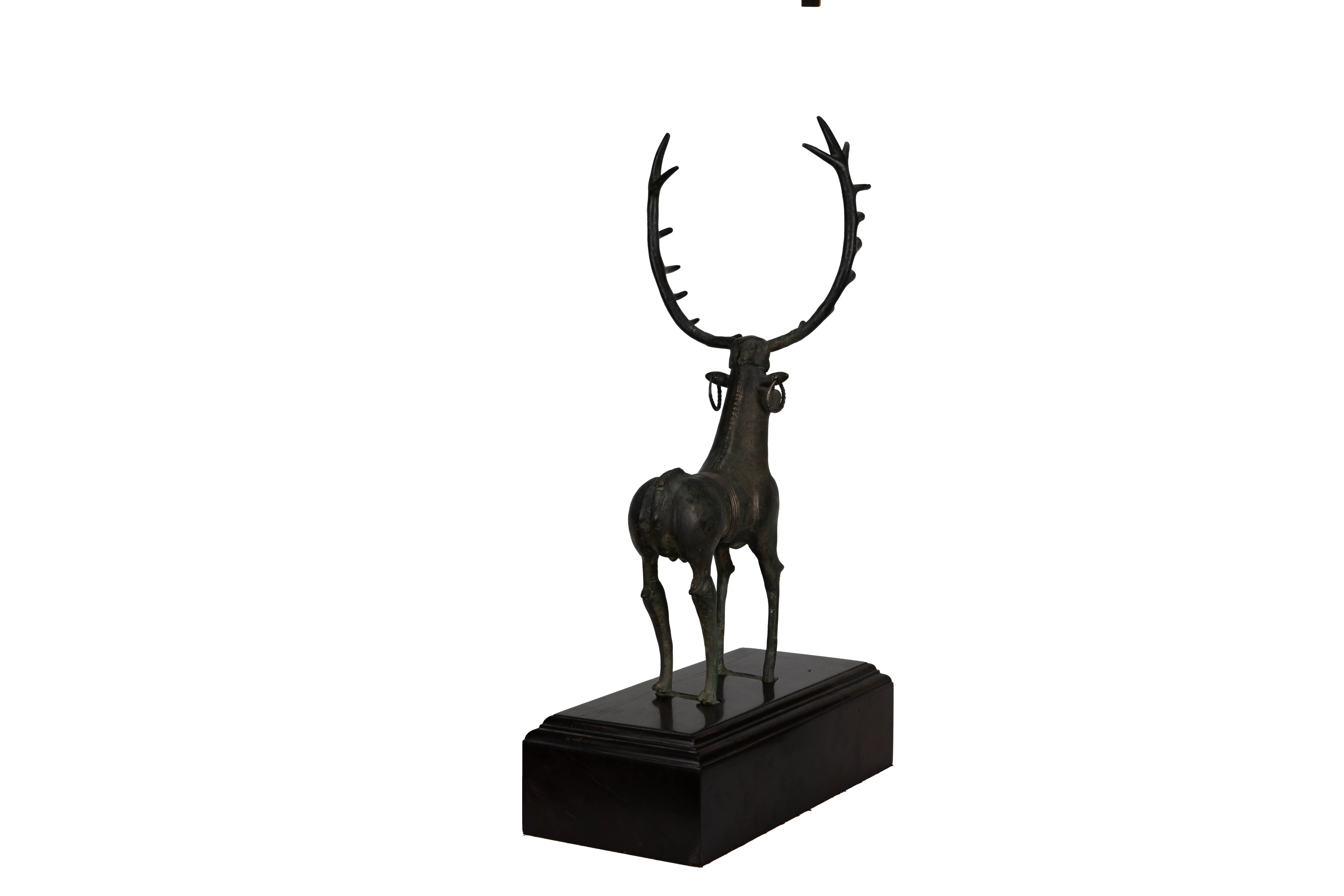
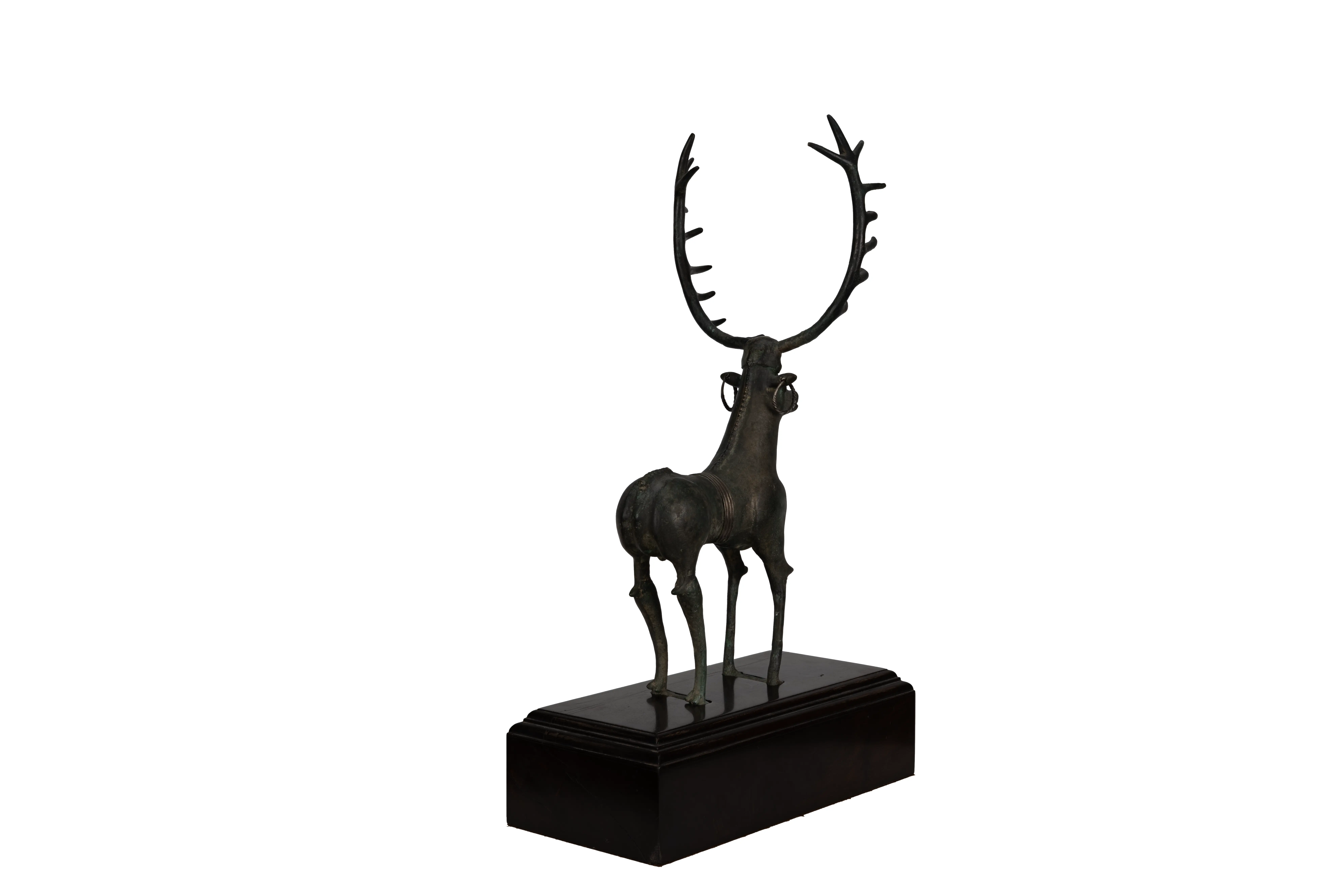
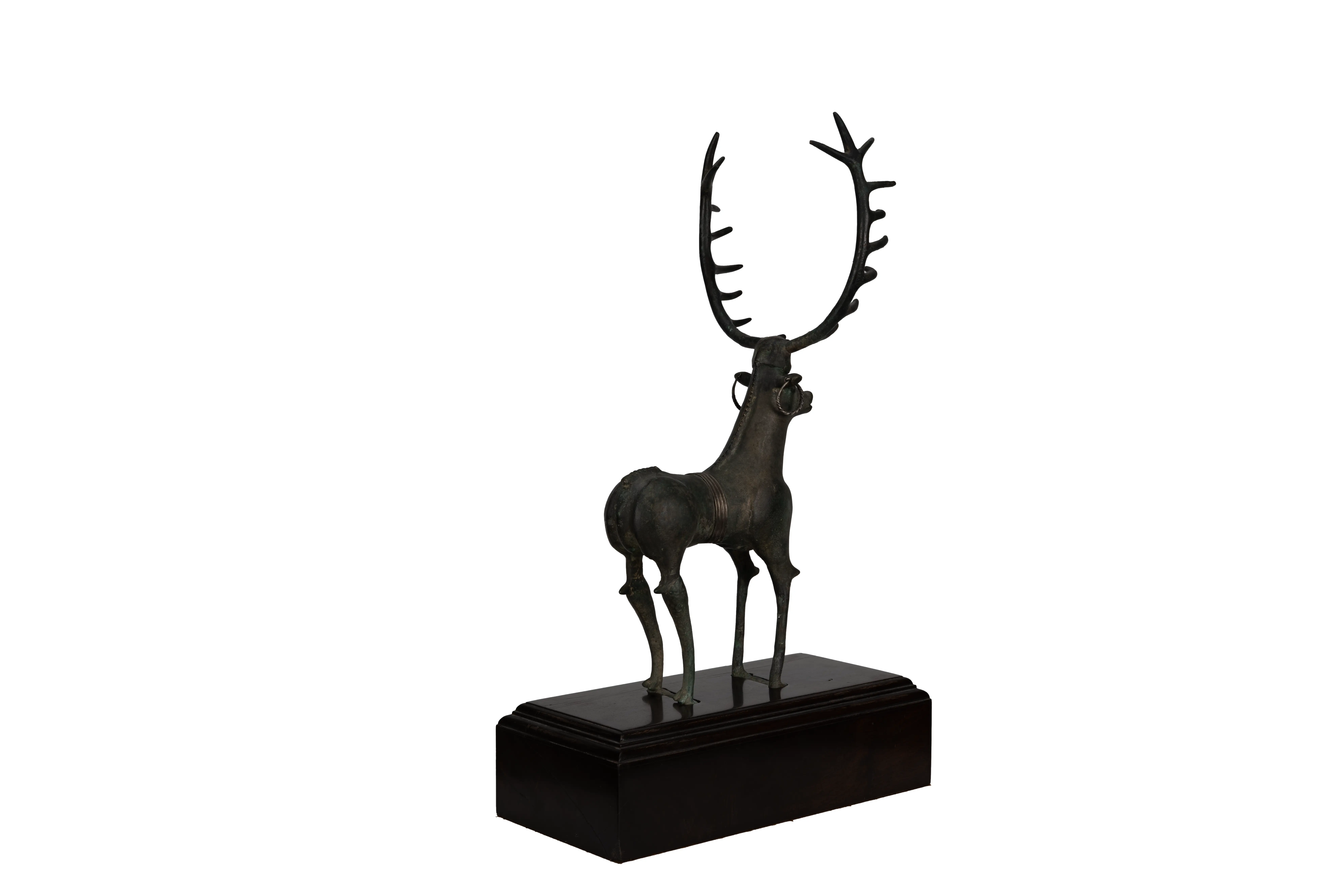
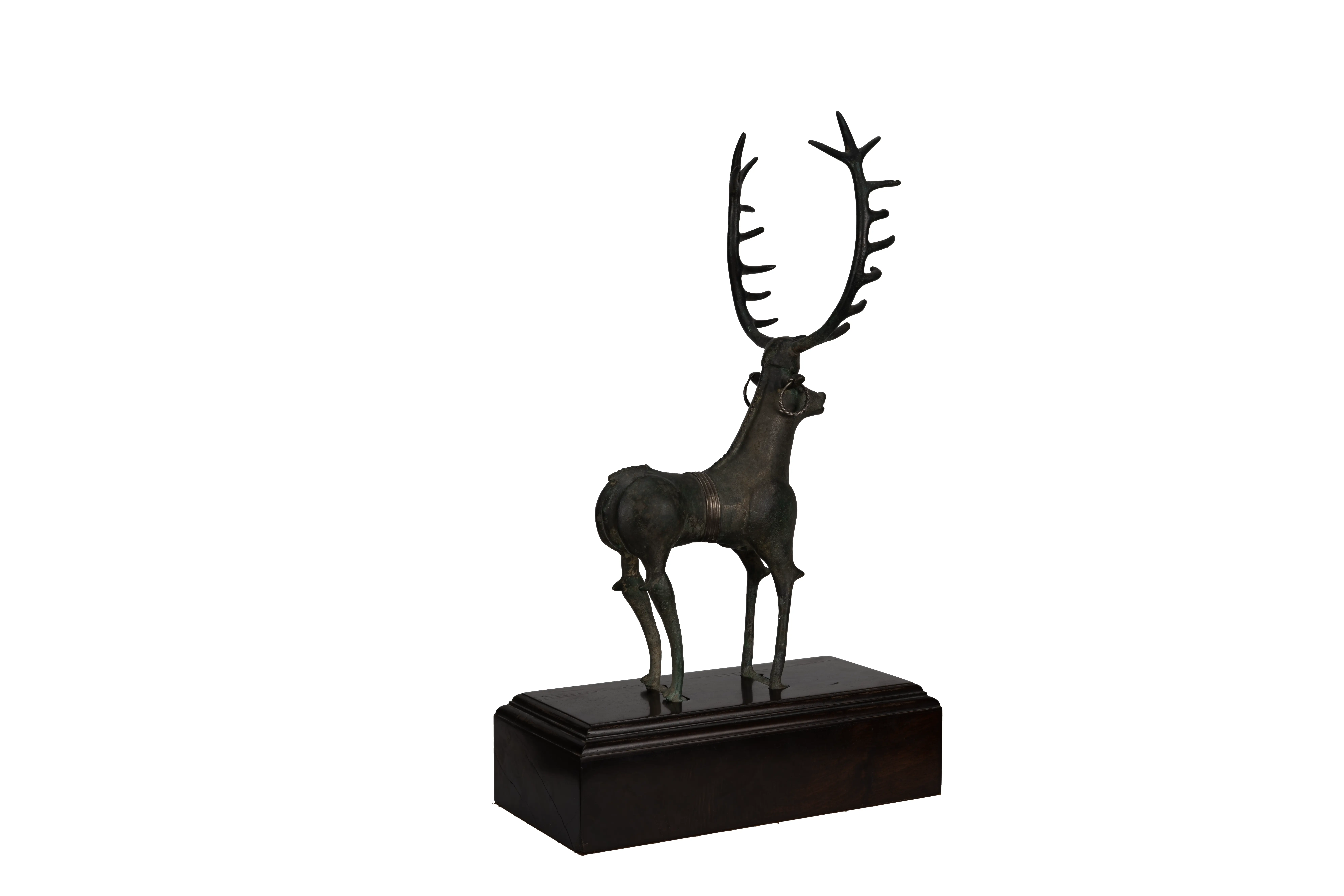
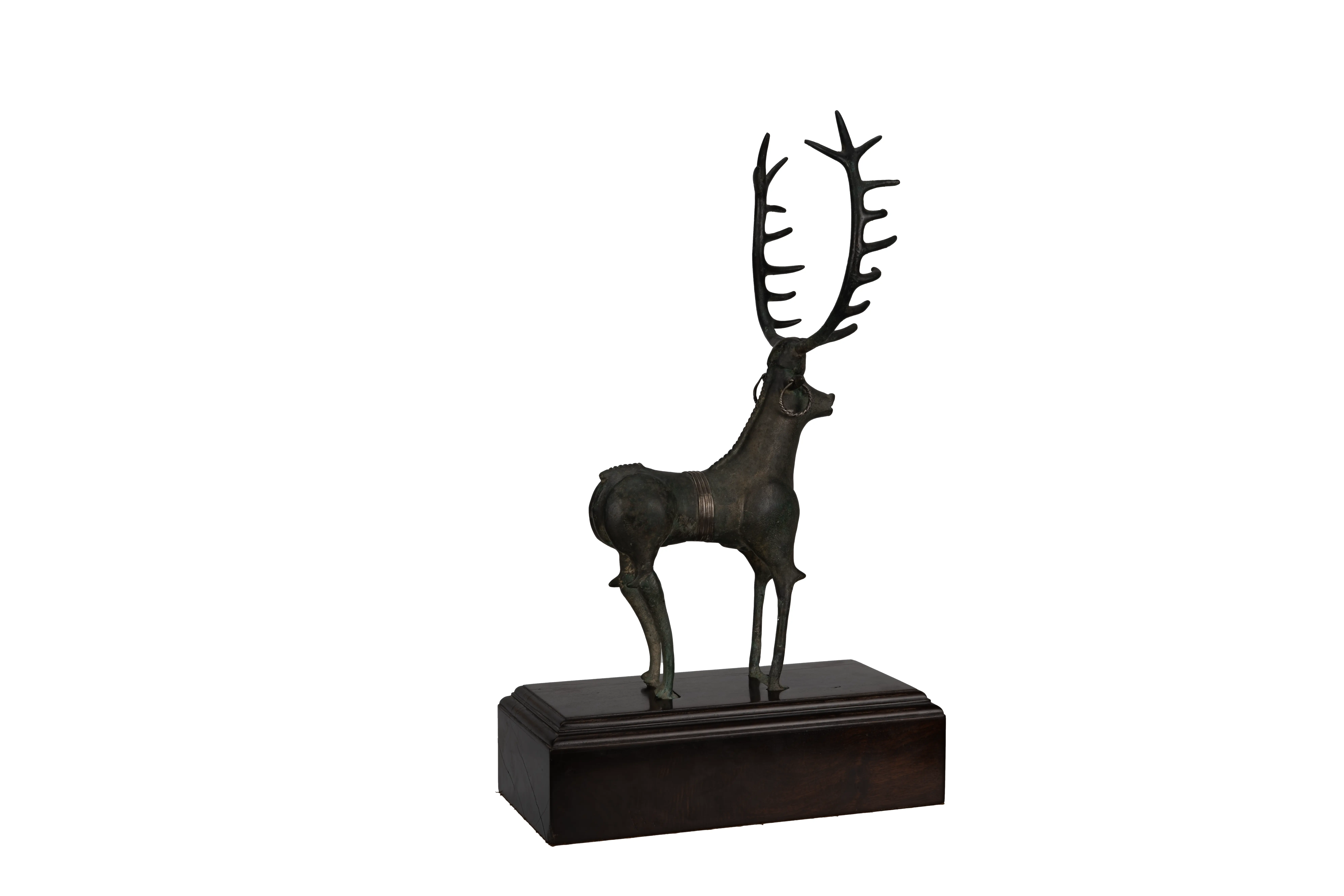
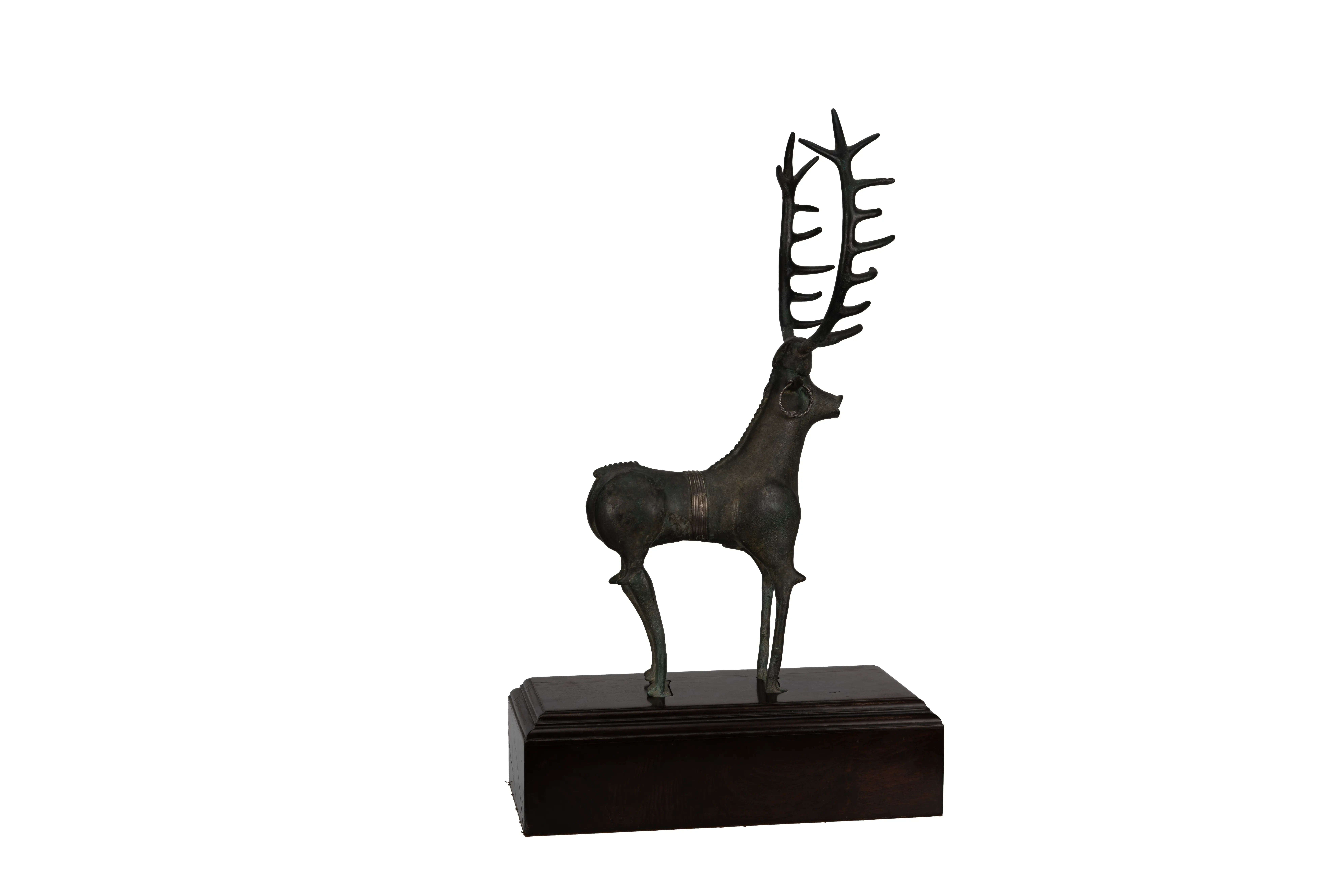
Deer Figurine
1st millennium BCE. Central Asia. Bronze. 49 × 21.3 cm; With podium: 57 × 21,3 cm
Audio guide
Description
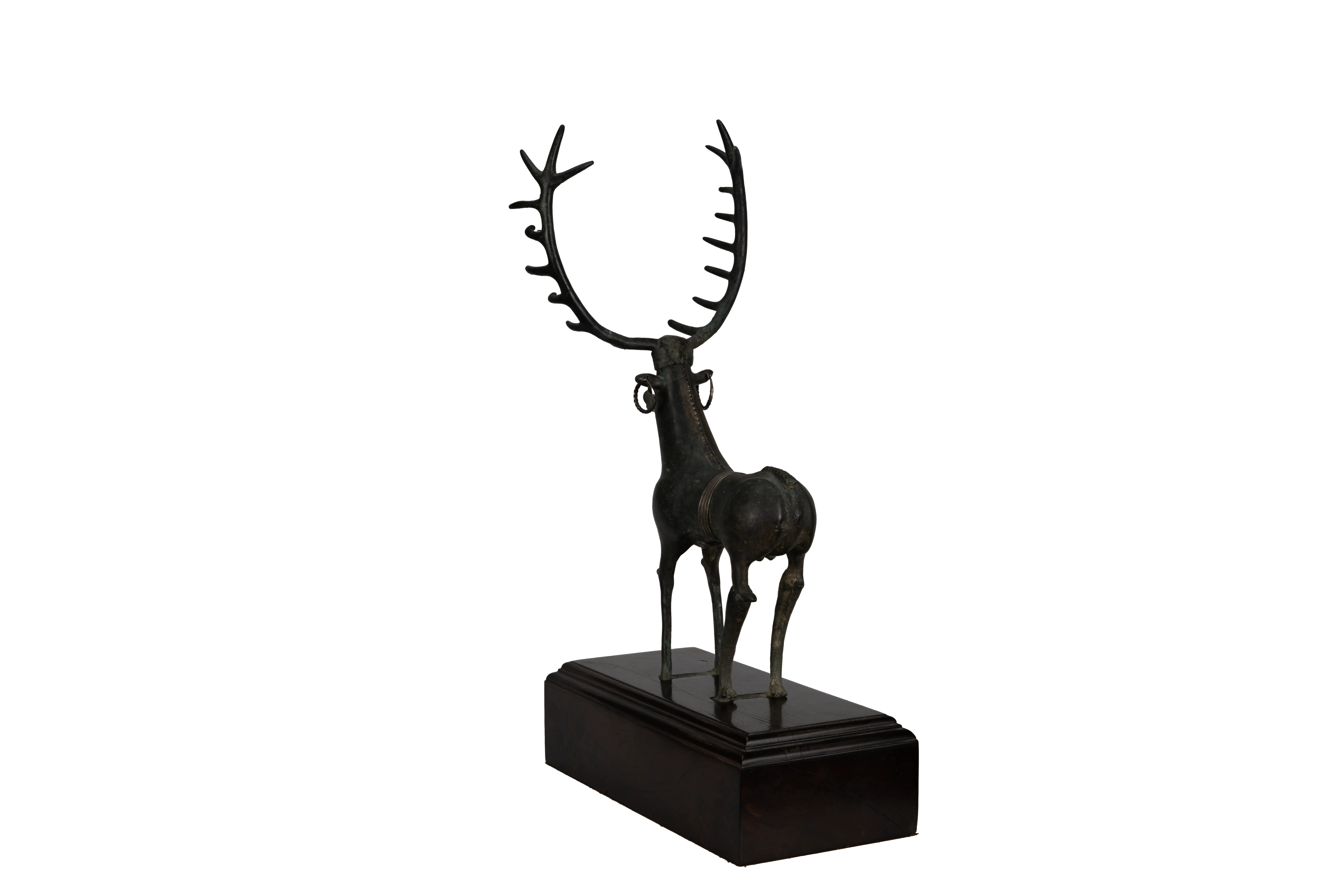
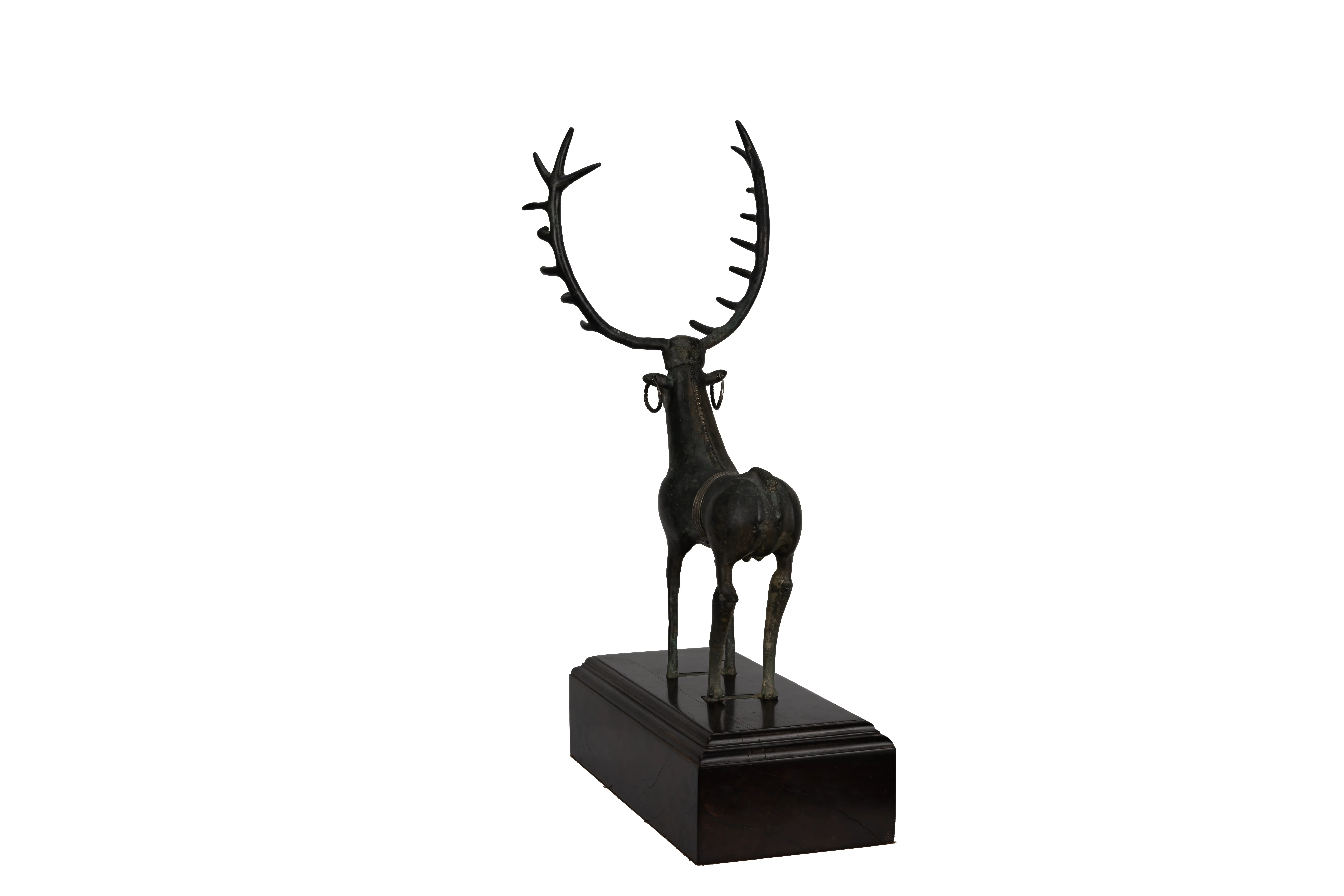
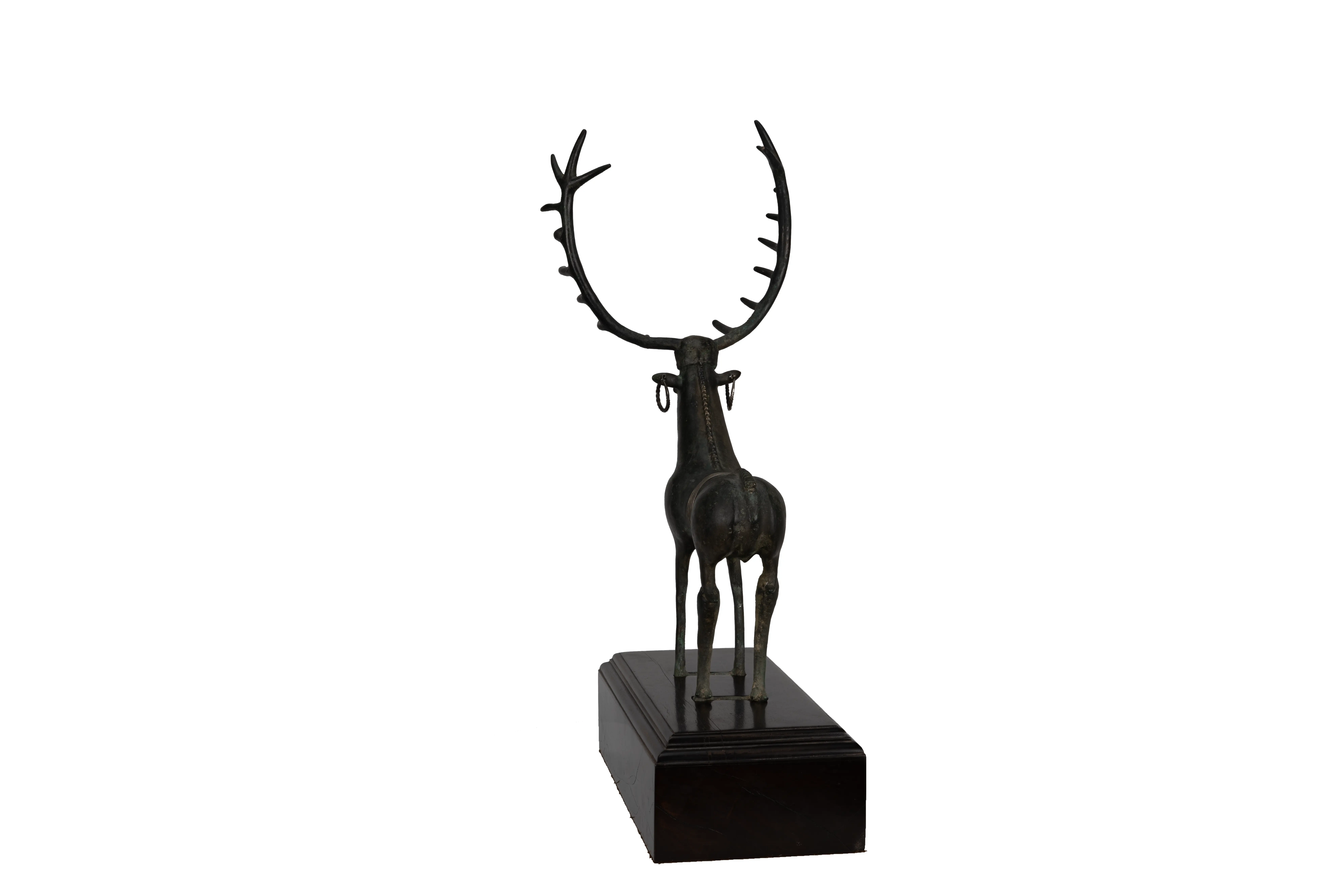
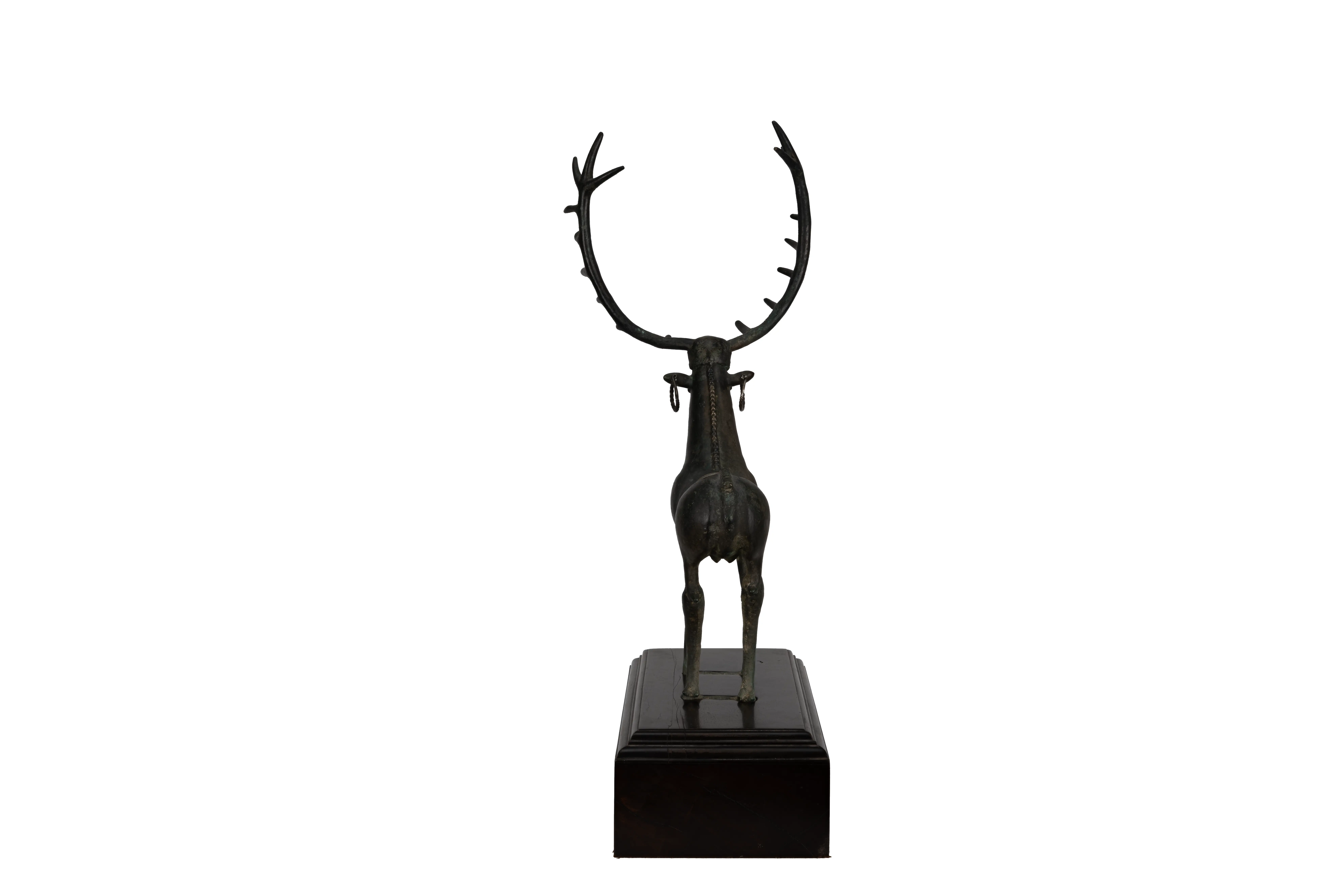
This bronze figurine of a deer dates back to the first millennium BCE and was for a long time kept in a private collection in the United Kingdom.
The deer is depicted with antlers rising upward in a crescent shape. Its ears are adorned with double rings, and the figure is shown with four legs carefully attached in a stylized manner. Scientific analysis revealed that the statuette contains several metals, including silver, lead, tin, and iron.
This historical artifact was created approximately 2,500–3,000 years ago and continues to attract the attention of scholars. In particular, the English researcher Max Bernheimer, International Director of Antiquities at Christie’s, noted that this object is a remarkable example of Saka-Scythian artistic tradition. He suggested that the metals used in its production may have been sourced from the Nurata Mountains in present-day Uzbekistan.
This interpretation is supported by visual parallels: similar depictions of deer can be found in rock carvings in the Sarmishsay gorge at the foothills of the Nurata Mountains. These connections highlight the cultural and artistic continuity across the ancient steppe regions.