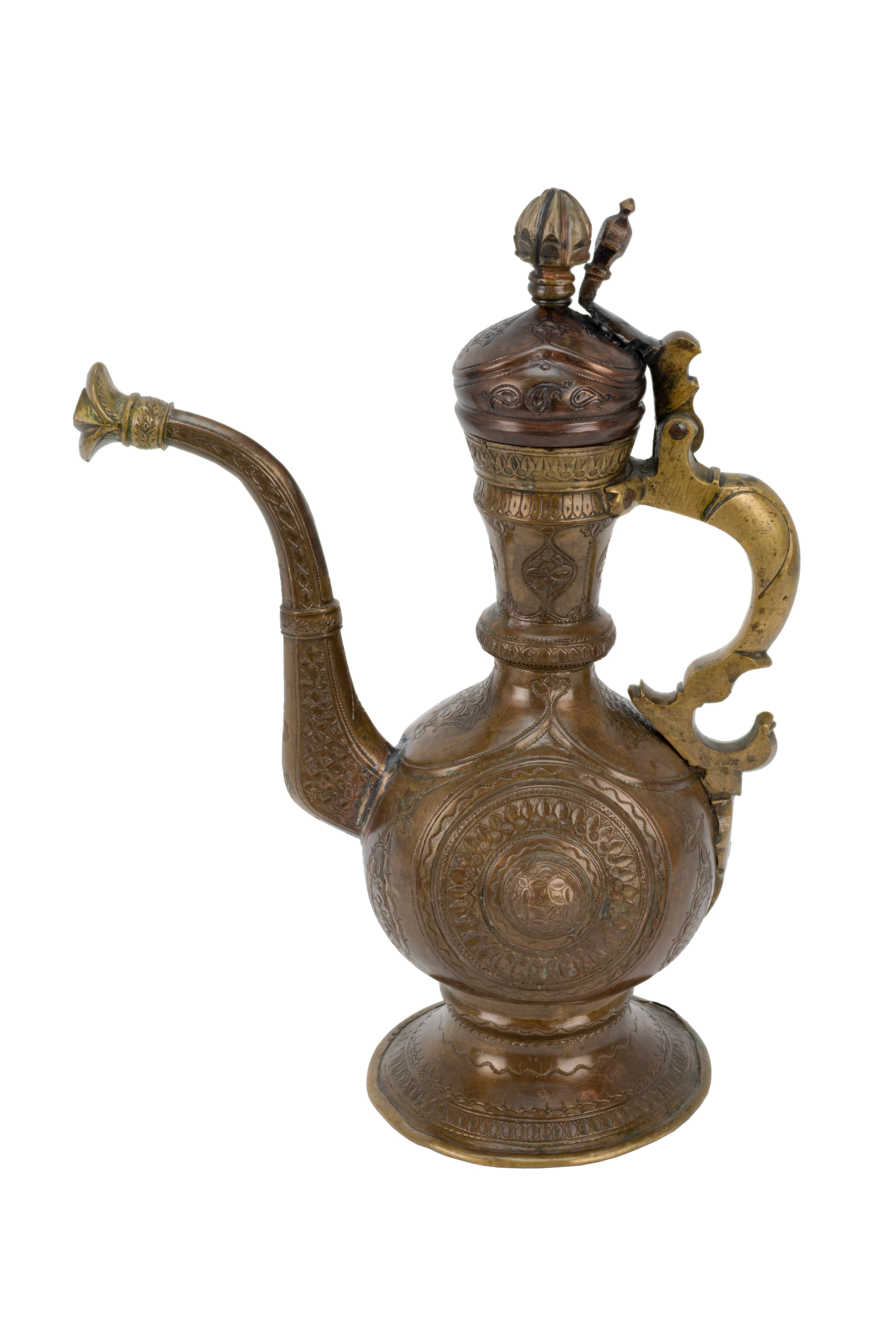
Oftoba (Water Ewer)
19th century Kokand. Copper. 30 × 22 sm. WOSCU collection
Audio guide
Audio available in: RU
Description
This object is an oftoba, a traditional water ewer produced in Kokand during the nineteenth century CE.
In Central Asian households such vessels were commonly used for washing hands before and after meals. The host would present the ewer together with a basin called a lagan, allowing guests to wash their hands as part of the etiquette of hospitality and cleanliness.
The form of the vessel is elegant and functional. Its rounded body supports a tall neck with a lid, while the elongated curved spout allows a controlled stream of water when pouring. The strong handle ensures a comfortable grip when lifting the vessel.
The surface of the ewer is richly decorated with engraved ornamentation. Central medallions and bands of vegetal patterns create a balanced decorative composition typical of Kokand copperwork of the nineteenth century CE.
During this period Kokand was one of the major craft centers of the Fergana Valley. Metalworkers there produced vessels that combined practical function with refined artistic design.
This ewer represents the craftsmanship, social customs, and aesthetic traditions of Central Asian culture.