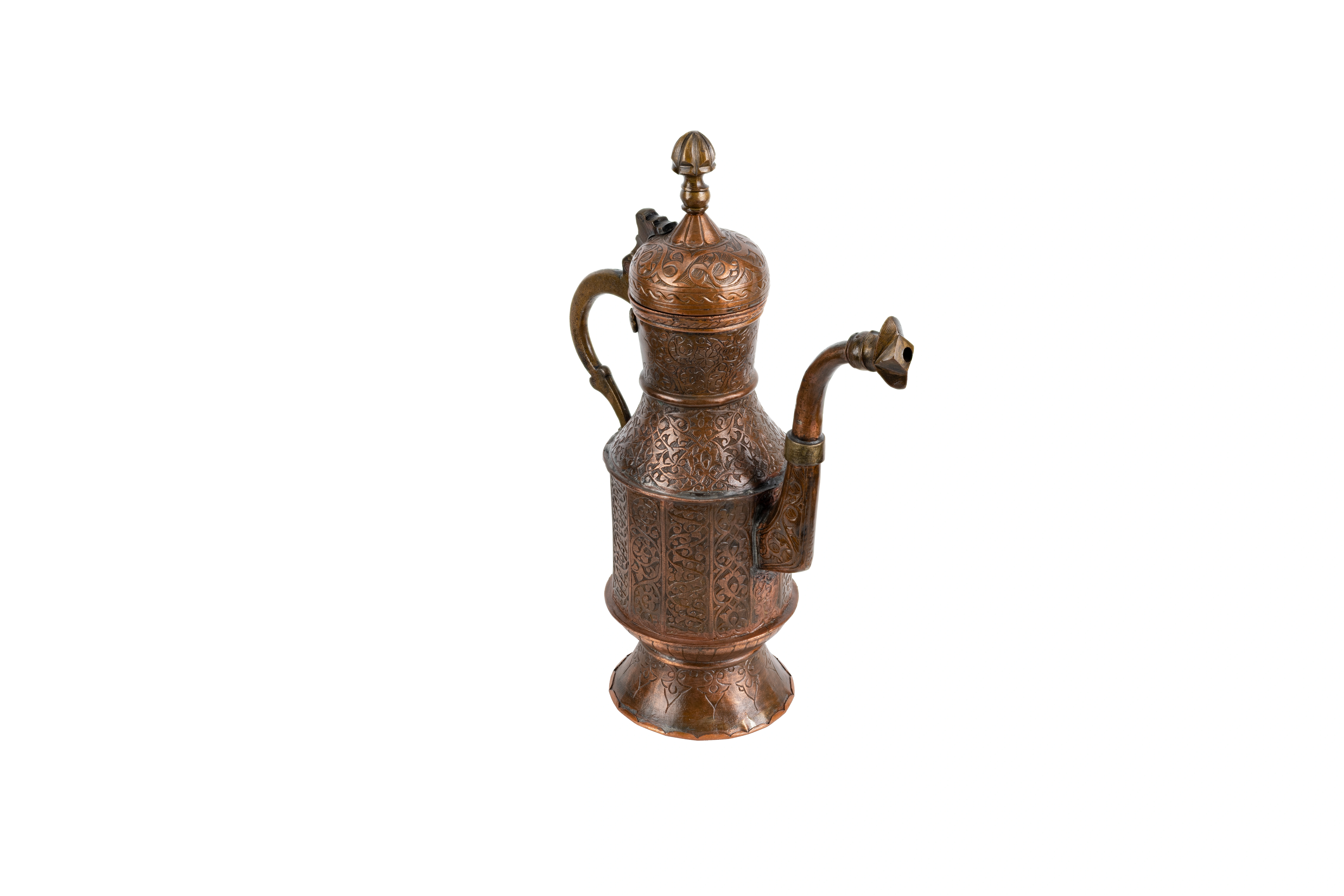
Oftoba (Water Ewer)
19th century. Kokand. Copper. 26 × 19 sm. WOSCU collection
Audio guide
Audio available in: RU
Description
This object is an oftoba, a traditional water ewer produced in Kokand in the 19th century CE.
In Central Asian culture such vessels were primarily used for washing hands before and after meals. This practice is closely connected with Islamic traditions of cleanliness, where water plays an essential role in daily life.
The shape of the oftoba is both elegant and functional. Its tall narrow body helps maintain the temperature of the water, while the curved spout allows a controlled stream when pouring. A lid protects the water from dust. The vessel was usually used together with a basin known as a lagan, into which the water flowed during washing.
The surface is decorated with delicate engraved ornamentation composed of vegetal and geometric motifs typical of the artistic traditions of the Fergana Valley.
During the 19th century CE Kokand was an important center of metal craftsmanship. Local artisans produced finely decorated copper and brass vessels that combined everyday functionality with refined aesthetic qualities.
This ewer reflects the traditions of hospitality, ritual cleanliness, and craftsmanship that shaped everyday life in Central Asia.