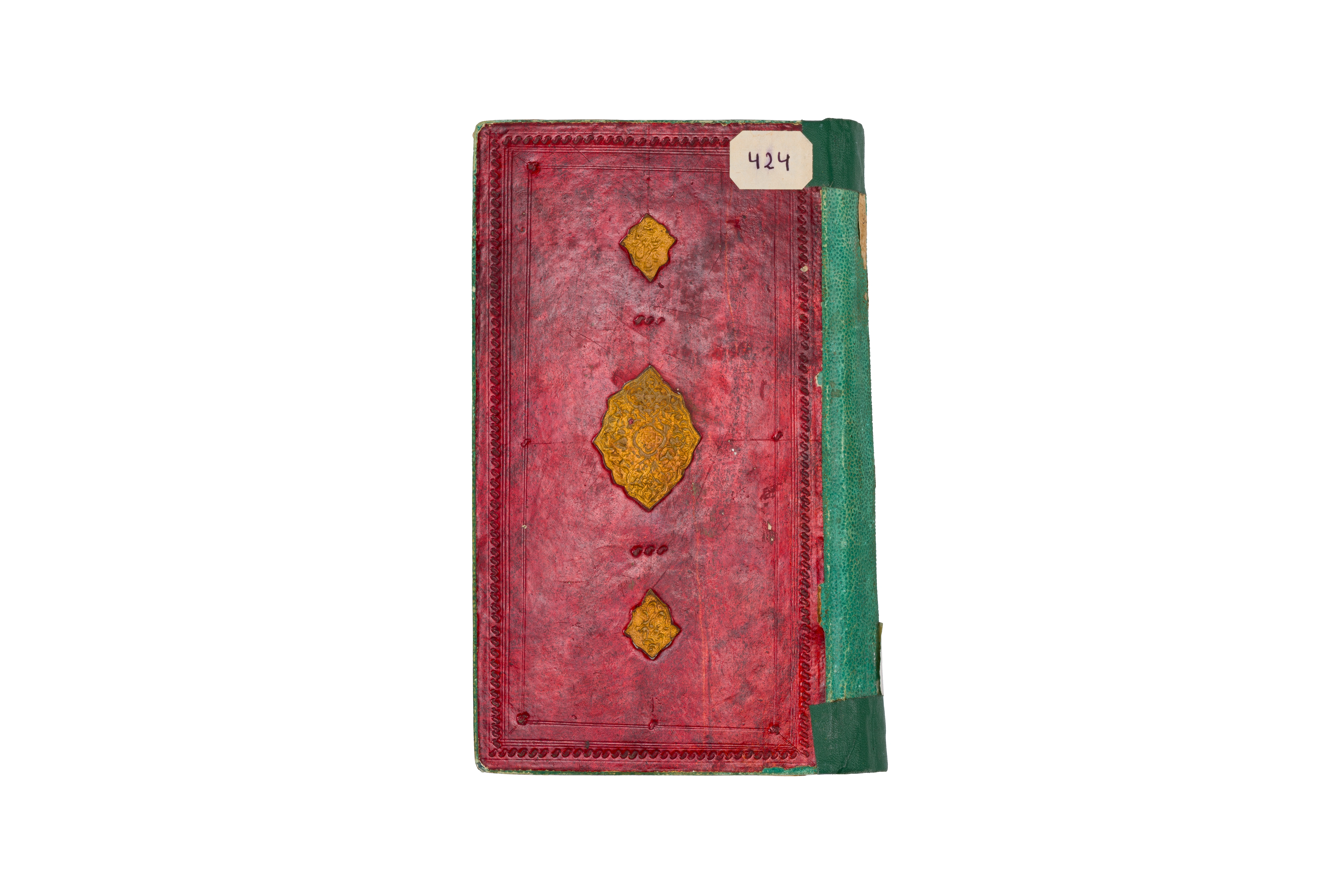
“Ashhar al-Lughat”
Gulamullah (Gul Muhammad) Siddiqi al-Hasnawi al-Ghaznawi. Calligrapher: Muhammad Riza walad-i Gul Muhammad Siddiqi al-Hansuwi al-Ghaznawi. Copied in 1727. India. Persian. Nastaliq script. Oriental paper. 13 × 24 cm. Manuscript of the Institute of Oriental Studies, Academy of Sciences of Uzbekistan
Description
This manuscript is Ashhar al-Lughat, a Persian explanatory dictionary copied in India in 1727. Tradition connects the work with Ghulamullah, or Gul Muhammad Siddiqi, a scholar associated with the Ghazni milieu. Such books were not reference tools in the modern sense, but working instruments of the learned world: through them readers approached poetry, theological texts, historical chronicles, and chancery documents. The manuscript shows a clear educational structure: words are organized into sections, key headings and terms are marked in red ink, and the dense nastaliq preserves the rhythm of the handwritten page. Persian linked Samarkand, Bukhara, Kabul, Ghazni, and Delhi; therefore, a dictionary produced and copied in the Indian environment remained part of a shared Islamic book culture. In the Babur sector, this object is especially meaningful: the Baburid Empire inherited not only the political memory of Mawarannahr, but also its linguistic discipline – respect for the word, precision of meaning, and learned transmission of knowledge. The red leather binding with gilded medallions reminds us that even a practical book could possess high artistic dignity.