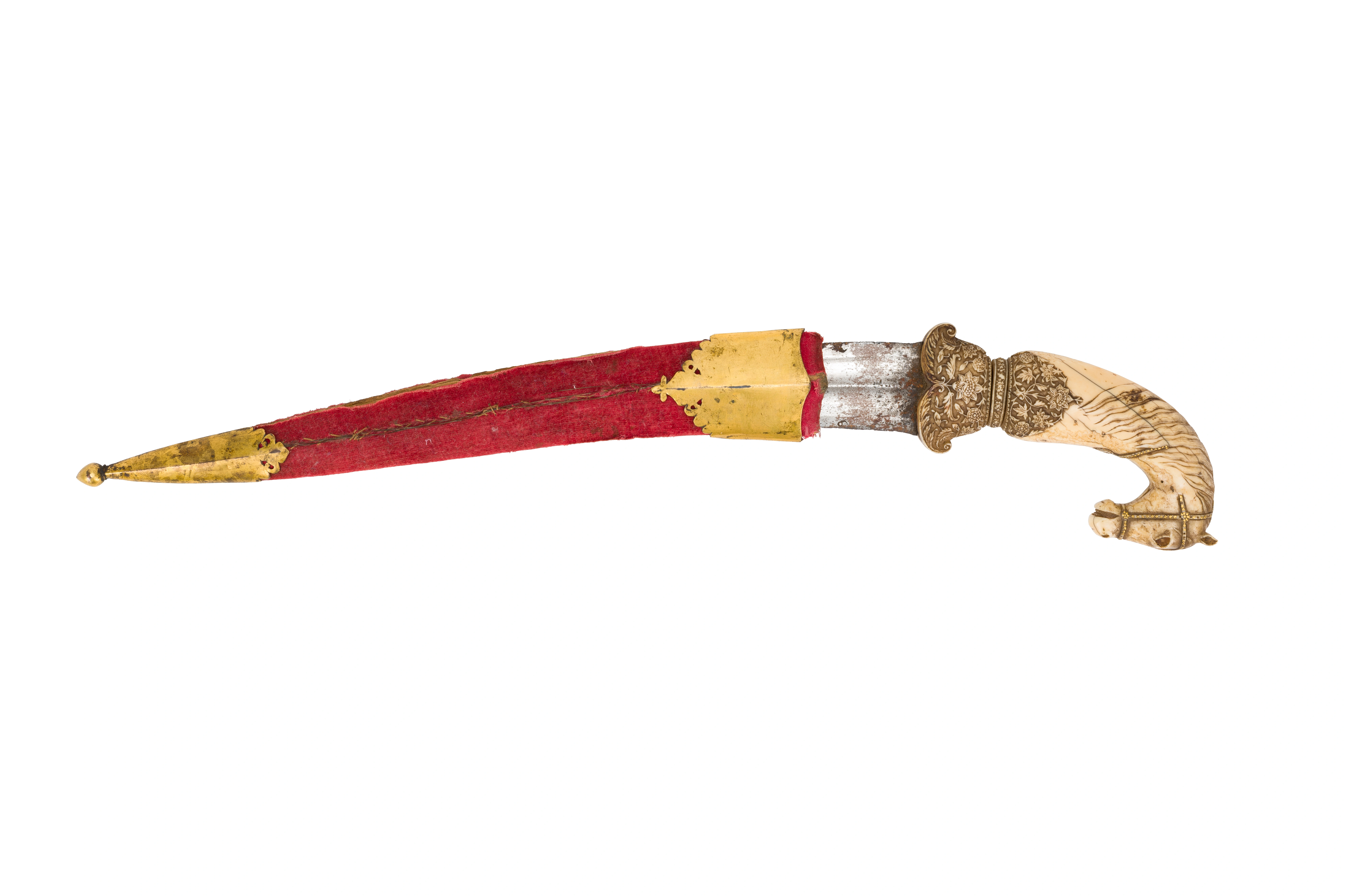
Dagger and Scabbard
Baburid Period. 17th century. India. Steel. Length: 37 cm. Handle: Walrus ivory. Length: 11.8 cm. Scabbard: 30.3 × 4.4 cm
Description
Before us is a ceremonial dagger with its scabbard, made in India in the seventeenth century, during the Baburid period. Its form belongs to the khanjar type: the steel blade has a graceful curve, while the hilt is shaped as a sculptural horse’s head. For the Baburid court, this motif was especially meaningful: the horse recalled the martial culture of Central Asia, from which Babur’s dynasty originated. The hilt is made of walrus ivory – a rare imported material valued for its density, pale colour, and expressive natural veining. The metal collar at the base is decorated with a vegetal ornament close to the language of the Islamic arabesque. The scabbard is covered with red velvet and fitted with gilded metal mounts; its vivid colour emphasized the ceremonial character of the object and made it visible within formal dress. Such daggers were rarely only weapons: they formed part of court costume, participated in rituals of gift-giving, and marked the owner’s rank. In the context of the Second Renaissance, this object shows how the heritage of Mawarannahr, Indian materials, long-distance trade, and Islamic decorative tradition came together in Baburid art.