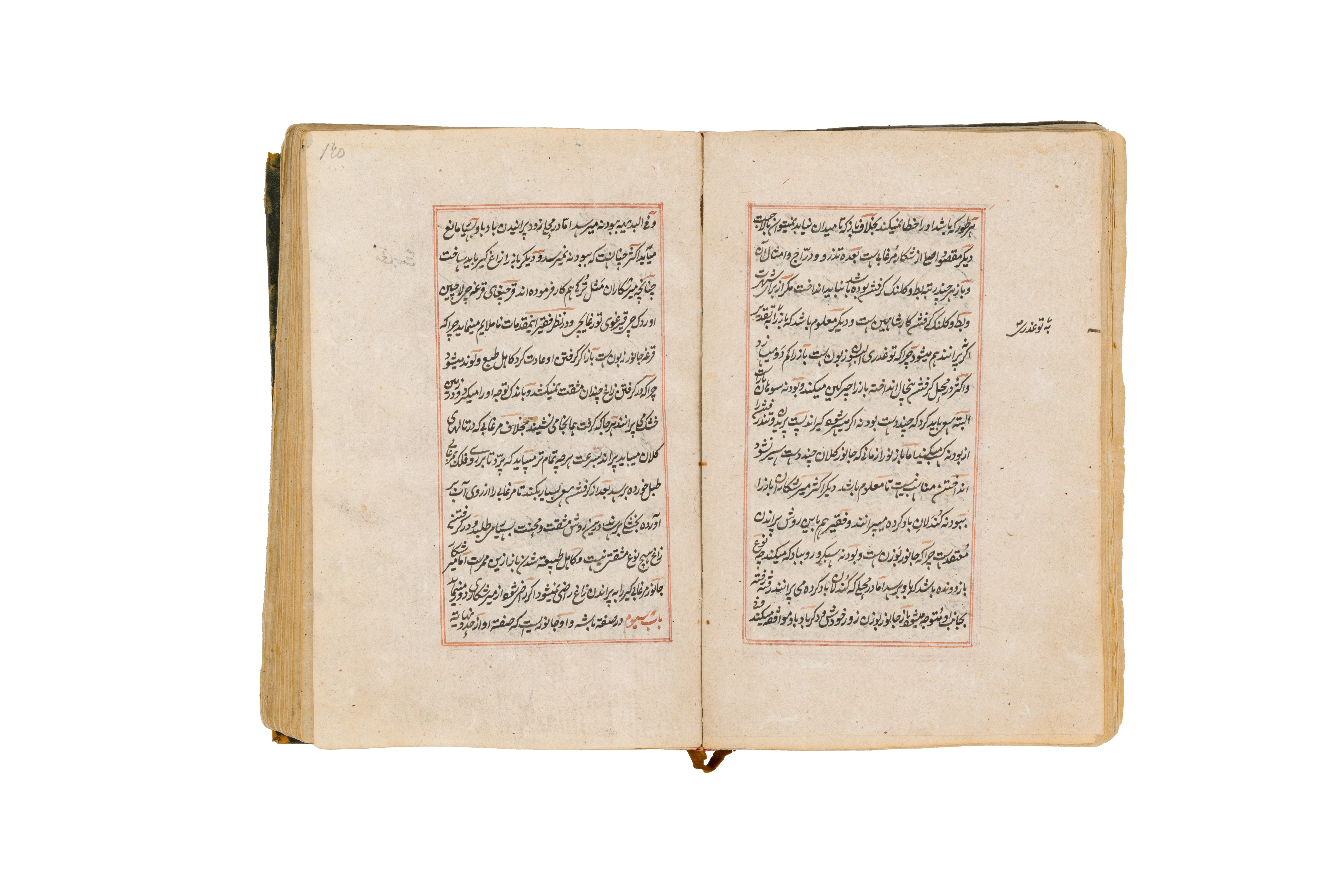
“Boznoma”
Muhib Ali ibn Nizamuddin Ali Khalifa al-Farghani. Copied in 1850. India. Persian. Nastaliq script. Oriental paper. 12.5 × 19.5 cm. Manuscript of the Institute of Oriental Studies, Academy of Sciences of Uzbekistan
Description
This manuscript takes us into the world of courtly falconry, where knowledge of nature formed part of power, etiquette, and military culture. The Boznoma, or “Book of Birds of Prey,” is attributed to Muhib Ali ibn Nizamuddin Ali Khalifa al-Farghani; the copy before us was transcribed in India in 1850, in Persian. The treatise described types of raptors, methods of selecting, taming, feeding, and treating them, as well as the duties of an experienced falconer. Diseases of birds and practical remedies occupied a special place: such texts combined observation, veterinary skills, and the courtly tradition of shikar – organized hunting. On the open pages we see dense nasta‘liq script, red rubrication, and fine ruling; the binding is modest, emphasizing the book’s practical, reference character. For its reader, it was both a working manual and a marker of educated elite culture. Its connection with the Second Renaissance is especially important: the Baburid brought to India Central Asian courtly habits, military discipline, and a sustained interest in describing the living world. The author’s nisba, al-Farghani, recalls Ferghana, Babur’s homeland, and the cultural routes between Mawarannahr and India.