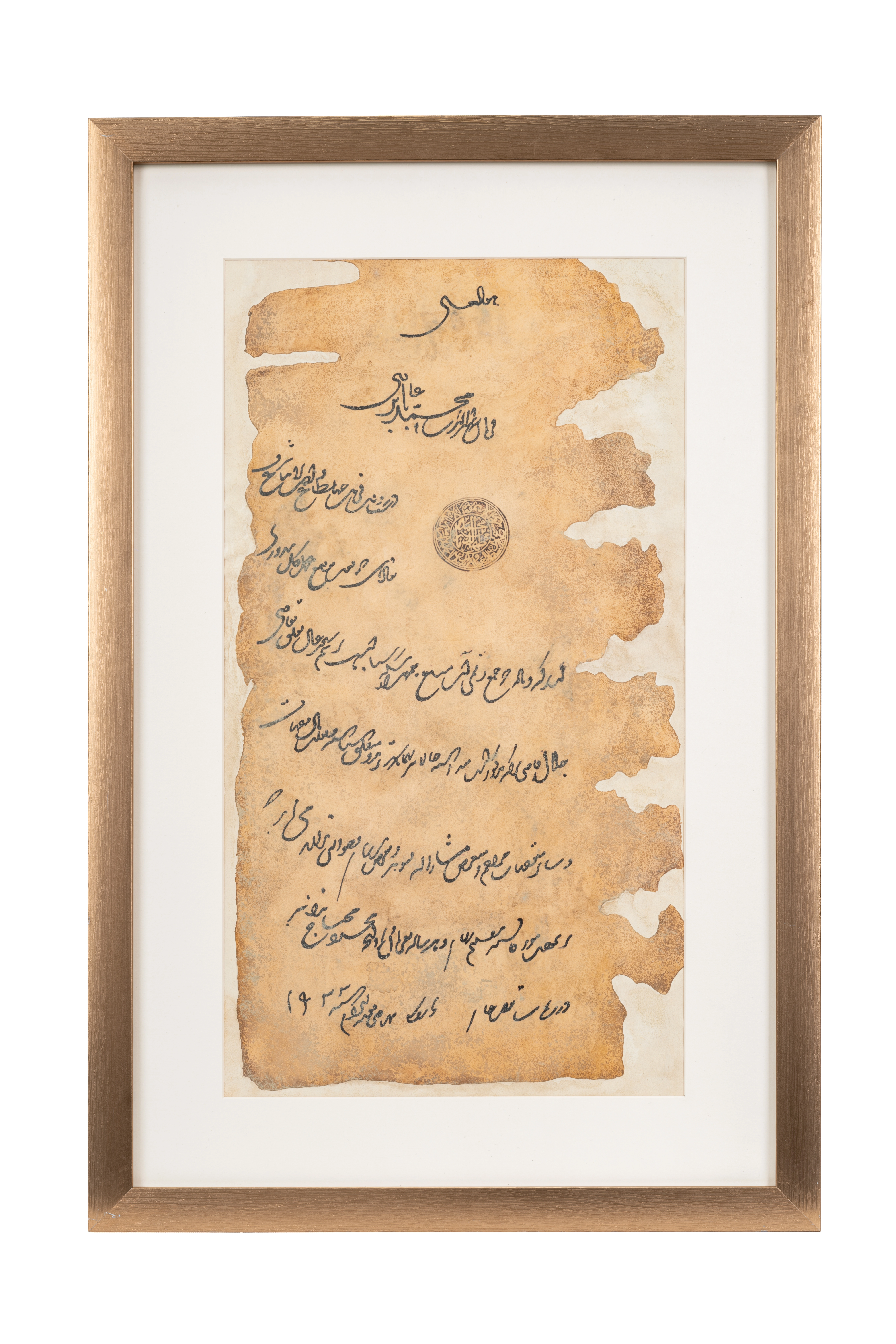
Decree of Babur
Baburid Рeriod. 16th century. India. Paper. 40 × 20 cm
Description
Before you is Babur’s decree – a rare example of early Baburid chancery culture in sixteenth-century India. The document is written on a small sheet of paper: its elongated format, free arrangement of lines, and round seal at the centre show that authority here is expressed not through a monument, but through a written order. The text is written in ink; larger lines alternate with more cursive ones, while losses along the edges recall the long life of paper as a working legal material. Such farmans fixed the ruler’s will: a grant, a confirmation of rights, or an instruction to officials and local holders of authority. For the Babur sector, this object is especially significant. It links Fergana, Kabul, and North India within a single administrative tradition. With Babur, Timurid ideas of legitimacy, seals, writing, and law entered the Indian world. This modest sheet may therefore be seen as the beginning of the written memory of a new empire.