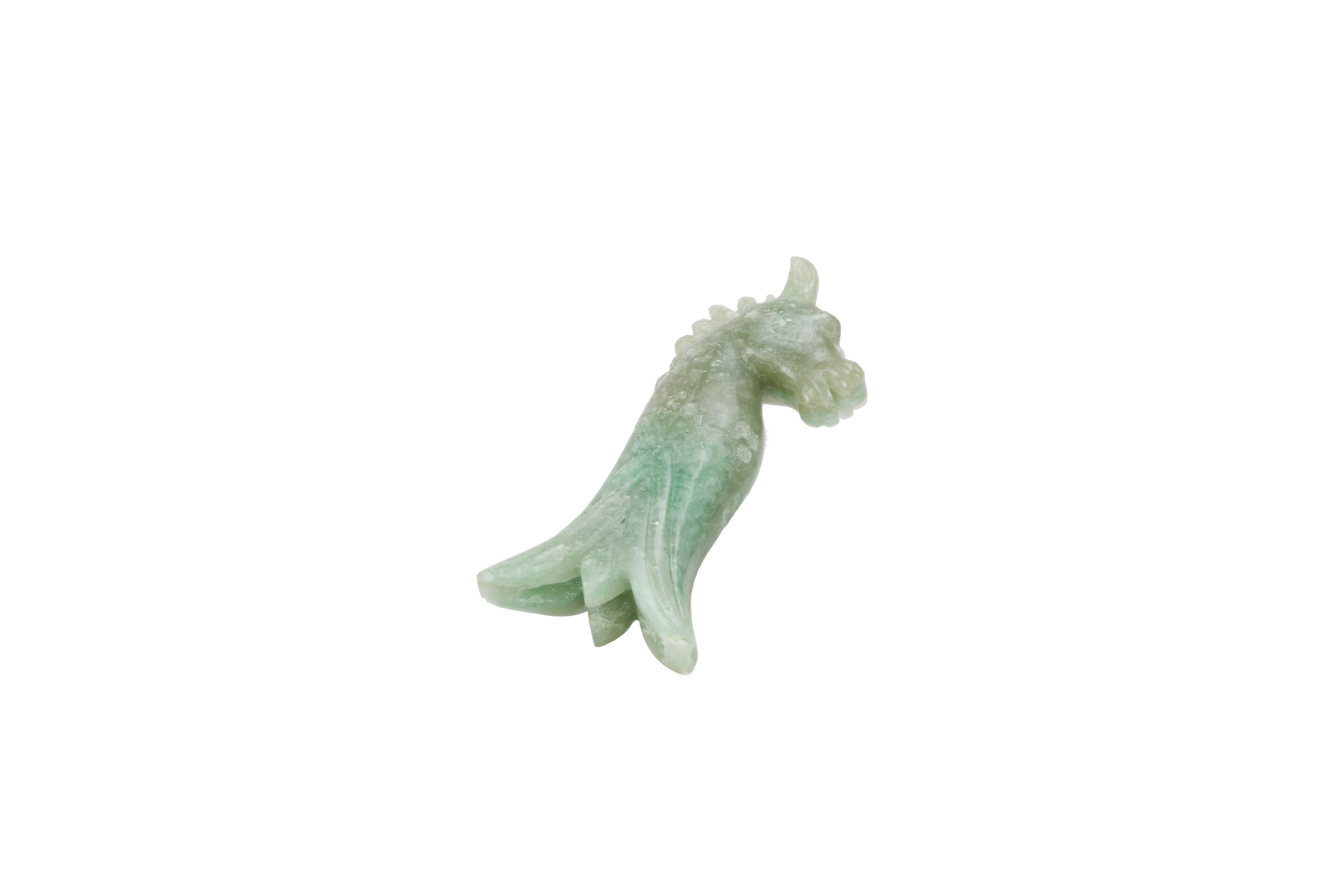
Dagger Hilt
Baburid Period. 17th – 18th centuries. India. Nephrite. 14.3 × 7.2 × 2.7 cm
Description
This dagger hilt reveals one of the most refined aspects of Baburid art: carving in nephrite. It was made in India in the seventeenth and eighteenth centuries and carved from pale greenish stone, almost translucent at the thin edges. The pommel takes the form of a horse’s head: the slightly open mouth, high crest of the mane, curved neck, and tense silhouette turn the object into a miniature sculpture.
For the court of Babur’s descendants, the horse was a sign of martial valor and a reminder of the dynasty’s Central Asian origins. Similar zoomorphic hilts are known in Baburid culture from the age of Shah Jahan and were especially valued as ceremonial elements of weapons. The soft polish deepens the stone, while natural inclusions create a lively play of light. At the base are petals recalling a lotus and a socket for the tang of the blade. This is not an ornament in itself, but the surviving part of a precious dagger worn at court ceremonies, durbars, and diplomatic receptions, where weapons also served as signs of status, taste, and power.