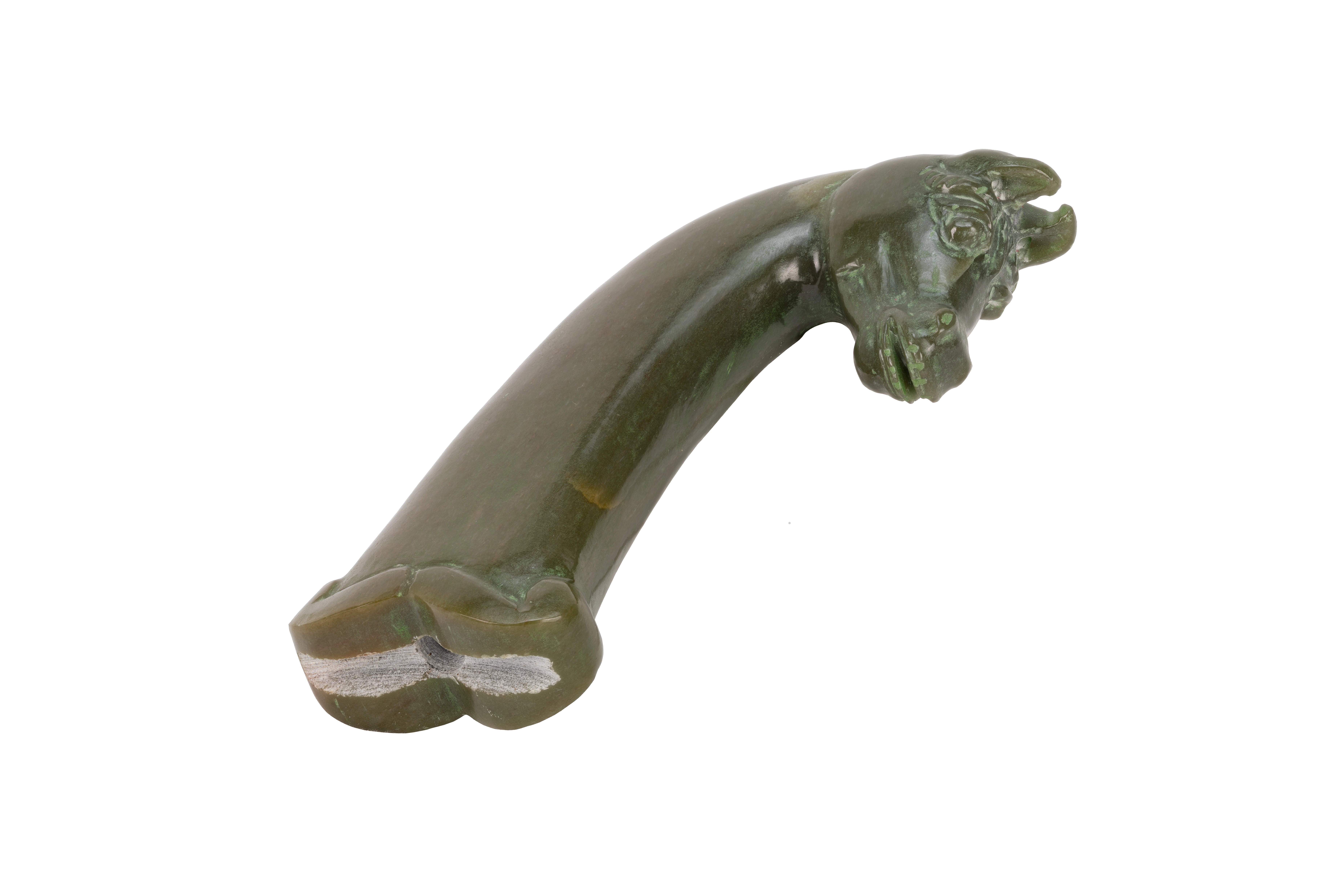
Dagger Hilt
Baburid Period. 17th–18th centuries. India. Nephrite (jade). 7.8 × 3.2 × 1.7 cm
Audio guide
Audio available in: RU
Description
This jade dagger hilt from the seventeenth–eighteenth century illustrates a distinctive feature of Baburid artistic culture: the transformation of weapons into objects carrying layered meanings of power, faith, and dynastic identity.
Carved in the form of a lion’s head, the hilt reflects a symbol deeply embedded in Islamic tradition. The lion was associated with Ali ibn Abi Talib, known as the “Lion of God,” and represented courage, justice, and martial virtue. Such imagery may also have functioned as a protective emblem for the owner.
The choice of nephrite (jade) is equally significant. Among the Timurids and their Baburid successors, jade was regarded as a prestigious material associated with rulership. Its use also reflects the Central Asian heritage of the Baburid dynasty.
The sculptural treatment of the animal demonstrates the interest in naturalistic representation. The carefully carved mane, facial features, and jawline reveal the technical mastery required to shape this extremely hard stone.
At the same time, the curved form ensured a secure grip, while the widened base prevented the hand from slipping during use.
This object exemplifies the synthesis of Central Asian heritage, Indian courtly aesthetics, and Islamic symbolic language characteristic of Baburid art.