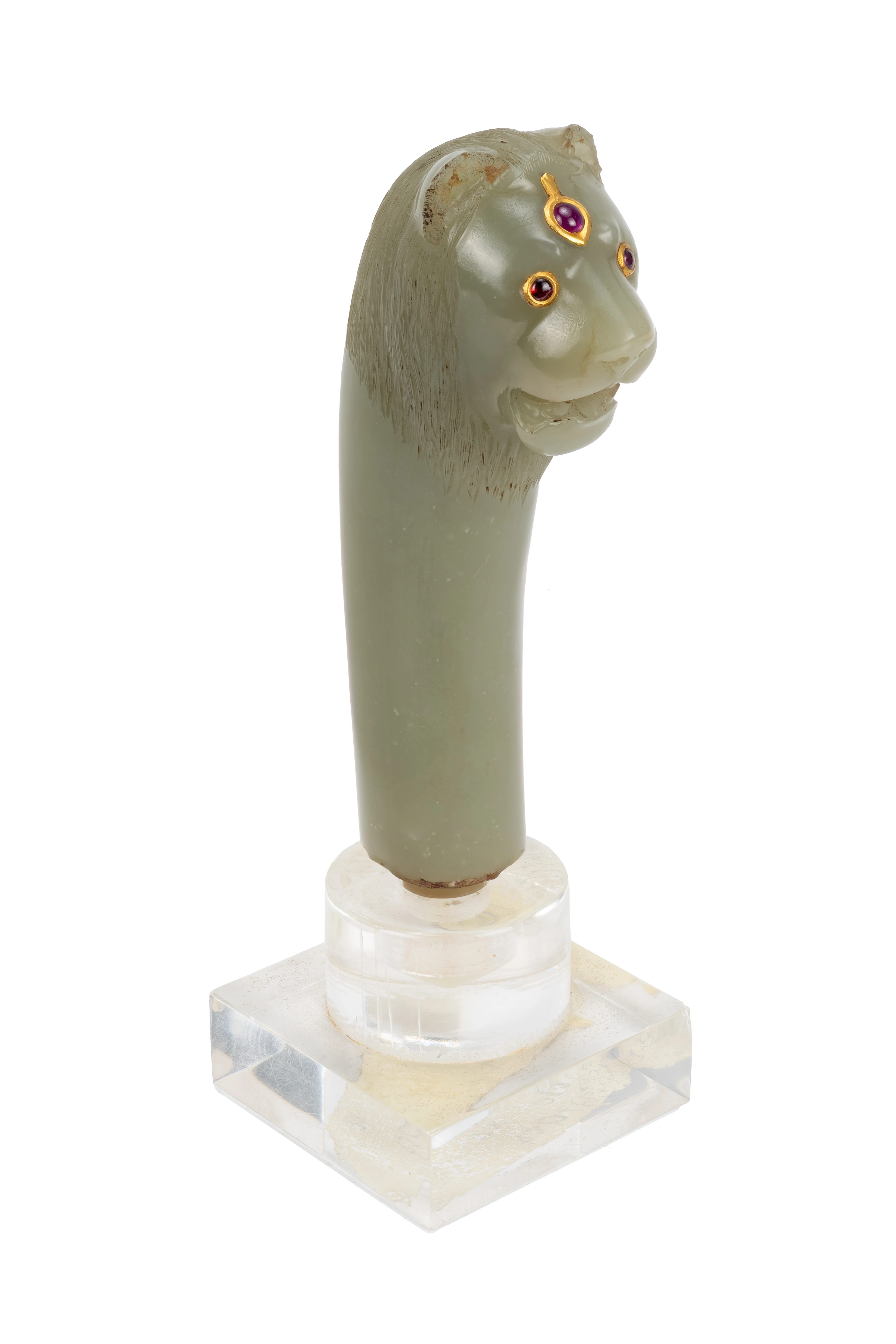
Lion-Shaped Hilt
Late 17th – early 18th century . India. Nephrite. 15.3 × 4.5 × 3.1 cm
Audio guide
Description
This object is a dagger hilt created in India at the end of the 17th or the beginning of the 18th century CE, during the Baburid period, the dynasty founded by the Central Asian ruler Zahir al-Din Muhammad Babur.
The hilt is carved from jade, a material highly prized across the Islamic world and Asia. Its durability, smooth texture, and soft translucent color made jade one of the most prestigious materials used for luxury weapons and courtly objects.
The pommel is shaped as a lion’s head. In the symbolic language of the Islamic and broader Eastern world, the lion represents power, courage, and authority. For this reason, lion imagery frequently appears in elite and courtly art.
The lion’s eyes are inlaid with precious stones set in gold mounts. Such embellishments were often executed using the Indian kundan technique, in which gemstones are secured in nearly pure gold without soldering.
Daggers of this type were rarely intended for combat. Within Baburid court culture, they functioned primarily as symbols of rank, prestige, and imperial favor, often presented as gifts to generals or princes.
The object reflects the remarkable artistic synthesis of the Baburid world, combining Central Asian dynastic heritage, Persian weapon forms, and the refined stone-carving and jewelry traditions of India.