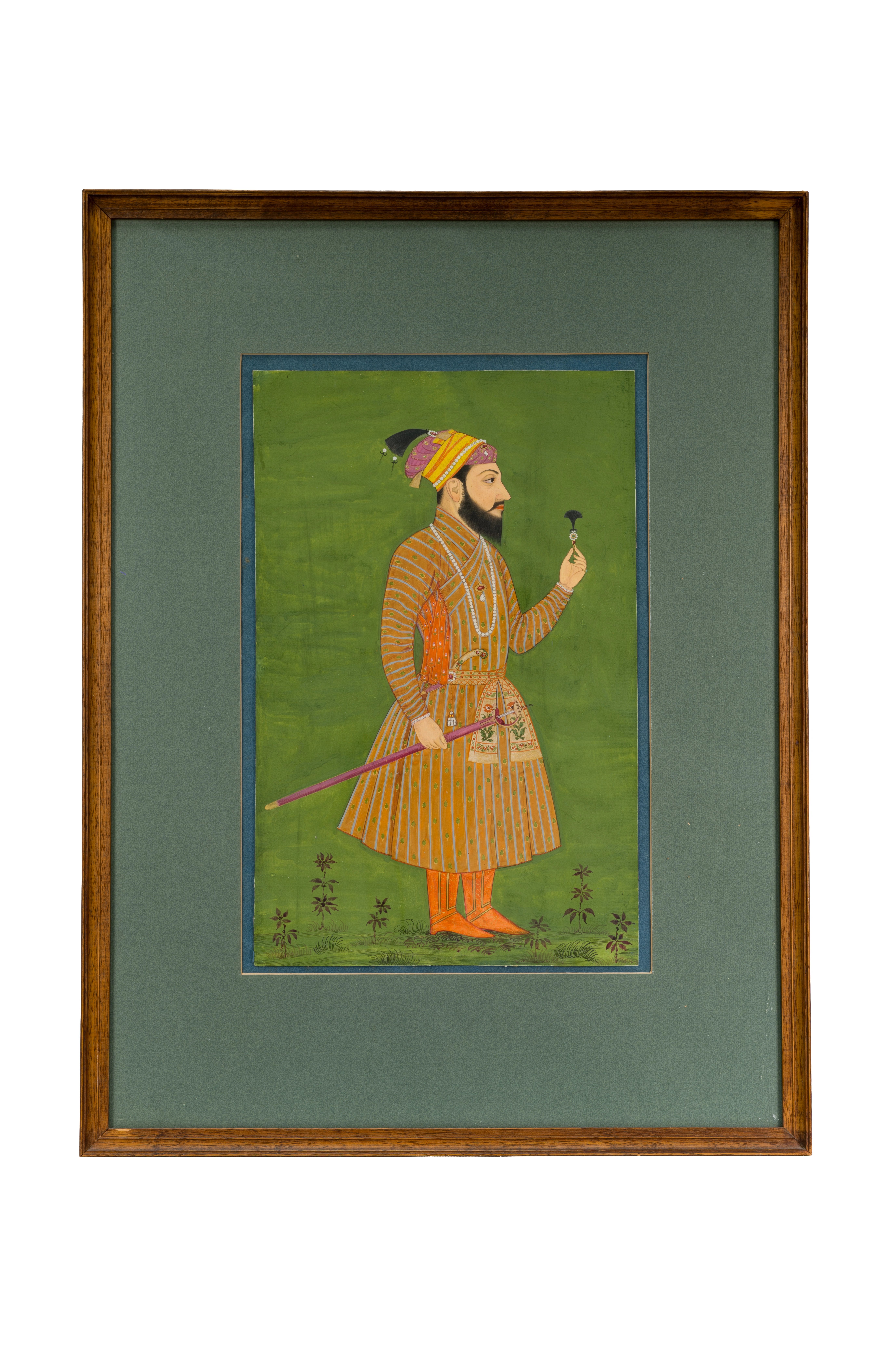
Portrait of а Baburid Рrince
Baburid Рeriod. 1700. India. Paper mounted on fabric; tempera. 42 × 27 cm
Description
This portrait of a Baburid prince was created in India around 1700, when Baburid painting was already preserving memory of the past as a language of dynastic legitimacy. The figure is shown in a strict profile turned to the right, against an even green background. This neutral field concentrates attention on the sitter’s rank: the striped orange jama, strings of pearls, elaborate turban with a black feather, and white sash with vegetal ornament form a ceremonial code of court culture.
In one hand, the prince holds a dark flower — a sign of refinement, poetic taste, and reflection on the transience of life. In the other is a long staff or cane, associated with the dignity of a governor or noble official. A dagger is visible at his belt, and a long blade rests nearby in coloured scabbards. The miniature belongs to the muraqqa album tradition: such folios were gathered in courtly and private collections. In the context of the Babur sector, it shows how the heirs of Timurid culture in India transformed portraiture into an elegant language of authority, memory, and self-representation.