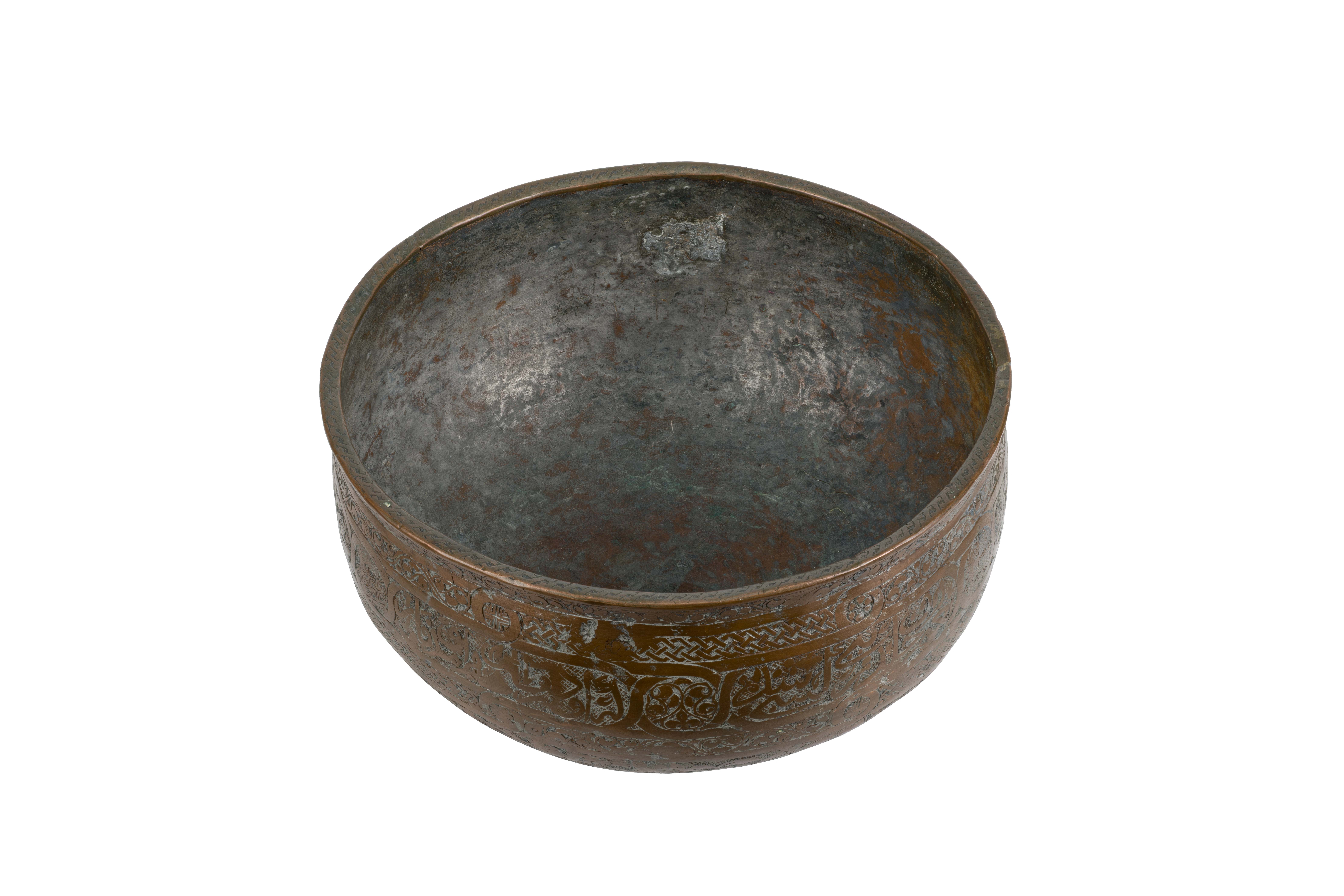
Bowl
15th–16th centuries. Khorasan. Bronze. 24.2 × 13 cm
Audio guide
Audio available in: UZ
Description
This bronze bowl of the fifteenth–sixteenth centuries originates from Khorasan, a region that remained one of the most important centers of artistic metalwork in the Islamic world during the late Timurid period.
A prominent feature is the engraved decorative band surrounding the body of the vessel. Such compositions typically combine calligraphic inscriptions, vegetal arabesques, and geometric interlace patterns. The inscriptions often contained blessings for the owner, expressing wishes for prosperity, longevity, and good fortune, thus transforming a functional object into a bearer of symbolic meaning.
The manufacturing technique also demonstrates remarkable craftsmanship. Bowls of this type were usually raised from a single sheet of metal using hammering techniques, then carefully polished and decorated with fine engraving. In some cases, the engraved lines were filled with dark compounds to enhance visual contrast.
It is also noteworthy that the interior of such vessels was often tinned, giving the surface a silvery appearance and making it more suitable for contact with food.
Objects of this kind could function both in everyday urban settings and within scholarly or Sufi environments, where material objects were often associated with intellectual and spiritual symbolism.