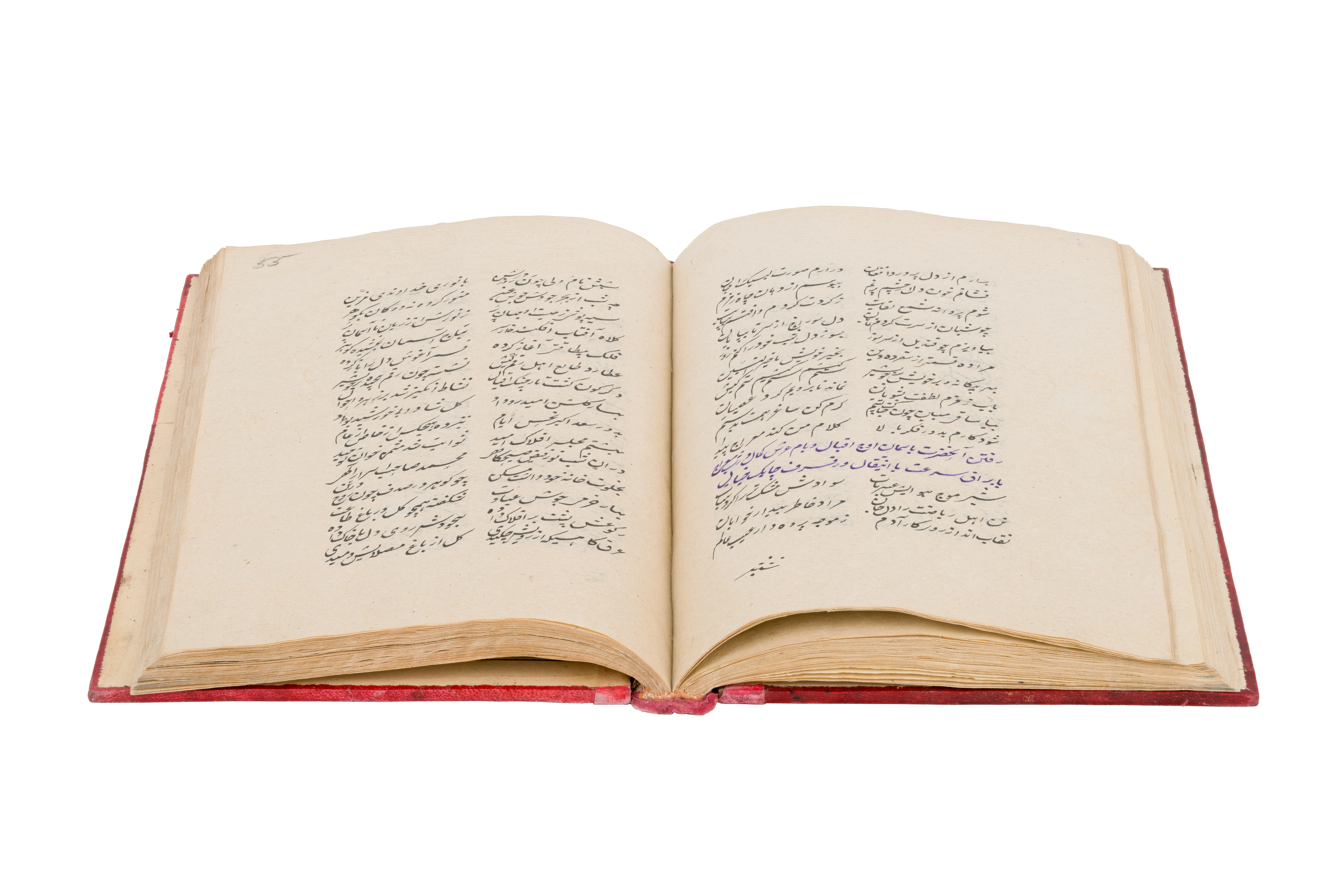
“The Shah and the Dervish”
Hiloly Astrobody. Copied in 1812. Persian. Nastaliq script. Kokand paper. 14.5 × 25 cm. Manuscript of the Institute of Oriental Studies, Academy of Sciences of Uzbekistan
Description
The bright light-green binding immediately distinguishes this manuscript from many traditional Islamic books of Central Asia. Its gilded medallions and delicate vegetal embossing transform the volume into both a literary work and a refined artistic object.
This is a copy of “Shah and Dervish,” a poem by Hilali Astarabadi, transcribed in Kokand in 1812. The manuscript belongs to the period of cultural flourishing in the Kokand Khanate, when poetry, calligraphy, and manuscript production experienced remarkable growth throughout the Ferghana Valley.
The text is written in elegant nastaliq script, the principal calligraphic style for Persian poetry. Its flowing lines create an almost musical rhythm across the page. On several folios, verses extend diagonally into the margins, a sophisticated feature used to incorporate additional lines while also demonstrating the skill of the scribe.
The manuscript opens with the sacred formula “In the name of God, the Most Merciful, the Most Compassionate,” followed by philosophical reflections on the fleeting nature of worldly power. In the Sufi interpretation of the poem, the shah symbolizes earthly authority, while the dervish represents humility and the spiritual search for divine truth.
This manuscript demonstrates how the literary and intellectual traditions associated with the Timurid Renaissance continued to shape Islamic culture in Central Asia centuries later.