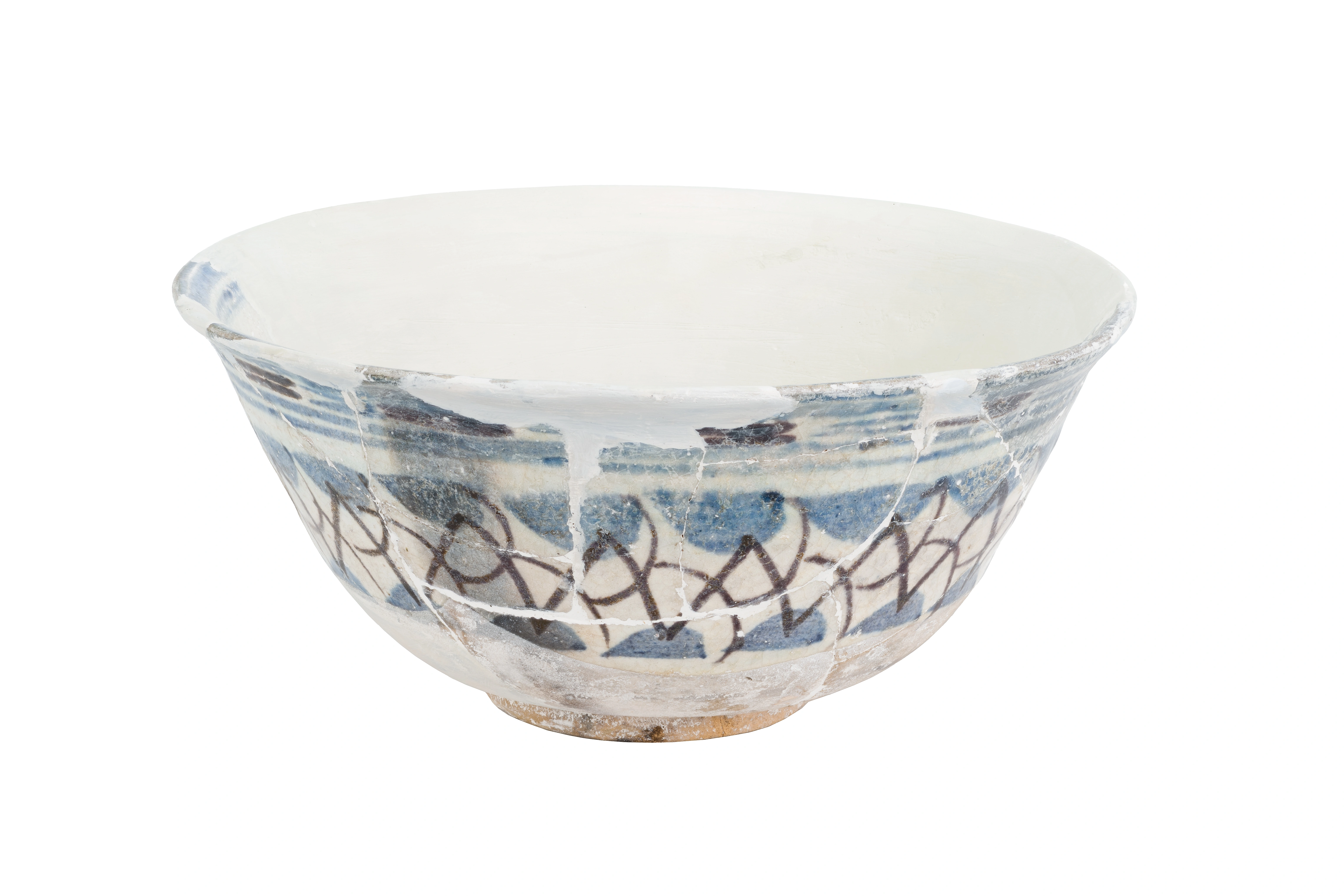
Bowl
15th century. Tashkent. Ceramic; engobe, decorated with cobalt pattern. 9.5 × 20.8 cm. WOSCU collection
Description
This bowl is made of local clay and coated with a white engobe, creating a light surface that visually resembles porcelain. Over this background, cobalt pigment was used to paint vegetal ornamentation, with a central medallion forming the compositional focal point.
Particular attention should be paid to the exterior decoration. The alternation of angular and wave-like lines produces a sense of continuous movement. This graphic quality relates the ceramic decoration to the ornamental language of contemporary textiles and architectural tilework.
Visible restoration joins indicate that the object survived in fragments before being reassembled. Such traces are typical of archaeological ceramics and emphasize the importance of their preservation.
Based on its dimensions, the bowl likely served for presenting food or drink during domestic meals. Objects of this kind shaped the aesthetic environment of everyday urban life, where utility and visual refinement were closely interconnected.
Ceramic vessels of this type illustrate the artistic vocabulary of Tashkent potters of the fifteenth century–restrained in technique yet refined in composition.