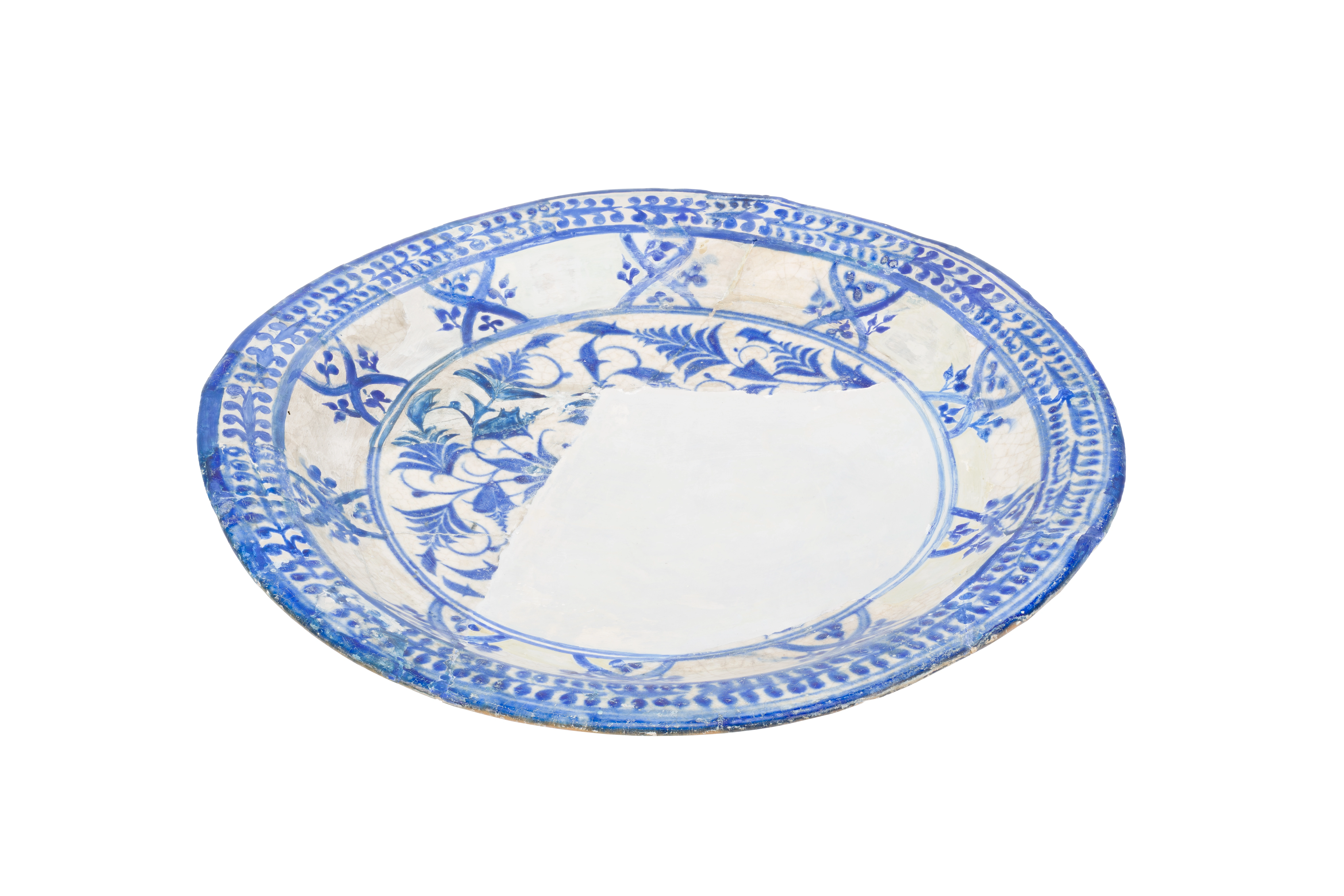
Bowl
15th–16th centuries. Tashkent. Ceramic; engobe, cobalt decoration, colorless glaze. 6.5 × 40.5 cm. WOSCU collection
Audio guide
Audio available in: UZ
Description
This dish, dated to the fifteenth–sixteenth centuries, represents a mature phase of Tashkent ceramic production, when artistic traditions established during the Timurid era continued to evolve within changing historical circumstances.
Its design is structured through a clear hierarchy of decorative zones. The wide rim is articulated with alternating vegetal motifs and rhythmic ornamental bands, creating a sense of continuity and visual flow. In contrast, the central area is treated more sparingly, allowing the border decoration to dominate the visual perception of the object.
The decoration was executed in cobalt over a white engobe, a technique that allowed potters to achieve the prestigious visual effect associated with porcelain while maintaining established regional ceramic practices. The precision of the brushwork and the balance of repeating motifs point to the high level of workshop organization.
The profile of the vessel, with its broad and slightly inclined rim, corresponds to serving dishes intended for formal dining settings, where craftsmanship and decoration also communicated social prestige.
This object illustrates the synthesis of technical skill, ornamental discipline, and aesthetic continuity characteristic of Central Asian applied arts of this period.