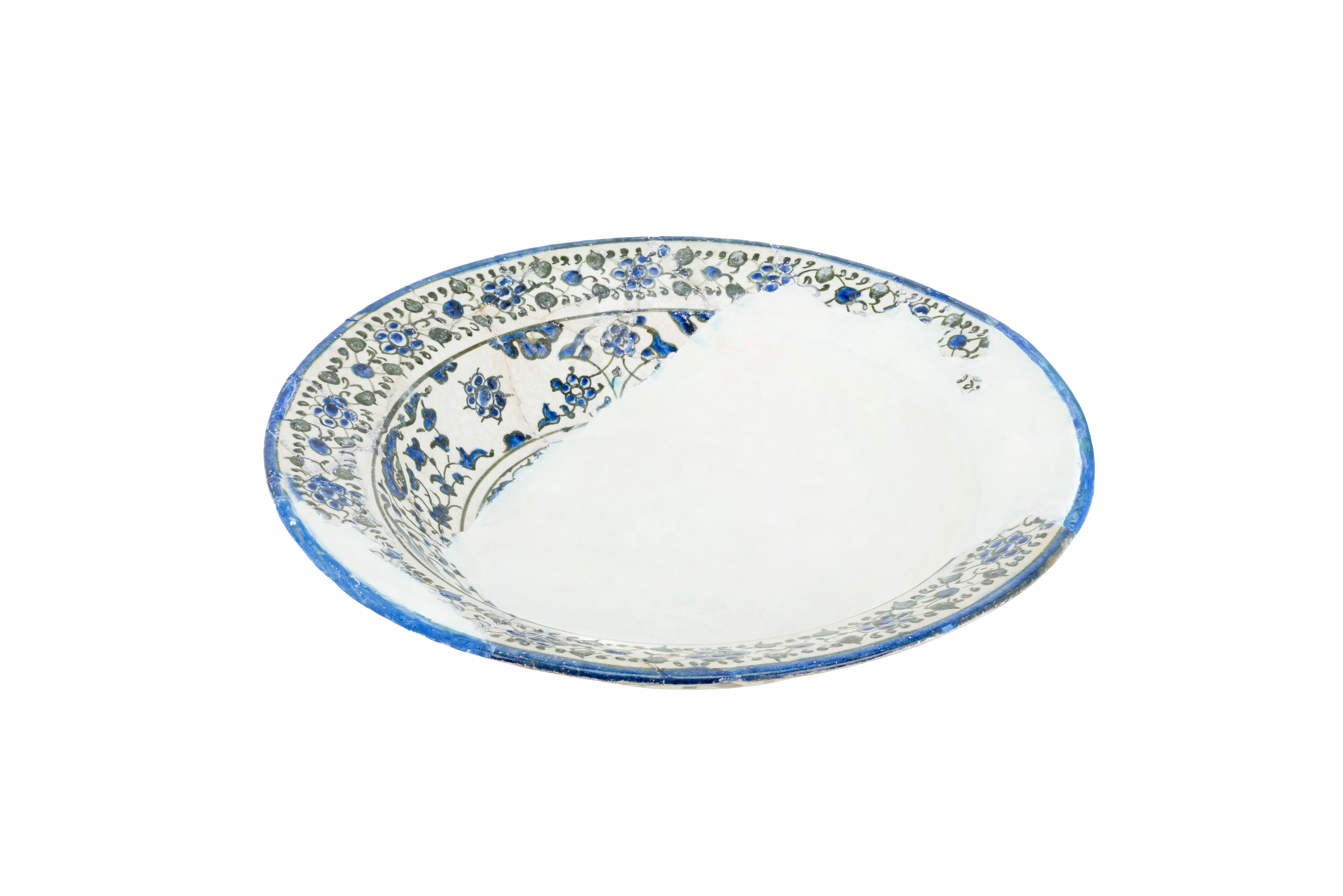
Bowl
15th – 16th centuries. Тashkent. Ceramic; engobe, cobalt and manganese decoration, transparent glaze.7.5 × 36.2 cmWOSCU collection
Audio guide
Audio available in: UZ
Description
This ceremonial ceramic dish from the fifteenth to sixteenth centuries was produced in Tashkent, a major center of craftsmanship during the late Timurid and early Shaybanid periods.
The richly decorated wide rim is particularly notable. The vegetal ornament, painted in cobalt and manganese over a white engobe, belongs to the islimi tradition — one of the principal decorative systems of Islamic art. Flowing stems and blossoms symbolized the imagery of the garden of paradise, an important concept in the visual culture of the Islamic world.
The technique reflects the advanced level of local ceramic production. Cobalt created the deep blue tones, while manganese was used for outlining and strengthening the graphic clarity of the composition. A transparent glaze both protected the surface and enhanced the visual depth of the ornament.
The large diameter indicates its role in communal dining traditions. Such dishes typically occupied a central place on the dastarkhan and were associated with hospitality and social interaction.
This object demonstrates how Central Asian ceramics integrated local traditions with influences from Iranian decorative arts and the prestige of Chinese blue-and-white porcelain, resulting in a distinctive regional aesthetic.