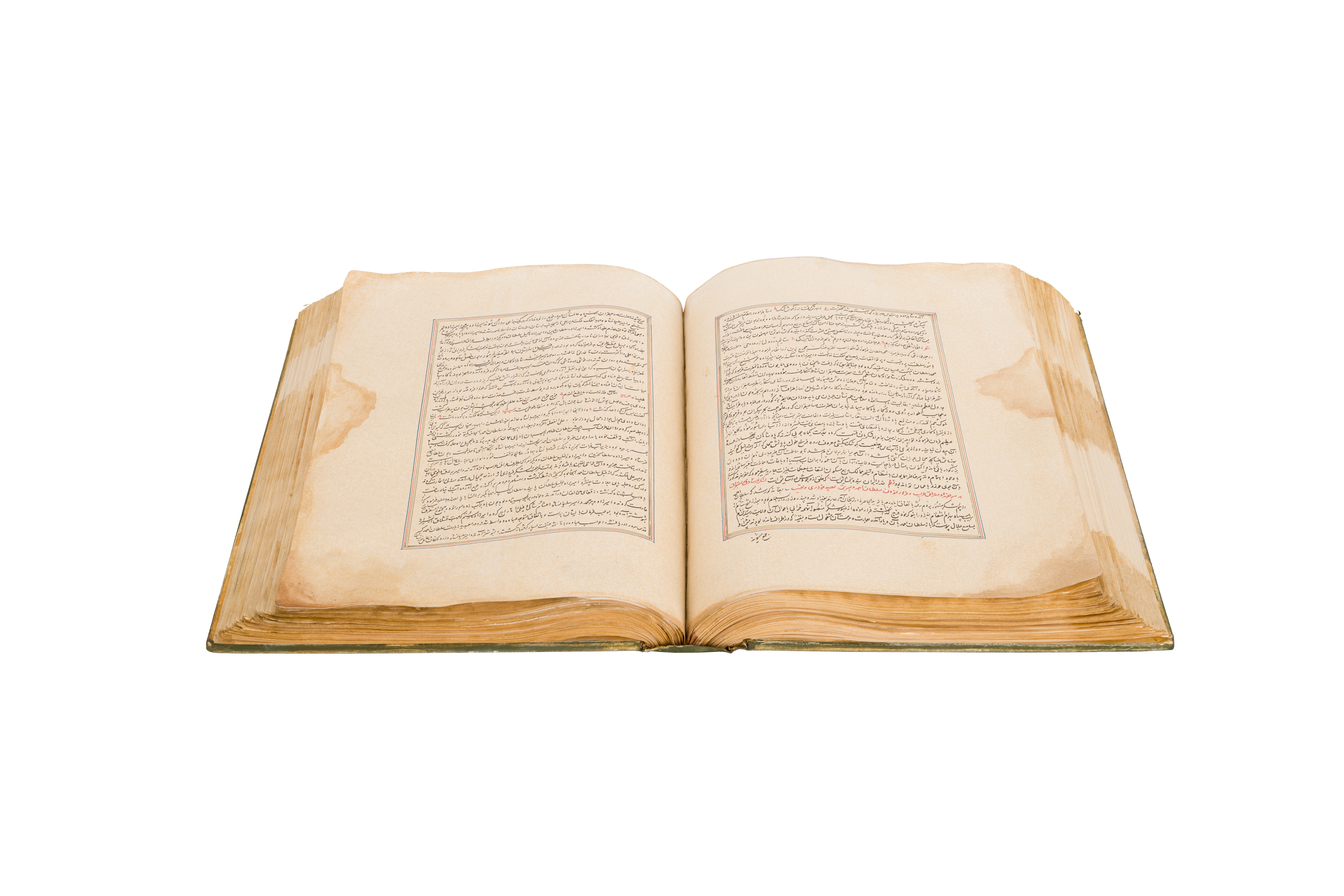
“Chinese Journye”. Manuscript Page
Ghiyath al-Din Naqqash. Included in Hafiz Abru’s “Zubdat at-tawarikh Baysunghuri”. Mid-15th century. Central Asia. 42 × 32.5 cm. Replica
Audio guide
Audio available in: UZ
Description
Before you is a manuscript page from the mid-fifteenth century known as the “Chinese Journey,” authored by Ghiyāth al-Dīn Naqqāsh, a court artist and participant in a Timurid diplomatic mission to China.
The text survives through the historian Ḥāfiẓ-i Abrū, who incorporated it into his historical compendium Zubdat al-tawārīkh-i Baysunghurī, one of the major historiographical works of the reign of Shāhrukh. In this compilation, Central Asia is positioned as a cultural and political intermediary between major Eurasian civilizations.
The epithet “Naqqāsh,” meaning “painter” or “decorator,” reflects the author’s professional background and helps explain the descriptive quality of his narrative. Unlike conventional diplomatic reports, his account pays close attention to visual and material details—architecture, dress, ceremonial practices, and urban organization.
The manuscript records observations of Ming China and provides insight into how a Central Asian observer perceived a different cultural environment. Among the phenomena described are the use of paper currency, an advanced system of roads and postal stations, and monumental religious structures. These details are of considerable value for the study of fifteenth-century intercultural exchange.
The object displayed here is a replica, produced to convey the format, layout, and calligraphic features of the original while preserving the integrity of the source manuscript.
The text is written in a refined calligraphic hand, with carefully structured ruling that guided the layout of the page. This reflects the high level of technical precision in manuscript production.
This exhibit illustrates the active diplomatic and cultural connections between the Timurid state and China. It also demonstrates that manuscript culture in Central Asia encompassed not only religious and literary works, but also observational and historical narratives.
Thus, this page represents a documentary record of cross-cultural encounter between two major civilizations.