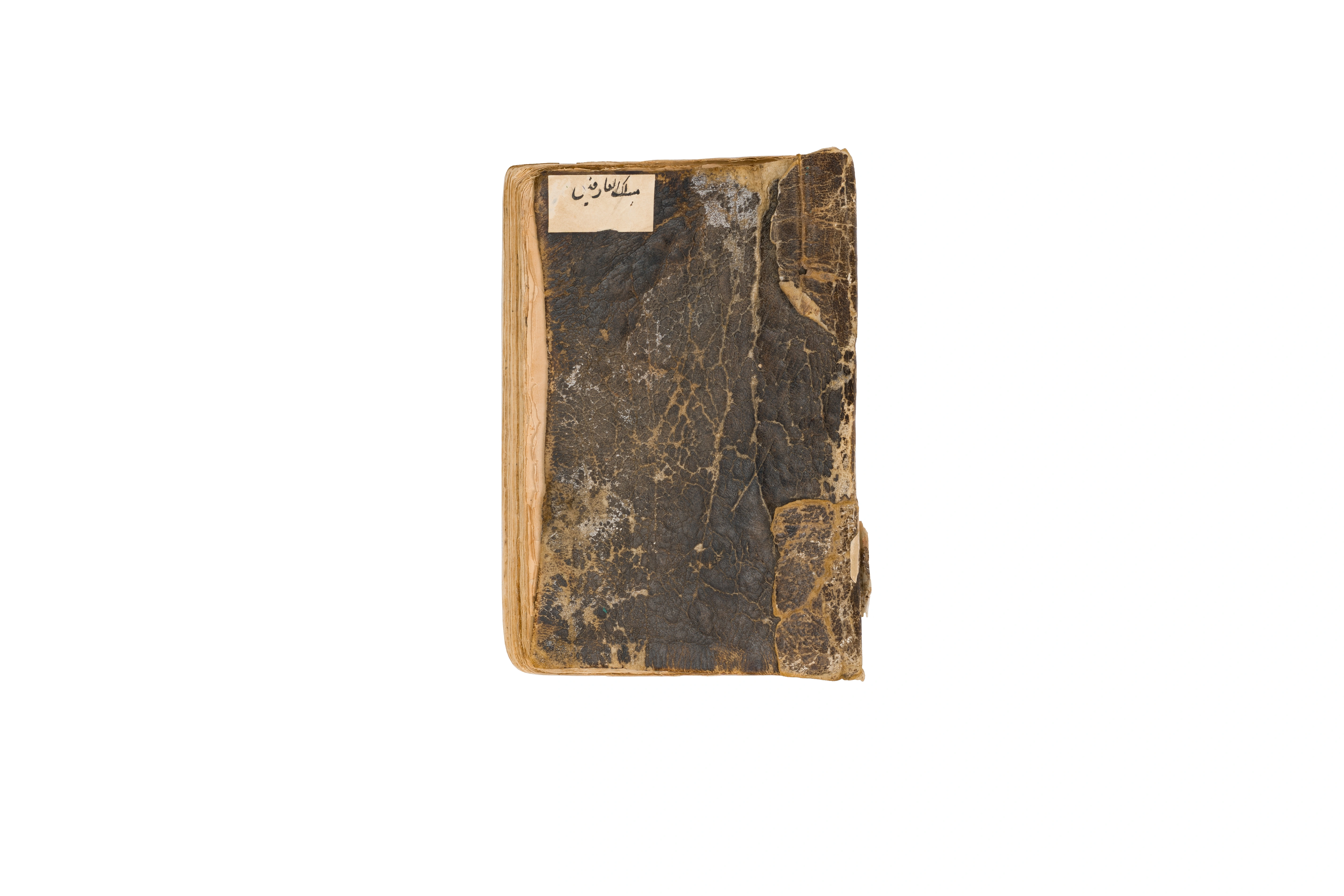
“Risаla-i Qudsiyya”
Khoja Muhammad Porso. Calligrapher: Muhammad ibn Haji Muhammad al-Kalidari. Copied in 1470. Central Asia. Persian. Nastaliq script. Oriental paper. 18.3 × 12.5 cm. Manuscript of the Institute of Oriental Studies, Academy of Sciences of Uzbekistan
Audio guide
Audio available in: UZ
Description
Before you is the manuscript of Risala-i Qudsiyya, an early and highly significant work of Sufi literature from the Timurid period, copied in 1470.
Its author, Khwaja Muhammad Parsa, was one of the closest disciples of Baha al-Din Naqshband and a central figure in the Naqshbandi tradition. In this treatise, he systematized the spiritual teachings of his master, transforming them into a practical guide for inner moral and spiritual refinement.
The manuscript’s importance lies in its early date. It was copied only a few decades after the author’s lifetime, making it a crucial source for understanding the authentic doctrines of Naqshbandi Sufism.
The text is written in Persian, which at the time functioned as the principal language of culture and spiritual discourse in Central Asia. Unlike Arabic, associated with formal theological precision, Persian allowed for the nuanced expression of mystical and experiential dimensions of faith.
Observe the calligraphy. The nasta‘liq script here represents an early phase of its development, already displaying its characteristic fluidity and diagonal rhythm. This visual flow reflects the Sufi concept of a continuous spiritual journey toward harmony.
The manuscript is executed on high-quality Eastern paper made from cotton and hemp fibers and carefully burnished. Such a surface enabled the reed pen to glide smoothly, producing delicate lines that have endured for more than five centuries.
This is not merely a book, but a testament to a living intellectual and spiritual tradition – a moment when Sufi knowledge transitioned from oral transmission to written preservation, becoming an enduring part of the cultural heritage of Islamic Central Asia.