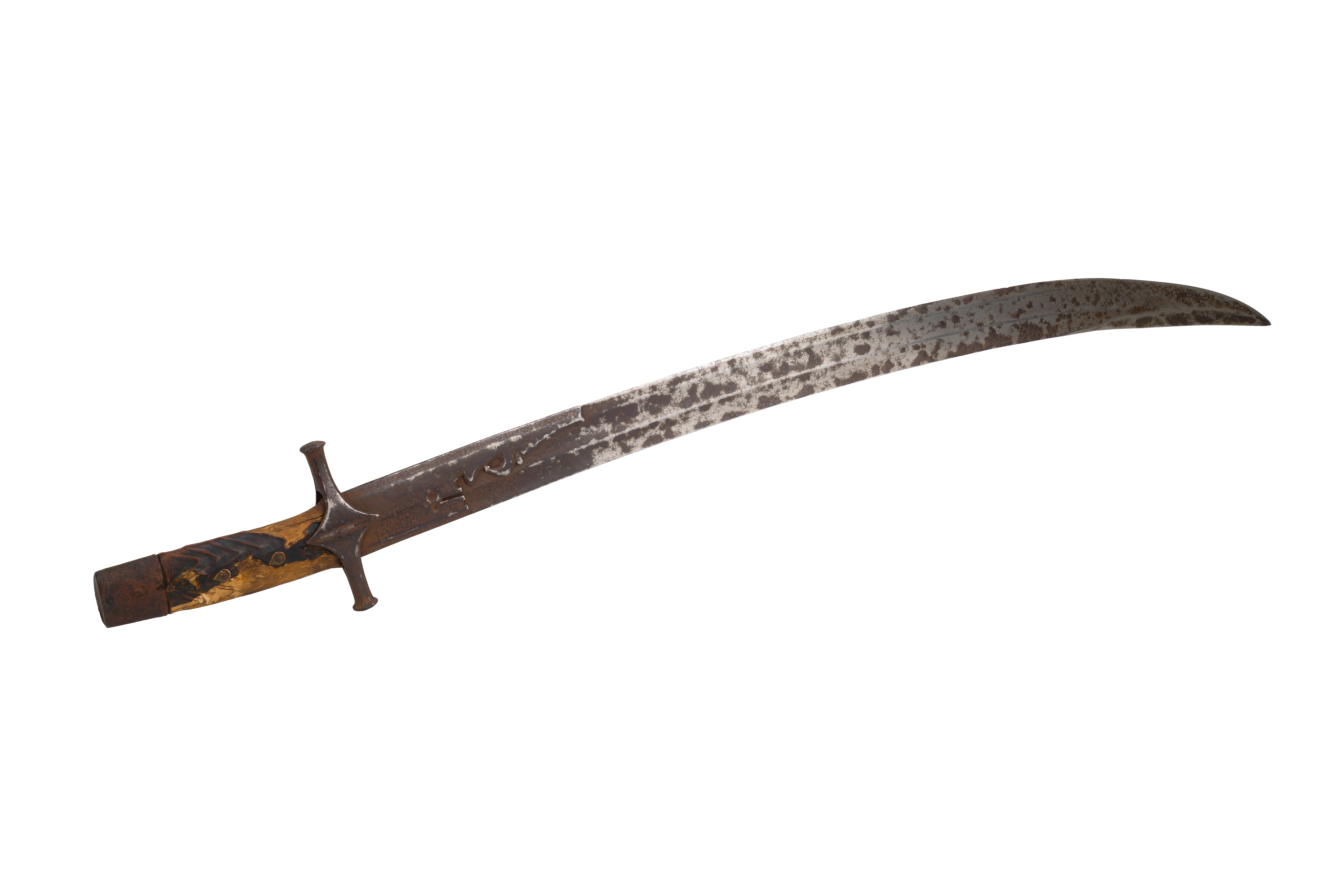
Sabre
13th–14th centuries. Central Asia. Steel. 82 × 10.5 cm. Scabbard: 86.5 × 5 cm
Audio guide
Audio available in: RU
Description
This sabre dates to the 13th–14th centuries, a period when warfare in Central Asia was transformed under the influence of mounted nomadic armies.
Its curved blade is a functional innovation. Unlike straight swords, it enabled effective slicing strikes from horseback, increasing cutting efficiency without the blade becoming lodged. Such weapons became standard among nomadic forces and later the armies of Amir Timur.
The blade surface reveals a mottled pattern, indicative of crucible steel – often referred to as wootz or early “Damascus” steel. This material combined hardness with flexibility, making it both sharp and resilient. Central Asia, particularly Khorezm and the Ferghana Valley, was a major center of its production.
At the base of the blade and around the guard, engraved ornamentation features vegetal motifs known as rumi, characteristic of Islamic art. Even weaponry was integrated into a broader aesthetic and symbolic framework.
The grip is covered in textured leather with a chevron pattern, providing a secure hold during combat.
Sabres of this type were essential to the military culture that underpinned the rise of the Timurid Empire – a state where martial power coexisted with remarkable achievements in science and the arts.