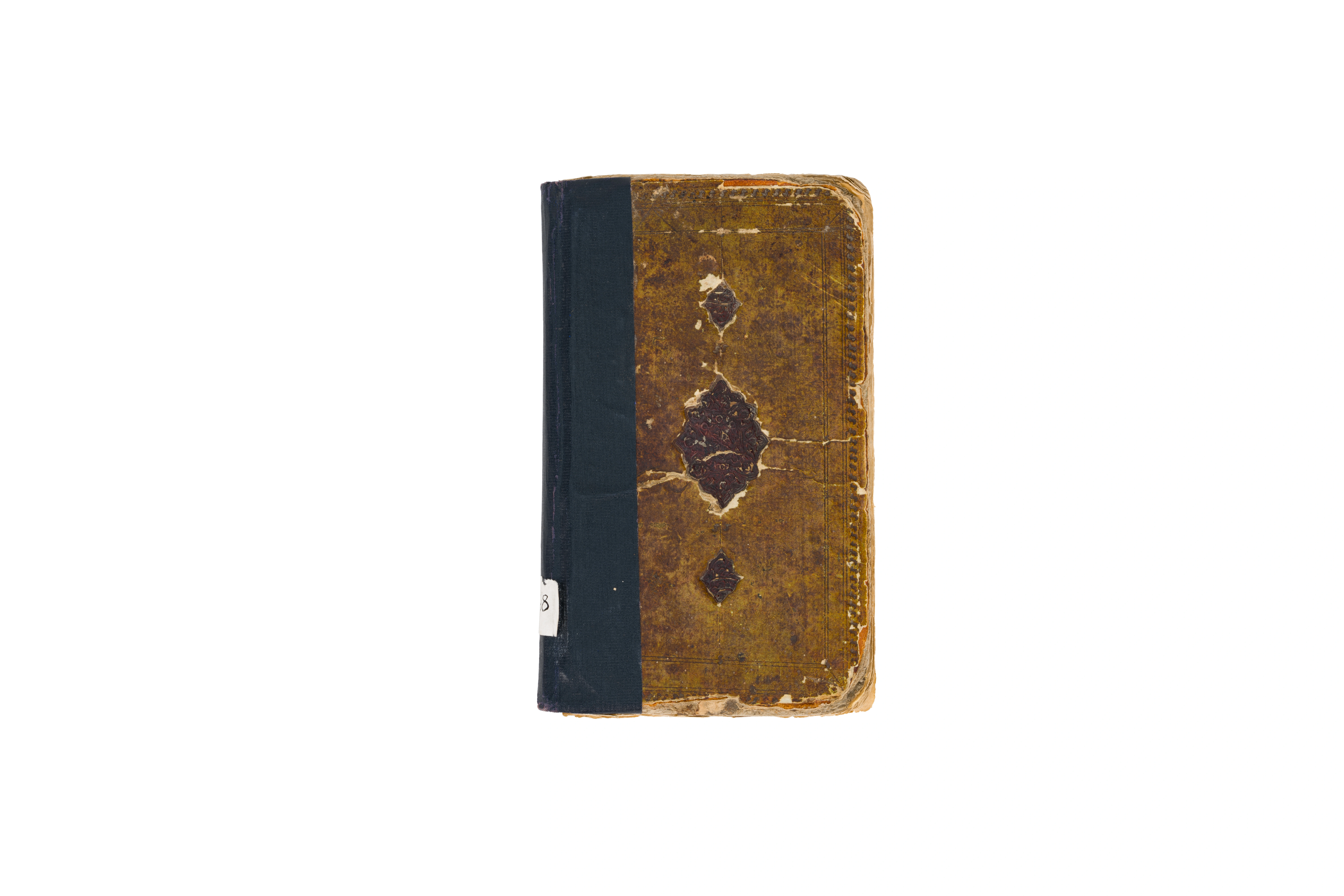
“Maqamat-i Baha al-Din Naqshband”
Abu al-Muhsin Muhammad Baqir. Calligrapher: Mirza Muhammad Qasim. Copied in 1802 Central Asia. Persian. Nastaliq script. Oriental paper. 14 × 24 cm. Manuscript of the Institute of Oriental Studies, Academyof Sciences of Uzbekistan
Audio guide
Audio available in: UZ
Description
This manuscript, dating to the early 19th century, is titled “Maqamat of Bahauddin Naqshband,” a work devoted to the life and spiritual path of one of Central Asia’s most influential Sufi masters.
Its central figure is Bahauddin Naqshband, a 14th-century scholar and the founder of the Naqshbandi order. The text belongs to the genre of “maqamat,” which emphasizes not only biographical events but also spiritual states, teachings, and miraculous aspects of the saint’s life.
Such works played a crucial role in shaping the spiritual culture of the region. The Naqshbandi teaching, expressed in the phrase “the heart with God, the hands at work,” deeply influenced the social and intellectual life of Transoxiana, including the Timurid period and beyond.
The manuscript was copied in 1802, a time marked by renewed interest in Sufi traditions in Central Asia. This period saw the strengthening of religious institutions and the active circulation of spiritual literature.
The text is written in elegant nastaliq script, known for its fluidity and rhythm. By the 19th century, this script had become the dominant style for Persian literary manuscripts in the region.
The page layout is carefully structured: lines are evenly arranged, spacing is consistent, and certain words are highlighted in red ink. These visual cues helped guide the reader through the text.
The manuscript is written on high-quality Eastern paper, whose durability has ensured its preservation. Even after more than two centuries, the text remains legible and the ink retains its contrast.
Signs of wear–creases, abrasions, and minor losses–indicate active use. This was not merely a decorative object, but a working book engaged in study and spiritual practice.
This artifact illustrates how Sufi tradition continued to play a central role in the later history of the region, linking religious knowledge, everyday ethics, and cultural identity.