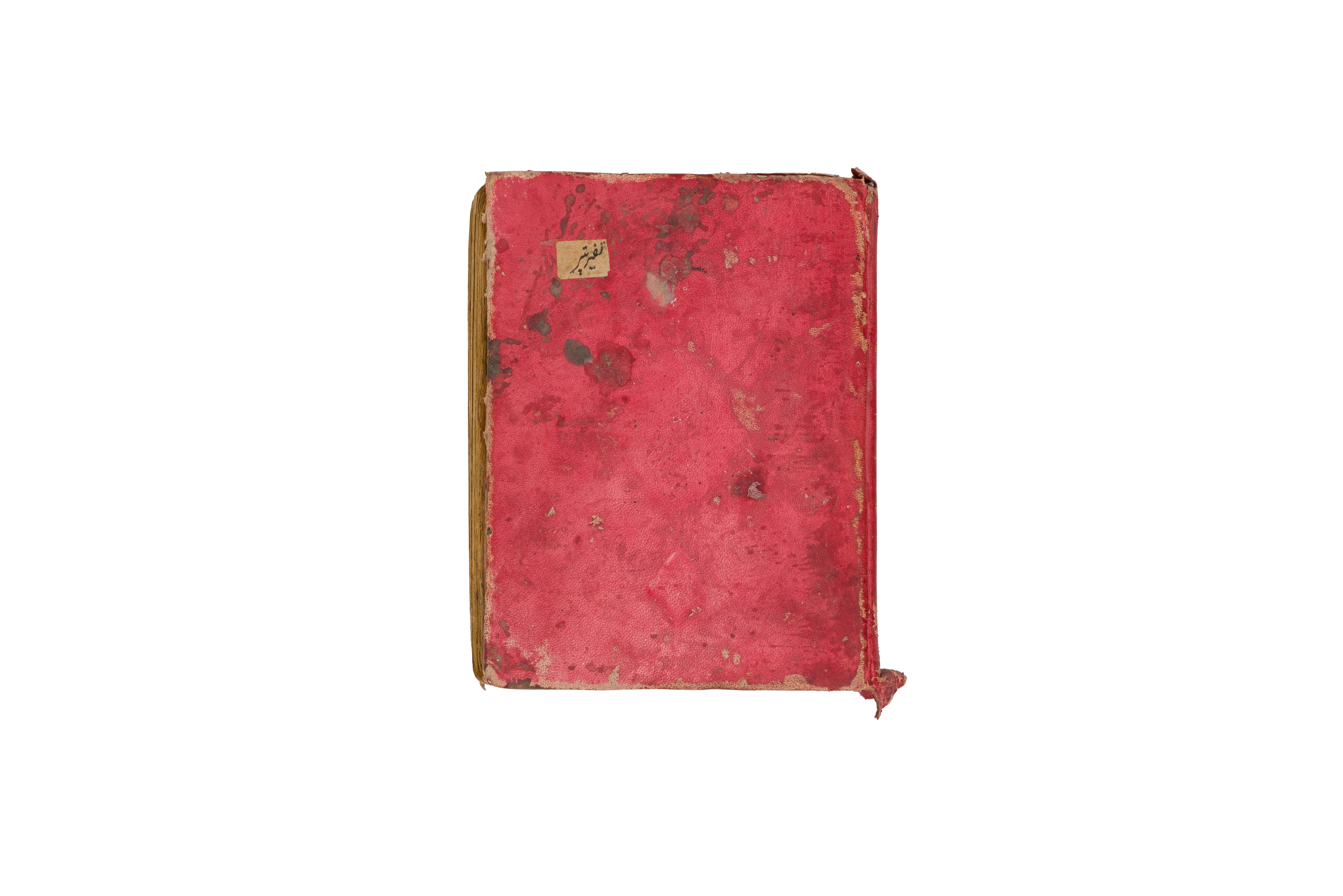
“At-Taysir fi al-Tafsir”
Najmiddin Abu Hafs Umar ibn Muhammad an-Nasafiy. Calligrapher: Muhammad ibn Muhammad ibn Ali ibn Usmon al-Bukhari. Copied in 1250. Khujand. Arabic. Naskh script. 14.5 × 19.5 сm. Oriental paperManuscript of the Institute of Oriental Studies
Audio guide
Audio available in: UZ
Description
This manuscript, dated to the 13th century, is a Qur’anic commentary titled “At-Taysir fi al-Tafsir” by the prominent scholar of Transoxiana, Najm al-Din al-Nasafi. The copy before you was transcribed in 1250 in Khujand, during a period marked by the aftermath of the Mongol invasions.
Its very existence is remarkable. Despite widespread destruction, intellectual and educational traditions in Central Asia continued without interruption, demonstrating resilience and continuity.
The work belongs to the genre of tafsir, or Qur’anic exegesis. Its defining feature is clarity. The term “taysir” means “facilitation,” reflecting the author’s intention to make complex theological concepts accessible to a wider audience.
The manuscript is written in naskh script, known for its clarity and readability. This script became the standard for copying scholarly and religious texts across the Islamic world. The balanced lines and consistent structure reflect the skill of the calligrapher.
The material–Eastern paper, likely locally produced–indicates that paper-making traditions remained active in the region even after the disruptions of the 13th century.
Visible wear, stains, and edge damage suggest prolonged and practical use. This was not a ceremonial object but a working book used in teaching and study.
This manuscript exemplifies a defining feature of Central Asia’s Second Renaissance: the continuity of intellectual life and the transmission of knowledge across generations.