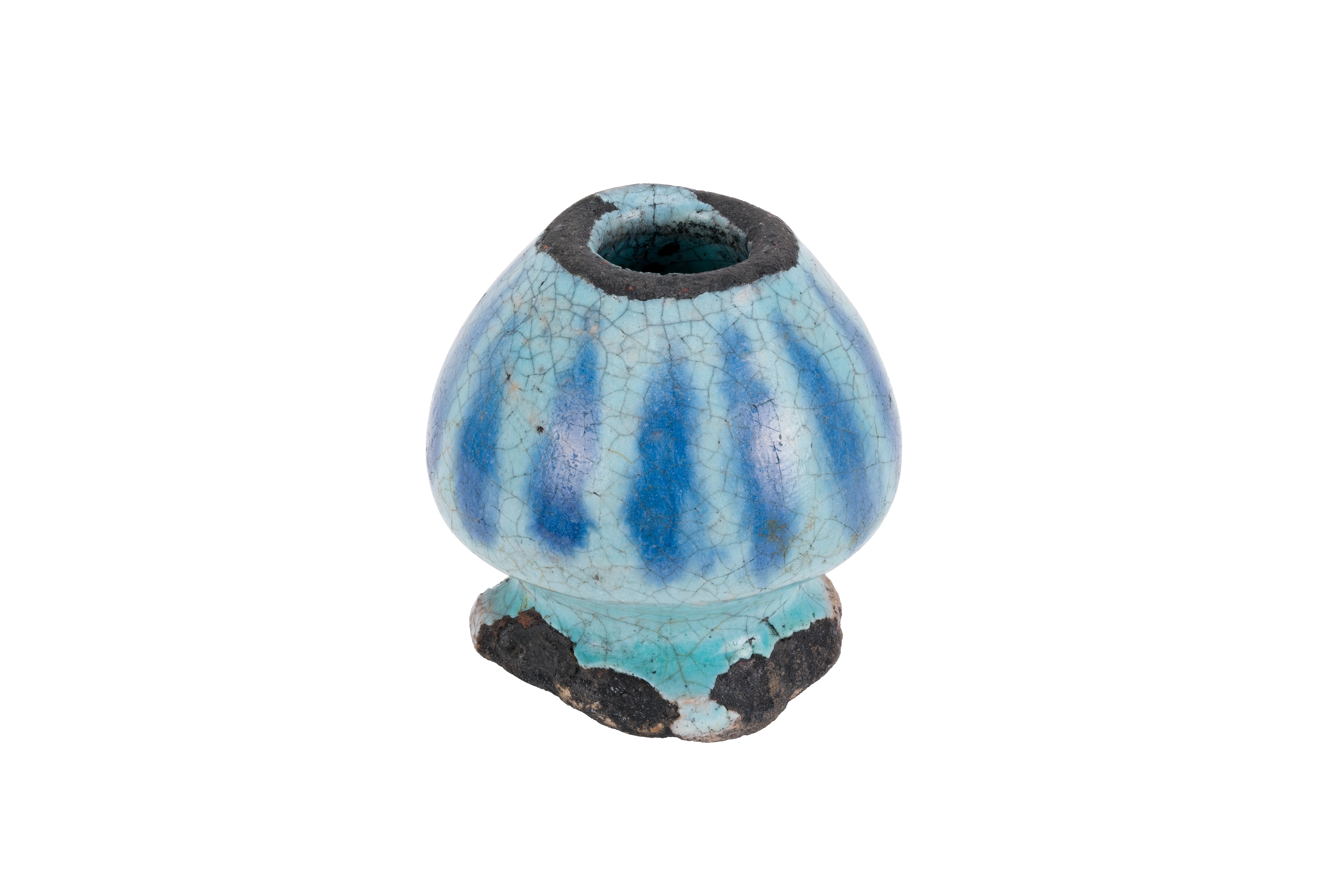
Ceramic Inkwell
14th - 15th centuries. Bukhara. Ceramic. 3.3 × 3 cm
Audio guide
Audio available in: UZ
Description
This small ceramic inkwell dates to the 14th–15th centuries and was produced in Bukhara, one of the major intellectual centers of Central Asia.
Objects like this were essential tools of the written culture of the Islamic world. Inkwells were used by calligraphers, scholars, administrators, and poets—individuals whose work depended on writing and scholarship.
The vessel is made from kashin, a silica-based ceramic material widely used in Central Asian and Iranian pottery. This technique allowed artisans to create light but durable objects with bright, glossy surfaces.
The turquoise color of the glaze was achieved by adding copper compounds to the glaze mixture. Such tones were especially popular in the architecture and ceramics of the Timurid period.
The ribbed shape of the inkwell resembles the form of a pomegranate or melon, motifs frequently used in the decorative arts of the region. Blue lines emphasize the rhythm of the form and enhance the object’s visual balance.
Although small, objects like this were symbols of learning and reflect the rich literary and scholarly traditions of medieval Central Asia.