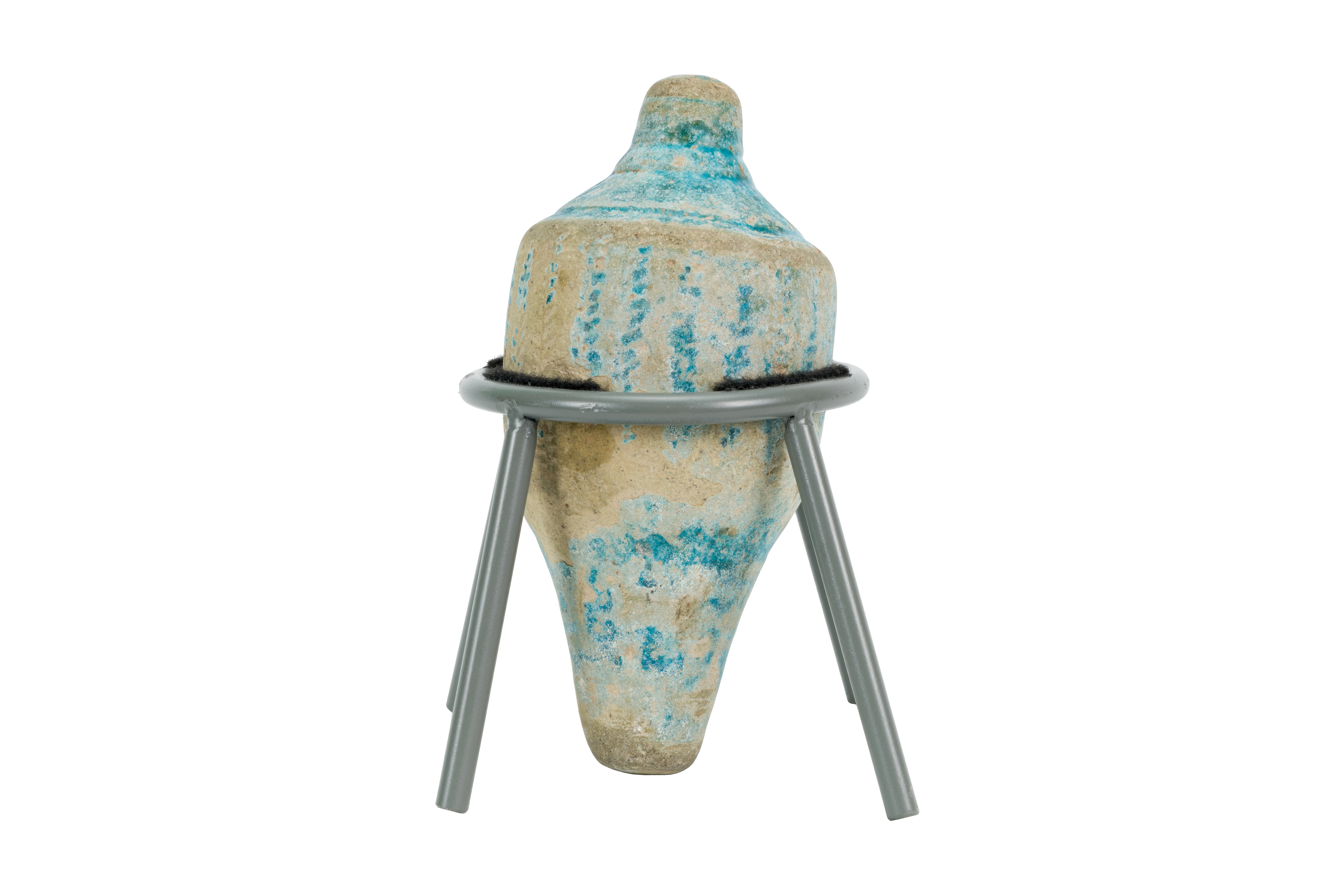
Vessel for mercury
13th - early 14th century. Central Asia. Ceramic. 17.5 × 8.5 cm
Audio guide
Audio available in: UZ
Description
This ceramic vessel from the 13th–early 14th centuries was used to store mercury.
Its elongated shape with narrow openings at both ends was designed to safely contain the liquid metal. Mercury played an important role in medieval science and technology, particularly in medicine, alchemy, and metallurgical processes.
At the time this object was produced, cities of Central Asia were major centers of scholarship and craftsmanship along the Silk Road. Scientific traditions that flourished in the region later reached a remarkable peak during the Timurid period, associated with scholars such as Mirzo Ulughbek.
Mercury was used in preparing pigments, in metalworking techniques, and in certain medicinal compounds. Vessels like this could therefore have been found in workshops, laboratories of alchemists, or early pharmacies.
This modest ceramic container thus reflects the intellectual and technological culture that formed an important foundation for the scientific achievements of the Timurid era.