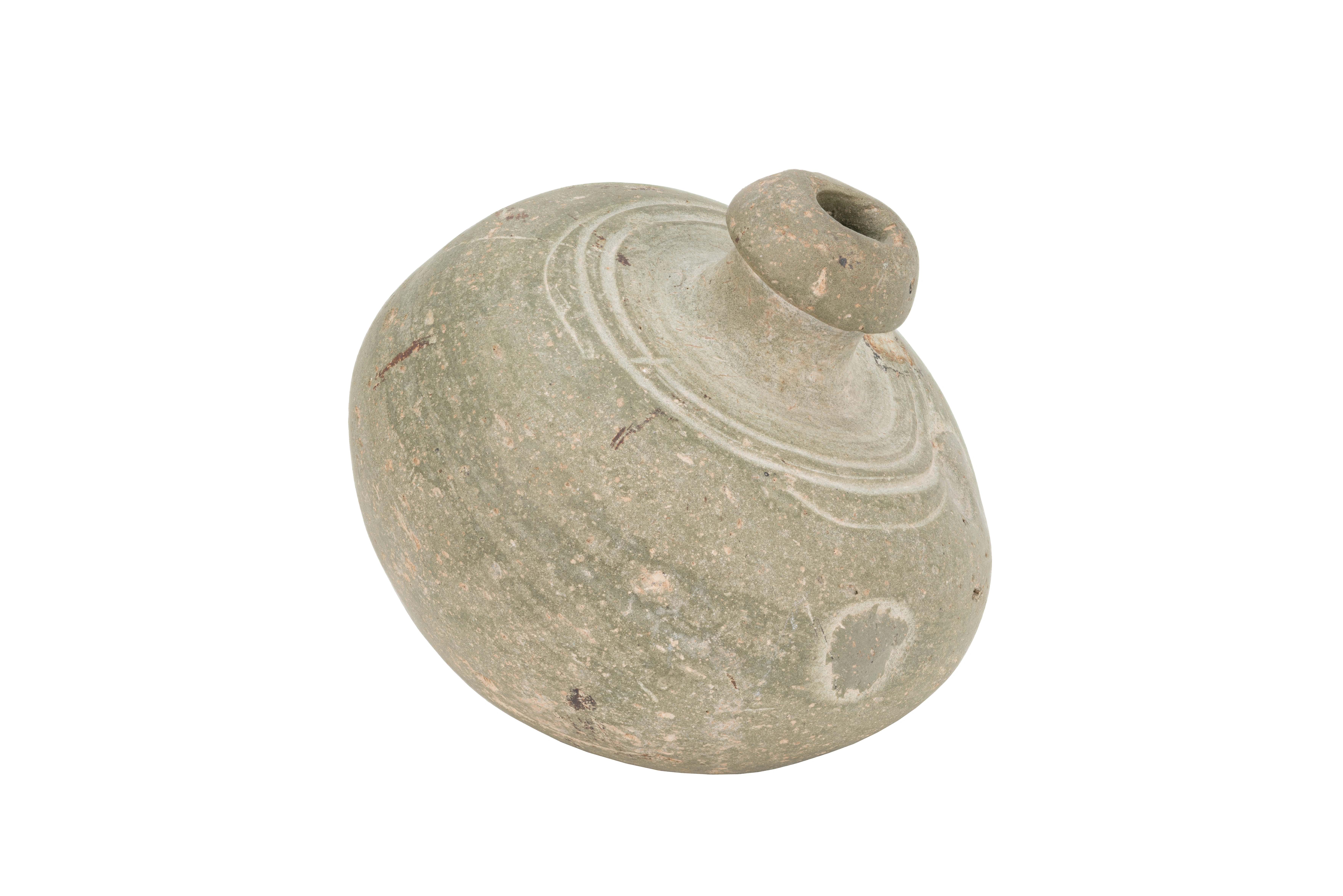
Vessel for mercury
9th–10th centuries СЕ. Samarkand. Ceramic. 9.6 × 9.7 cm
Audio guide
Audio available in: UZ
Description
This small ceramic vessel belongs to a category of objects that reveal the scientific history of Samarkand through material evidence rather than written sources.
The object is a sphero-conical vessel, designed for the storage and transportation of mercury. During the 9th–10th centuries, under the Samanids, Samarkand became a major intellectual and manufacturing center where chemistry, medicine, and paper production flourished.
Mercury was considered a strategic material. It was used in medicine, alchemical experiments, metallurgy, and in certain technical processes related to paper production. The narrow neck allowed the vessel to be tightly sealed with wax or resin, preventing the evaporation of this valuable and hazardous substance.
Its form is also significant. The nearly spherical body and unusually thick walls ensured durability during transport along caravan routes. This design helped the vessel withstand the considerable weight of mercury, which is far denser than water.
Such artifacts demonstrate that Samarkand was not only a cultural but also a technological center. The widespread presence of similar vessels suggests standardized production connected to scientific and commercial activity.
This object illustrates how the achievements of Islamic science relied not only on intellectual inquiry but also on a developed material infrastructure of workshops, laboratories, and trade networks.